
Honeywell International Inc. Navigates Leadership Shifts While Expanding into New Consumer Segments
Honeywell International Inc. has announced a significant reshuffle in its executive ranks that will reshape the strategic direction of its Process Technology and Building Automation divisions. Billal Hammoud will take the helm of Process Technology as of 1 October, succeeding Ken West, who exits the company on 31 August after a tenure that saw the division navigate volatile commodity markets and the rapid acceleration of digital plant solutions. Concurrently, Juan Picon will replace Hammoud as chief executive of Building Automation, a move that signals the company’s intent to strengthen its foothold in commercial building control amid heightened competition from nimble start‑ups and entrenched HVAC players.
Both new leaders report directly to Vimal Kapur, Honeywell’s chief executive officer, underscoring a unified vision for the conglomerate’s industrial and commercial portfolios. The timing of these appointments, set against the backdrop of a 52‑week high of $260.28 and a low of $195.87, suggests a deliberate attempt to inject fresh perspective into areas that have been under scrutiny for sluggish growth. With a price‑earnings ratio of 8.94, investors will be watching closely to see whether these leadership changes translate into tangible earnings acceleration.
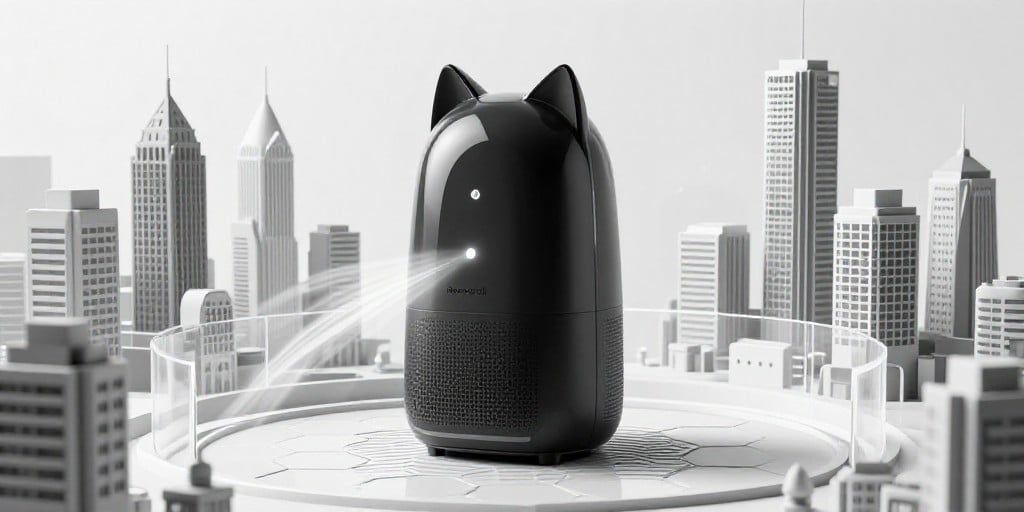
In a seemingly unrelated yet strategically insightful development, Honeywell showcased a new “cat air purifier” at the 28th Asian Pet Expo in Shanghai. The device, released in 2026, integrates a rotating hair‑capture system and a washable split‑unit design, all controllable via a smartphone app. This foray into the pet‑care market illustrates Honeywell’s broader diversification strategy, leveraging its core competencies in sensing, control, and environmental technologies to penetrate a niche consumer segment that has seen rapid adoption of smart devices. The move also reflects a broader industry trend—highlighted by the 2026 “TikTok e‑commerce pet industry consumption trend report”—where intelligent pet products such as air purifiers, grooming tools, and automated feeders are driving new revenue streams for manufacturers traditionally focused on industrial applications.
Honeywell’s market cap of $70.28 billion positions it as a formidable player in the industrial conglomerate space, yet the company faces mounting pressure from agile competitors across its various sectors. The leadership realignment and product expansion signal an aggressive attempt to maintain relevance in a market where technology convergence is redefining consumer expectations. Whether these initiatives will yield sustained shareholder value remains to be seen, but the company’s recent moves demonstrate a willingness to adapt and innovate in both its core industrial businesses and emerging consumer markets.