
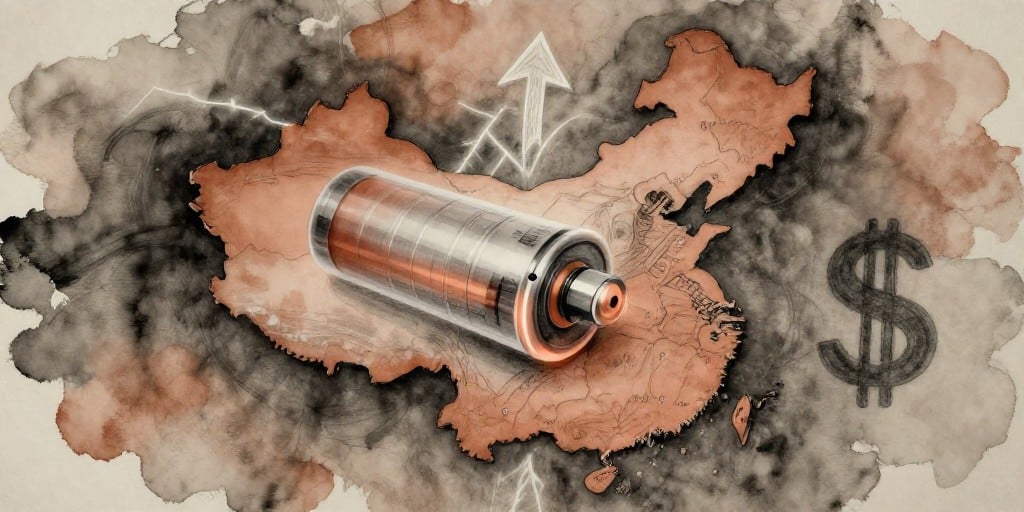
Market Context and Regulatory Momentum
The Chinese electric‑vehicle (EV) sector has entered a new acceleration phase. The International Energy Agency’s Global EV Outlook 2026 forecasts that global EV sales will reach 23 million units this year, representing roughly 30 % of all new‑vehicle sales—an increase from 5 % a decade ago. In China, the sector is expected to deliver over 200 million units annually, driven by aggressive domestic demand, favorable policy, and a tightening battery‑safety regime.
On 1 July, China enacted GB 38031‑2025, the most stringent power‑battery safety standard to date. The regulation lifts the fire‑and‑explosion test threshold from “alarm within five minutes before ignition” to “no ignition, no explosion” and mandates that smoke within five minutes of a thermal event cannot jeopardise the passenger compartment. While major players such as BYD and CATL already comply, smaller suppliers face heightened entry barriers, potentially consolidating the industry and improving profitability across the value chain.
EVE Energy’s Strategic Positioning
EVE Energy Co., Ltd. (EVE) is a diversified lithium‑battery and power‑system supplier headquartered in Huizhou, China. The company’s product portfolio spans:
- Primary lithium cells (thionyl chloride, manganese dioxide, iron disulfide, lithium‑ion capacitors, HP, PLM, micro‑lithium batteries)
- Lithium‑ion modules in cylindrical, pouch, prismatic, and aluminum‑shell formats
- Power systems for pure‑electric passenger vehicles, buses, and mini‑vehicles
- Energy‑storage systems for residential, telecom, micro‑grid, and industrial applications
With a market capitalization of approximately 1.33 trillion CNY and a price‑to‑earnings ratio of 29.08, EVE trades near the upper mid‑range of its sector. Its 2026‑07‑02 closing price of 61.16 CNY sits well below the 52‑week high of 94.44, suggesting a window for upside should the company capitalize on sector momentum.
Recent Financial Guidance and Market Sentiment
EVE is among the growing cohort of A‑share listings to disclose half‑year earnings forecasts. While the specific guidance for 2026 has not been released in the provided sources, the broader context indicates that peers in the lithium‑materials and battery‑components space are reporting robust upside:
- Yongtai Technology forecasts 2026 H1 net profit of 2.65–3.3 billion CNY, driven by higher volumes and prices of lithium‑based electrolytes and the new 5 kt per annum VC plant.
- Yonghe Group projects 4.6–5.5 billion CNY in 2026 H1 net profit, buoyed by tightening refrigerant supply and rising downstream demand.
- EVE‑related peers such as BYD and CATL have already met the new safety standard, positioning themselves to capture the expanding EV and energy‑storage market.
In the broader market, the Electric‑Vehicle ETF (招商159183) gained 1.92 % on 3 July, reflecting a sector‑wide rally. Conversely, the Battery ETF (汇添富159796) fell 1.95 % on 2 July amid concerns about overseas inverter‑policy risks, though a 140 million CNY inflow suggests a cautious re‑allocation of capital toward more resilient names.
Forward‑Looking Perspective
Given the confluence of regulatory tightening, rising global EV penetration, and EVE’s diversified product mix, the company is well‑positioned to:
- Benefit from the new safety standard—EVE’s broad cell portfolio and power‑system expertise should allow it to meet or exceed GB 38031‑2025 requirements, giving it a competitive edge over smaller rivals.
- Tap into the expanding energy‑storage demand—with governments committing to 300 GW of storage by 2030, EVE’s ESS offerings for residential, telecom, and industrial sectors are likely to see increased adoption.
- Leverage its cost‑competitiveness—EVE’s ability to produce a wide range of cell chemistries (including low‑cost lithium‑manganese and iron‑disulfide) can help it maintain margins in a price‑sensitive market.
While the 29.08 P/E ratio indicates a premium relative to the broader industrials sector, the upcoming earnings season and sector‑wide rally suggest that the valuation may be justified by sustained growth in battery production and EV sales. Investors should monitor EVE’s forthcoming quarterly reports for updates on production ramp‑ups, safety‑standard compliance, and potential new contracts with automotive OEMs and energy‑storage developers.
In summary, EVE Energy stands at the intersection of regulatory evolution and market expansion. Its diversified product line, coupled with an improving macro‑environment for EVs and storage, positions it to capture significant upside as the industry moves toward higher safety standards and greater penetration worldwide.