
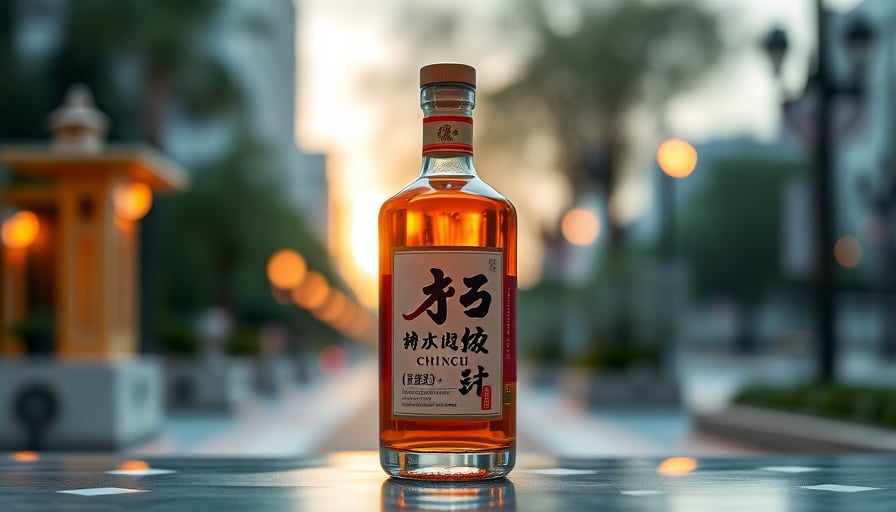
Kweichow Moutai’s 1499‑RMB “Flat‑Price” Gambit: A Market‑Shaking Reversal or a Hollow Smoke‑Screen?
Kweichow Moutai Co., Ltd. (600519.SH) – the behemoth that has long dominated China’s spirit market – has announced a bold, if controversial, pricing experiment that is already sending ripples through the consumer‑staples sector. On 1 January 2026, the company launched its new “2026 Fly‑High Moutai” (53 % vol, 500 ml) on the iMoutai mobile platform at a official guidance price of 1499 CNY per bottle. The move was accompanied by a daily purchase limit of 12 bottles per customer, a significant relaxation from the previous 6‑bottle cap.
A Shockwave in a Slumping Industry
The white‑wine sector has suffered a 13.71 % year‑to‑date decline in the China Securities Index by 28 December 2025, a slump that has dragged most listed alcohol firms into a “five‑year‑down” abyss. Even the historically resilient Moutai was not immune: its shares closed at 1377.18 CNY on 30 December 2025, barely above the 52‑week low, while the company’s market cap hovered at 1.72 trillion CNY with a P/E of 19.19. The industry’s erosion has raised questions about whether Moutai’s brand equity alone can sustain profitability.
The 1499 CNY Strategy: Aggressive Market‑Share Capture
Moutai’s leadership, as articulated by newly appointed Party Committee Secretary and Chairman Chen Hua at the December 28 de‑centralised dealer meeting, pledged to “put consumers at the centre of a market‑driven transformation.” The iMoutai platform, a digital distribution arm, was used as a lever to accelerate the new pricing model. By allowing 12 bottles per day, the company dramatically increased potential sales volume—an order of magnitude higher than the traditional 6‑bottle cap.
The result was immediate: within minutes of launch at 9:00 a.m., the product was sold out, and subsequent restocks every five minutes were likewise exhausted. Reuters‑style “first‑sale” figures show that within the first hour, the platform recorded over 70,000 purchases, a figure that dwarfs typical sales of a single bottle in China’s premium market. The platform’s traffic reports corroborated these numbers, stating that the page was “over‑loaded” and “access limited” due to high demand.
Pricing Dynamics: Breaking the Ceiling
Prior to this experiment, the market price of “Fly‑High” had been slipping: the wholesale price dropped to 1555 CNY on 31 December 2025, stabilising around 1550 CNY on New Year’s Day. By contrast, the official guidance price of 1499 CNY sits below the wholesale floor, signalling a deliberate undercutting. The company’s strategy, therefore, can be seen as a price‑penetration tactic designed to force the market downwards and eliminate grey‑market speculation.
The effect on the secondary market has been profound. The price of secondary “Fly‑High” bottles has fallen to ≈1550 CNY, compressing the margin between retail and resale. The official “price‑squeezing” has also pushed scalping platforms into a scramble, with many sellers now offering “Fly‑High” at prices that barely cover the retail cost. This scenario suggests that Moutai’s strategy is not merely a sales gimmick but a calculated attempt to re‑engineer the supply‑demand equilibrium in its favour.
A Sign of Strategic Re‑orientation?
The rapid sell‑through and subsequent restock attempts hint at a cascading effect on the broader market. Analysts speculate that the company may be testing the elasticity of its consumer base: if 12 bottles per day are sustainable, Moutai could significantly raise its production volume and dilute the brand’s scarcity value. This move would directly contravene the traditional white‑wine business model, which relies on exclusivity to justify premium pricing.
However, the company’s market‑cap of 1.72 trillion CNY and P/E of 19.19 indicate that investors remain wary. The price drop in the industry, coupled with Moutai’s own historical reliance on a high‑margin, low‑volume strategy, raises the question: Is this a desperate attempt to revive sales, or a strategic pivot toward a more mainstream, volume‑based model?
Conclusion
Kweichow Moutai’s 1499‑CNY “Fly‑High” launch on iMoutai represents a seismic shift in the Chinese premium alcohol market. By cutting the price below the wholesale floor and allowing a 12‑bottle daily limit, the company is effectively challenging its own brand equity and the industry’s scarcity paradigm. The immediate sell‑through and the subsequent price collapse in the secondary market suggest that the strategy is working—at least superficially. Yet the long‑term implications remain uncertain. If Moutai can sustain this model, it may signal the end of the white‑wine era of exclusivity and the dawn of a new, volume‑driven paradigm in China’s consumer staples sector.