
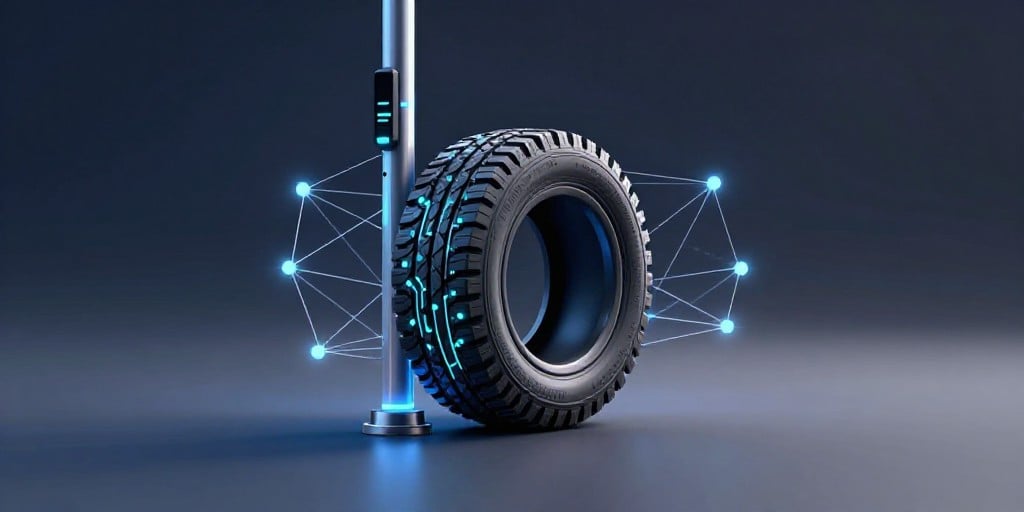
Nokian Renkaat Oyj: Strategic Engagements Amid Technological Pilots
Nokian Renkaat Oyj, a Finnish specialist in the development, manufacturing, and marketing of summer and winter tires, has been at the center of several notable events in the week ending 14 August 2026. While the company’s core business remains the tire market, recent developments indicate a broader focus on technology, international collaboration, and strategic positioning.
1. Smart‑Pole Pilot Linking Headquarters to Keran Railway Station
In a demonstration of urban connectivity and municipal partnership, 10 million smart poles were installed across Finland. Among these installations, a series of nineteen poles were mounted in Espoo, tracing a route from Nokian’s headquarters to Keran railway station. The poles, initially deployed in 2020, were intended to provide illumination and data services but have since fallen into disuse. The current initiative seeks to re‑pilot the technology, potentially restoring functional utility or repurposing the infrastructure for new applications.
Although the smart‑pole project is not a direct product offering of Nokian Renkaat, the company’s participation underscores its willingness to engage in public‑private collaborations that leverage its existing manufacturing and logistical capabilities.
2. Meeting with the U.S. Development Finance Corporation
On 14 August 2026, Ben Black, the chief executive of the U.S. Development Finance Corporation (DFC), visited Finland. During his visit, Black highlighted the substantial allocation of U.S. taxpayer funds—205 billion USD—toward projects aligned with U.S. strategic interests. He specifically mentioned an upcoming meeting with representatives of Nokian Renkaat.
The conversation emphasized Finland’s strategic importance as a hub for technology companies, referencing well‑known collaborations with Nokia and Ericsson in the development of 5G and 6G infrastructures. While the details of the discussion with Nokian Renkaat were not disclosed, the meeting signals a potential exploration of joint ventures or supply‑chain enhancements, especially given Nokian’s manufacturing footprint in Europe, the United States, and Asia.
3. Market Context and Company Position
Nokian Renkaat’s market presence is reflected in its stock performance on the NASDAQ OMX Helsinki exchange. As of 13 August 2026, the closing price stood at €15.35, positioned near a 52‑week high of €15.72 reached on 20 July 2026. The company’s market capitalization is approximately €2.12 billion, and its price‑to‑earnings ratio of 109.57 indicates investor expectations of continued growth, albeit at a premium.
The company’s core business—tire production for cars, bicycles, and heavy machinery—remains robust. Yet the recent engagement with U.S. development agencies and the smart‑pole initiative suggest a strategic pivot toward technology integration and international partnership, potentially diversifying revenue streams and strengthening global supply chains.
4. Outlook
While Nokian Renkaat Oyj has not announced new product lines or expansion plans in the immediate news cycle, the strategic interactions with municipal infrastructure projects and a major U.S. development finance entity point to an evolving corporate strategy. Investors may view these moves as early indicators of a broader shift toward technology‑enabled mobility solutions, aligning with global trends toward smart cities and advanced manufacturing.
In the weeks that follow, market observers will likely monitor whether these engagements translate into concrete collaborations, new contracts, or investment in research and development. For now, the company’s dual focus on maintaining its traditional tire business while exploring technology partnerships positions it uniquely within the automotive components sector.