
Sungrow Power Supply Co. Ltd.: A Case Study in China’s Solar‑Industry Boom
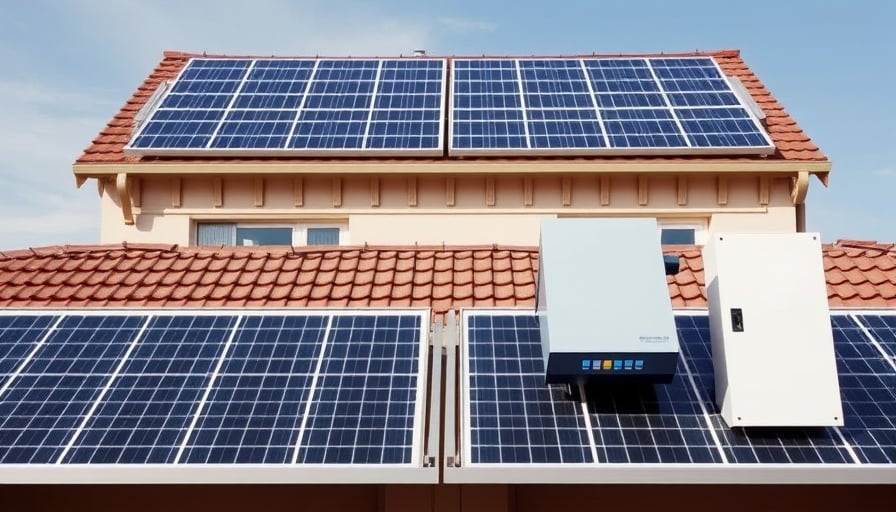
Sungrow Power Supply Co. Ltd., headquartered in Hefei and listed on the Shenzhen Stock Exchange, has become a cornerstone of China’s renewable‑energy push. Its product portfolio—ranging from central and string photovoltaic (PV) inverters to a wide array of storage systems (e.g., SD200‑B, SH5K‑20, SC1000TL)—positions the firm at the heart of the country’s transition to clean power. Yet the company’s fortunes cannot be divorced from the broader dynamics that dominated the 2025 A‑share market, a period marked by unprecedented gains and a seismic shift toward technology‑centric valuation.
1. Market Context: 2025’s “Fire‑Burn” Rally
The A‑share market ended 2025 on an emphatic high. The Shanghai Composite index gained 18.41 %, the Shenzhen Component rose 29.87 %, and the ChiNext index surged a staggering 49.57 %. These gains were not isolated; they were part of a broader 63 % increase in total trading volume compared with 2024. The rally was fuelled by three principal drivers:
| Driver | Impact |
|---|---|
| Policy Support | Targeted subsidies and favourable regulations for renewable‑energy projects amplified investor confidence. |
| Capital Inflows | Institutional and retail money flowed into high‑growth sectors, especially technology and resources. |
| Structural Shift | A move away from traditional heavy industry toward high‑tech and green energy sectors reshaped sectoral performance. |
Within this landscape, industrial and electrical‑equipment stocks—Sungrow’s sector—benefited from a 40 %+ annual rise. The company’s share price, which closed at 171.04 CNY on 2025‑12‑30, had already leapt over 100 % in 2025, riding the wave of sectoral enthusiasm.
2. Sungrow’s Business Fundamentals
Sungrow’s business model is built on three pillars:
- PV Inverters – Central and string inverters that convert DC to AC for solar farms and commercial installations.
- Energy‑Storage Solutions – Modular storage units (e.g., SH5K‑20, SC1000TL) that enable grid‑level and residential storage.
- Monitoring & Integration Services – Software platforms (SolarInfo Logger, iSolar Cloud) that provide real‑time data for plant operators.
These offerings cover the entire value chain of solar projects: from generation to grid‑connection and end‑user monitoring. The firm’s extensive product line, coupled with a global sales network, gives it a competitive moat against newer entrants.
Key quantitative indicators (all in CNY):
- Market Capitalisation: 354 billion
- Price‑Earnings Ratio: 23.25
- 52‑Week Range: 52.98 – 209.88
The 52‑week high of 209.88 reflects the optimism of 2025’s market, but the current price sits significantly below its peak, indicating a potential reversal or consolidation.
3. Critical Analysis: Risks Behind the Bright Numbers
| Risk | Evidence | Implication |
|---|---|---|
| Sectoral Volatility | The 2025 rally was largely driven by technology and renewable‑energy stocks. Any correction in these sectors could disproportionately impact Sungrow. | Stock price could retract sharply if sector sentiment shifts. |
| Capital‑Intensive Expansion | Sungrow’s growth hinges on continual R&D and plant expansion, which requires sustained capital outlay. | If funding dries up or cost of capital rises, profitability could be squeezed. |
| Competitive Pressure | International rivals (e.g., SMA, ABB) and domestic newcomers are advancing in inverter efficiency and storage integration. | Market share erosion if Sungrow cannot maintain technological edge. |
| Regulatory Dependence | Subsidies and green‑energy mandates are critical to sales volume. Policy roll‑backs or subsidy cuts would reduce demand. | Revenue and margin pressures if policy support wanes. |
| Currency Exposure | As a global exporter, Sungrow is exposed to exchange‑rate fluctuations, especially the CNY‑USD pair. | Profitability volatility in foreign‑currency earnings. |
4. Outlook: Navigating a Post‑Boom Landscape
The A‑share market’s exuberance in 2025 is unlikely to persist indefinitely. As investors digest inflated valuations, a correction in the industrial and technology sectors is plausible. Sungrow must therefore:
- Accelerate R&D – Push for higher efficiency in inverters and lower-cost storage modules to stay ahead of competitors.
- Diversify Funding – Explore hybrid financing or strategic partnerships to mitigate capital‑intensity risks.
- Strengthen Global Presence – Expand into emerging markets where solar penetration is still low but growing rapidly.
- Hedge Currency Risks – Implement forward contracts or natural hedging through local‑currency revenues.
In sum, Sungrow Power Supply Co. Ltd. exemplifies both the opportunities and pitfalls inherent in China’s renewable‑energy boom. While its product suite and market position provide a solid foundation, the firm’s trajectory will ultimately hinge on its ability to navigate sectoral volatility, competitive pressure, and regulatory uncertainty in a rapidly evolving global energy landscape.