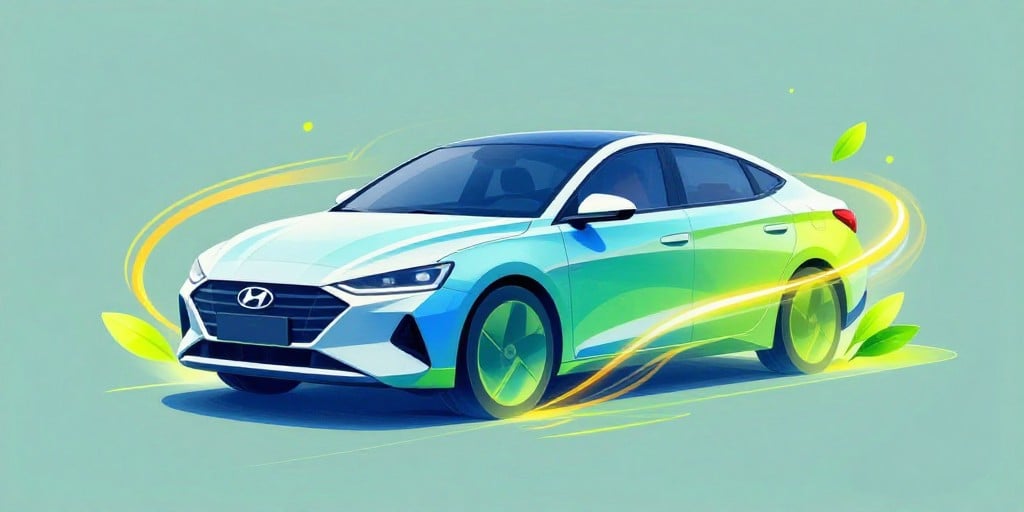
In a decisive move that underscores its commitment to innovation and sustainability, Hyundai Motor Co. has announced a strategic pivot towards hybrid vehicles. This shift is a direct response to the burgeoning consumer demand for fuel-efficient vehicles, driven by escalating fuel costs and a growing environmental consciousness. Hyundai’s decision to expand its hybrid lineup across various model segments is not merely a reaction to market trends but a calculated step to cement its position as a leader in the evolving automotive landscape.
Hyundai’s strategic realignment comes at a critical juncture. The company, a stalwart in the Consumer Discretionary sector and a key player in the Automobiles industry, is navigating a period of significant transformation. With a market capitalization of approximately 5.65 trillion KRW and a price-to-earnings ratio of 10.71894, Hyundai’s financial health remains robust, providing a solid foundation for this ambitious shift. However, the company’s recent stock performance, with a close price of 161,700 KRW on October 21, 2026, and a 52-week low of 151,000 KRW on October 14, 2026, reflects the volatile nature of the market and the challenges that lie ahead.
The automotive industry is witnessing a paradigm shift, with traditional internal-combustion engines gradually giving way to more sustainable powertrains. Hyundai’s move to integrate hybrids as a core component of its future strategy is a testament to its foresight and adaptability. By broadening its hybrid offerings, Hyundai is not only aligning with consumer preferences but also positioning itself to meet stringent regulatory expectations that are increasingly favoring eco-friendly vehicles.
Hyundai’s commitment to balancing internal-combustion and electric powertrains is a strategic endeavor to cater to a diverse customer base. This approach allows the company to offer a spectrum of options, from traditional vehicles to cutting-edge hybrids and electric models, thereby ensuring that it remains competitive in a rapidly changing market. The company’s emphasis on providing diverse options is a clear indication of its intent to lead rather than follow industry trends.
The implications of Hyundai’s strategic shift are far-reaching. By prioritizing hybrid technology, Hyundai is poised to influence its product development roadmap significantly. This move is expected to enhance its market positioning, enabling the company to capture a larger share of the hybrid vehicle segment. Moreover, Hyundai’s focus on hybrids is likely to drive innovation within the company, fostering advancements in technology and design that could set new industry standards.
In conclusion, Hyundai Motor Co.’s strategic pivot towards hybrid vehicles is a bold and necessary step in an era of heightened environmental awareness and regulatory pressures. By expanding its hybrid lineup and balancing various powertrains, Hyundai is not only responding to current market demands but also shaping the future of the automotive industry. As the company navigates this transformative period, its ability to innovate and adapt will be crucial in maintaining its competitive edge and securing its position as a leader in the global automotive market.