
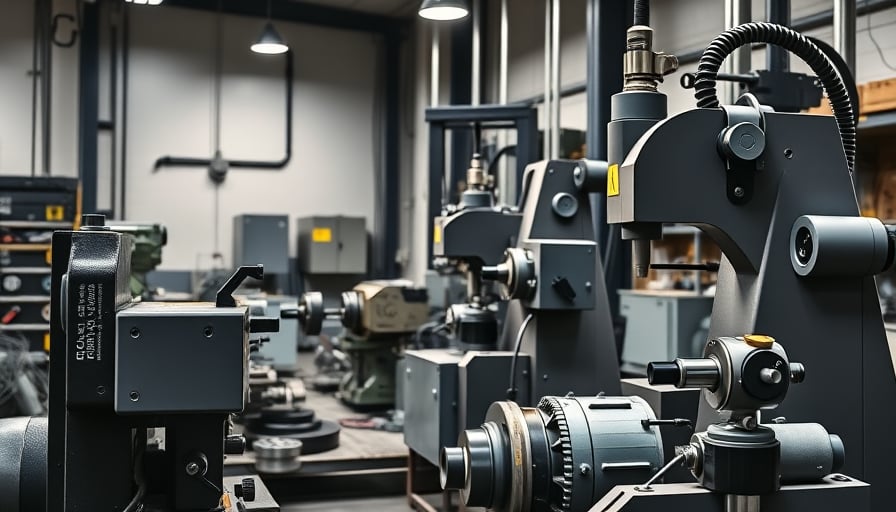
Zhejiang XCC Group Co Ltd – A Snapshot of a Metal‑Products Specialist
Zhejiang XCC Group Co Ltd, listed on the Shanghai Stock Exchange, operates in the machinery sector of China’s industrial landscape. The company’s core business revolves around the design, manufacture and global distribution of precision metal components—primarily bearings, turned rings and high‑grade steel tubes. With a market capitalisation of approximately 29.7 billion CNY and a 52‑week high of 88 CNY, the stock has shown a considerable range, reflecting the volatility inherent in China’s industrial equities.
Financial Position
The group’s current share price, standing at 81.09 CNY as of 15 January 2026, places it well below its 52‑week peak but comfortably above the low of 27.73 CNY reached in April 2025. The price‑to‑earnings ratio, a key valuation metric, sits at 324.1, signalling that investors are paying a premium for the company’s earnings relative to industry peers. While a high P/E ratio can indicate growth expectations or market optimism, it also underscores the need for disciplined earnings management and transparent communication with shareholders.
Operational Focus
XCC’s product portfolio caters to a diverse set of industries that demand high‑precision metal components. Bearings and turned rings are indispensable in automotive, aerospace and heavy‑equipment manufacturing, whereas precision steel tubes find applications in pipelines, construction and advanced machinery. The company’s emphasis on design and quality positions it to benefit from China’s ongoing industrial upgrade, which increasingly favours components that offer durability, efficiency and reduced lifecycle costs.
Market Context
On 16 January 2026, the Shanghai Stock Exchange experienced a modest decline, with the main index slipping 0.26 % to just below the 4,100‑point threshold. Broad market activity was characterised by a net outflow of 242.68 billion CNY in large‑block trades, suggesting that institutional capital was rebalancing rather than aggressively targeting any single sector. Nevertheless, the machinery and equipment segment did see a net inflow of 34.69 billion CNY in large‑block transactions, indicating that investors were still allocating resources to manufacturing‑related stocks.
While the day’s headlines focused on semiconductor momentum and robot‑technology gains—both of which dominate China’s high‑tech narrative—there was no specific mention of Zhejiang XCC Group in the major trade‑volume or sector‑performance reports. This absence does not diminish the company’s potential; rather, it highlights the broader sectoral dynamics that can influence industrial equities. For instance, rising demand for precision components in robotics or automotive manufacturing could indirectly buoy XCC’s revenue streams, even if the stock itself was not a headline grabber on that day.
Strategic Outlook
Given the company’s specialization in high‑quality metal products, Zhejiang XCC Group is well‑placed to tap into several growth avenues:
- Automotive Electrification – Electric vehicles (EVs) require robust bearings and steel components that can withstand new drivetrain configurations, offering an expanding customer base.
- Infrastructure Modernisation – China’s continued investment in infrastructure, including high‑speed rail and urban transit, creates demand for durable machinery parts.
- International Expansion – As global supply chains re‑evaluate sourcing strategies, XCC could leverage its proven manufacturing capabilities to secure overseas contracts, diversifying revenue beyond domestic markets.
Conclusion
Zhejiang XCC Group Co Ltd remains a focused player in the machinery sector, delivering specialised metal components that underpin a wide range of industrial applications. While recent market activity has spotlighted high‑tech sectors, the fundamental strengths of companies like XCC—rooted in quality engineering and manufacturing excellence—position them to benefit from China’s broader industrial evolution. Investors should monitor both macro‑economic signals and sector‑specific trends to gauge when the company’s valuation aligns with its underlying growth prospects.