
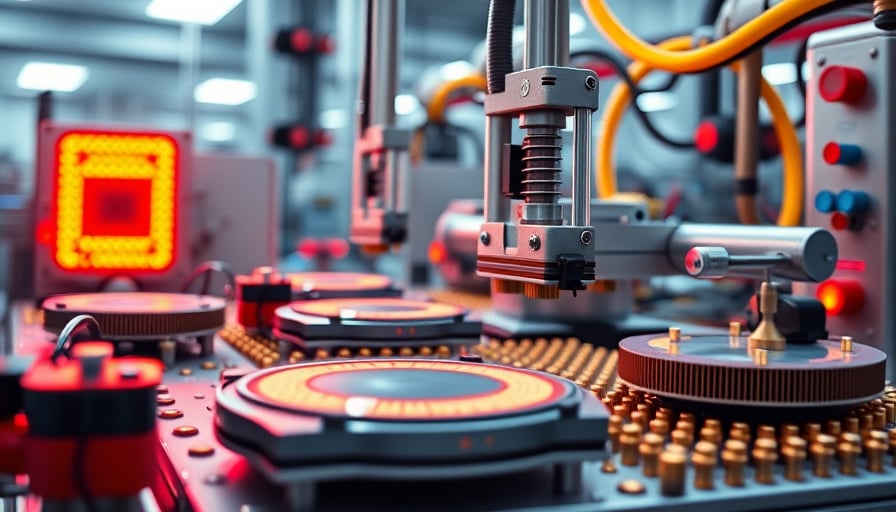
PVA TePla AG, a prominent player in the Information Technology sector, specifically within the Semiconductors & Semiconductor Equipment industry, has recently been the subject of intense scrutiny. Based in Wettenberg, Germany, the company has carved a niche for itself by manufacturing specialized equipment designed for the production and processing of high-tech industrial materials. These materials are crucial for industries such as semiconductors, hard metals, electrical/electronics, and even food processing. The company’s innovative approach involves the application of high temperatures, vacuum conditions, and plasma, which are essential for the advanced manufacturing processes required by these sectors.
As of December 29, 2025, PVA TePla AG’s stock closed at 22.8 EUR on the Xetra exchange, reflecting a significant fluctuation over the past year. The company’s stock reached a 52-week high of 31.1 EUR on October 20, 2025, but also experienced a low of 11.05 EUR on April 6, 2025. This volatility underscores the challenges and opportunities faced by PVA TePla AG in a highly competitive and rapidly evolving market.
With a market capitalization of 471,020,000 EUR, PVA TePla AG’s financial standing is robust, yet the company’s price-to-earnings ratio of 30.88 raises questions about its valuation. This high ratio suggests that investors are willing to pay a premium for the company’s shares, possibly due to its strategic position in the semiconductor equipment market. However, it also indicates potential overvaluation, prompting a critical examination of the company’s future growth prospects and profitability.
The semiconductor industry, a key market for PVA TePla AG, is undergoing significant transformations driven by technological advancements and increasing demand for high-performance materials. The company’s ability to innovate and adapt to these changes will be crucial in maintaining its competitive edge. PVA TePla AG’s focus on high-tech manufacturing processes positions it well to capitalize on these trends, but it must also navigate the inherent risks associated with such a dynamic industry.
Moreover, the company’s diversification into other sectors, such as hard metals and food processing, highlights its strategic efforts to mitigate risks and explore new growth avenues. By leveraging its expertise in high-temperature, vacuum, and plasma technologies, PVA TePla AG aims to expand its market presence and enhance its revenue streams. However, this diversification strategy also requires careful management to ensure that the company does not overextend itself and dilute its core competencies.
In conclusion, PVA TePla AG stands at a critical juncture, with its future success hinging on its ability to innovate, adapt, and strategically navigate the complexities of the semiconductor and related industries. While its current financial metrics and market position are promising, the company must remain vigilant and proactive in addressing the challenges and opportunities that lie ahead. Investors and industry observers will undoubtedly keep a close watch on PVA TePla AG’s performance, as its trajectory will have significant implications for the broader semiconductor equipment market.