
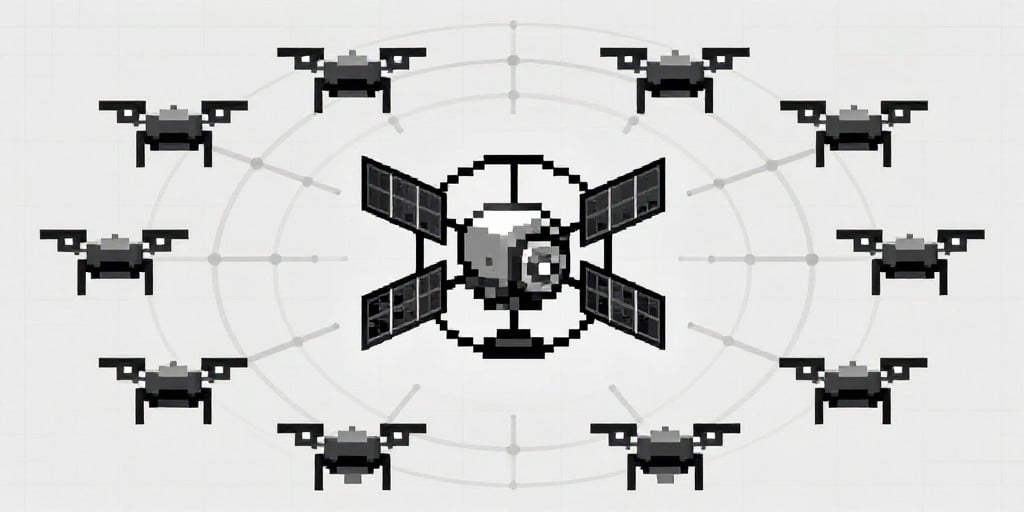
KDDI’s Unprecedented Drone‑Control Initiative via Starlink
On 22 July 2026, KDDI Corporation announced that it has begun remotely controlling drones using the Starlink satellite‑based broadband network. The move, reported by Mobile World Live, positions KDDI at the cutting edge of telecommunication services in Japan, where the company already commands a dominant share of the mobile market and operates a broad‑band infrastructure.
A Strategic Leap into Edge‑Computing and Remote Operations
KDDI’s decision to integrate Starlink’s low‑latency satellite connectivity into its drone operations is not merely a novelty; it is a calculated bet on the future of edge‑computing and remote‑sensing. The company’s core strengths—high‑speed mobile services and nationwide broadband coverage—are now being leveraged to enable real‑time, autonomous flight control from virtually anywhere in the country. This capability opens a new revenue stream in logistics, surveillance, and emergency response, sectors that have shown a growing appetite for rapid, reliable aerial data.
Technological Synergy with Starlink’s Architecture
Starlink’s constellation of low Earth orbit satellites delivers broadband speeds comparable to terrestrial 5G and, crucially, a latency as low as 20 ms. For drone pilots, latency is a life‑saving metric: it determines how quickly a command issued from a ground station can reach the aircraft and how fast the drone can react to changing conditions. By embedding KDDI’s existing network protocols into Starlink’s payload, the company can:
- Maintain stringent QoS guarantees for mission‑critical data, such as video feeds and telemetry.
- Leverage KDDI’s nationwide Roaming agreements to allow drones to operate seamlessly across regional borders without manual handovers.
- Capitalize on KDDI’s existing infrastructure for data aggregation and cloud storage, thereby keeping operational costs below industry averages.
Financial Implications and Market Position
KDDI’s market cap of ¥10.93 trillion and a price‑to‑earnings ratio of 15.66 indicate that investors view the company as reasonably valued relative to earnings. The recent price action—closing at ¥2,870.5 on 22 July 2026—situates the share just 2.6 % below the 52‑week high of ¥2,923, suggesting a bullish outlook. The expansion into drone control via Starlink can justify a future lift in earnings per share as the company monetizes new services.
However, the initiative carries risks:
- Regulatory compliance: Japan’s Civil Aviation Bureau imposes stringent licensing for UAV operations. KDDI must secure approvals that could delay go‑to‑market plans.
- Competitive pressure: Rival telecoms like NTT Docomo and SoftBank are already exploring similar satellite‑assisted drone services. KDDI must differentiate through service quality and cost efficiency.
- Technical integration: Merging terrestrial and satellite networks demands substantial engineering resources and could incur unforeseen operational costs.
Despite these challenges, KDDI’s robust cash position—evidenced by a current price close to its peak and a P/E ratio comfortably within industry norms—provides a cushion to absorb the upfront costs of this venture.
Conclusion: A Bold Step Toward Tomorrow’s Connectivity
KDDI’s remote‑drone control initiative, powered by Starlink, is a decisive move that transcends conventional telecom offerings. It demonstrates the company’s willingness to invest in frontier technologies and to diversify its service portfolio beyond mobile voice and data. If executed with disciplined risk management, this strategy could propel KDDI into a new class of “telecommunication‑plus‑aerospace” provider, strengthening its competitive moat in Japan’s saturated telecom market and setting a precedent for future satellite‑driven applications across Asia.