
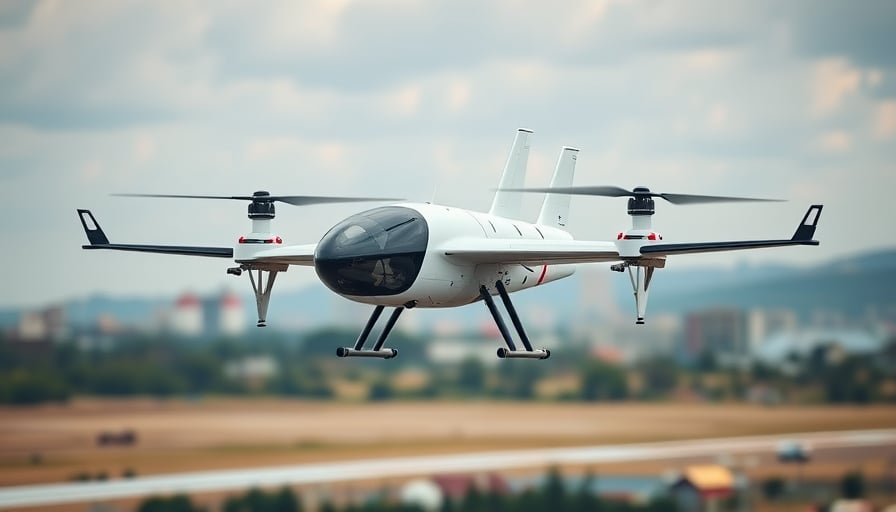
Joby Aviation Faces a Critical Turning Point as Wall Street Re‑evaluates Its Future
The electric‑air‑taxi pioneer Joby Aviation Inc. (NYSE: JOBY) has found itself under intense scrutiny from analysts and investors alike, as recent coverage underscores the company’s fragile path toward commercial viability. The company, headquartered in Santa Cruz, is attempting to launch an all‑electric vertical take‑off and landing (eVTOL) aircraft that promises a quiet, rapid, and convenient air‑taxi service. Yet its financial trajectory and competitive landscape paint a starkly different picture.
Analyst Sentiment Turns Defensive
On December 1, 2025, Goldman Sachs opened coverage of Joby with a sell recommendation. Analyst Anthony Valentini, whose view carries substantial weight on the capital‑market radar, signaled that the company’s valuation does not justify the optimistic growth narrative that has long propelled it. The sell stance is a clear repudiation of the bullish sentiment that previously drove JOBY’s market cap to $13.16 billion and a closing price of $14.43 on November 27, 2025.
The negative price‑to‑earnings ratio of ‑10.35 is a telltale indicator of the company’s persistent operating losses and the likelihood that investors will demand a steep discount for future profitability. Even as the 52‑week high reached $20.95 in August, the 52‑week low of $4.96 in April reflects the volatility that has become endemic to the eVTOL sector.
Competition Keeps Pressure Tight
Joby is not alone in courting the nascent urban‑mobility market. Archer Aviation (ACHR) has been highlighted as a direct competitor, with analysts comparing the two firms’ upside potential. Archer’s share price has already fallen approximately 20 % this year, a reaction that mirrors Joby’s own downward drift. Both companies are still seeking FAA Type Inspection Authorization (TIA), a critical regulatory hurdle that has proven more elusive and costly than initially anticipated.
In a broader context, Beta Technologies has been described as a “de‑risks” approach with its multi‑aircraft portfolio, suggesting that the eVTOL field is fragmenting into a more diversified, but also more fragmented, competitive landscape.
Revenue Trajectory and Market Sentiment
Although Powertechnic’s revenue figures (RM10.50 million in Q3 FY2025) are unrelated to Joby, their mention in the same news stream illustrates the broader volatility that pervades the aviation sector. Wall Street’s collective focus on “pullback mode” indicates that the market is re‑balancing after a surge of speculative enthusiasm for electric aircraft.
Conclusion: A Call for Realism
Joby Aviation’s ambition—to deliver a fast, quiet, and convenient air‑taxi service—is undeniably visionary. However, the confluence of a negative P/E, a recent sell from a marquee bank, and stiff competition from firms like Archer and Beta Technologies signals that the market has grown weary of the optimism that once surrounded JOBY. Stakeholders must confront the stark reality that without significant breakthroughs in regulatory approval, cost control, and revenue generation, the company’s lofty aspirations may remain unfulfilled.