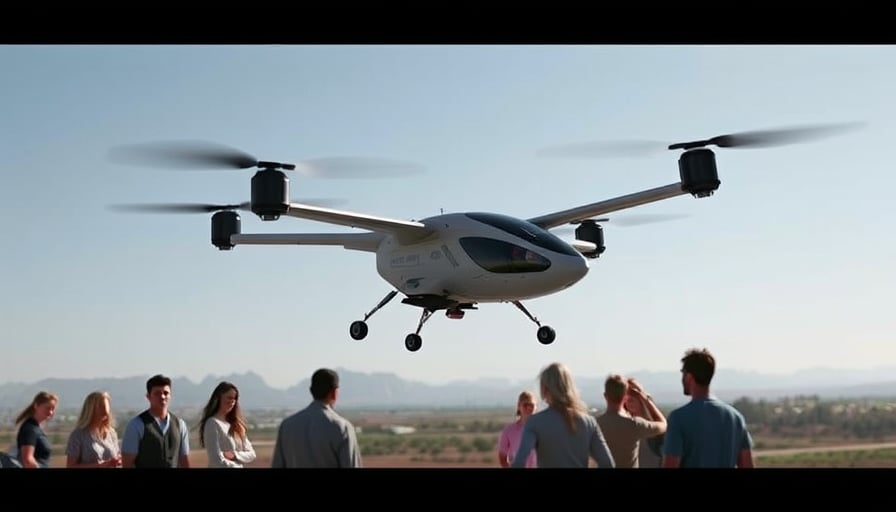
Joby Aviation Inc., a company based in Santa Cruz, United States, has been making waves in the aviation sector with its innovative approach to air travel. As an aircraft manufacturing company, Joby Aviation is at the forefront of developing an all-electric vertical take-off and landing (eVTOL) aircraft. This groundbreaking technology is poised to revolutionize urban air mobility by offering a fast, quiet, and convenient air taxi service. However, despite its ambitious vision, the company faces significant financial challenges that cannot be overlooked.
As of March 26, 2026, Joby Aviation’s stock closed at $8.1 on the New York Stock Exchange, a stark contrast to its 52-week high of $20.95 on August 3, 2025. This decline highlights the volatility and uncertainty surrounding the company’s financial health. The 52-week low of $4.96, recorded on April 6, 2025, further underscores the precarious nature of its market position. With a market capitalization of $8.29 billion, Joby Aviation’s valuation reflects both its potential and the risks inherent in its business model.
One of the most telling indicators of Joby Aviation’s financial struggles is its price-to-earnings (P/E) ratio of -9.13. This negative P/E ratio is a red flag for investors, signaling that the company is not currently profitable and may continue to face challenges in achieving profitability. The negative P/E ratio raises critical questions about the company’s ability to generate sustainable revenue and manage its expenses effectively.
Despite these financial hurdles, Joby Aviation remains committed to its mission of transforming urban air mobility. The company’s all-electric eVTOL aircraft promises to offer a seamless and environmentally friendly alternative to traditional ground transportation. By eliminating the need for runways and reducing noise pollution, Joby Aviation aims to make air travel more accessible and appealing to urban commuters.
However, the path to realizing this vision is fraught with challenges. The aviation industry is highly competitive, and Joby Aviation must navigate regulatory hurdles, technological advancements, and market acceptance. The company’s ability to secure partnerships, attract investment, and scale its operations will be crucial in determining its long-term success.
In conclusion, while Joby Aviation Inc. holds significant promise with its innovative eVTOL technology, the company’s financial instability poses a substantial risk. Investors and stakeholders must carefully weigh the potential rewards against the financial uncertainties. As Joby Aviation continues to push the boundaries of urban air mobility, its journey will be closely watched by industry observers and potential investors alike.