
Shenzhen Kaifa Technology Co., Ltd.: Navigating a Volatile Market Landscape
Shenzhen Kaifa Technology Co., Ltd. (KAIFA), a prominent player in the Chinese technology hardware sector, has found itself in the cross‑hairs of recent market turbulence. The company’s shares, which closed at 52.12 CNY on July 12, 2026, sit within a 52‑week range that spanned from 18.15 CNY to 66.20 CNY, reflecting the heightened volatility that has affected the broader A‑share market.
Market Context: “Black Monday” and Sector‑Wide Weakness
On July 13, 2026, the Shanghai Stock Exchange experienced a sharp sell‑off, with the Shanghai Composite falling more than 2 % and the Shenzhen Component dropping 3.48 %. The decline was particularly pronounced in technology‑heavy sectors such as electronic components, semiconductors, and advanced packaging. Over 4,600 stocks recorded losses, with 176 reaching the daily trading limit on the downside. This environment created headwinds for companies like KAIFA, whose core products—magnetic heads and hard disks—are integral to the global supply chain for data storage and semiconductor manufacturing.
The downturn was attributed in part to external shocks: a slump in South Korean equities and concerns over SK Hynix’s fourth‑quarter earnings. These developments tightened sentiment around AI hardware and semiconductor‑related stocks, sectors that are closely linked to KAIFA’s product line. In a market where liquidity is constrained, even firms with robust fundamentals can experience price pressure.
KAIFA’s Position Within the Industry
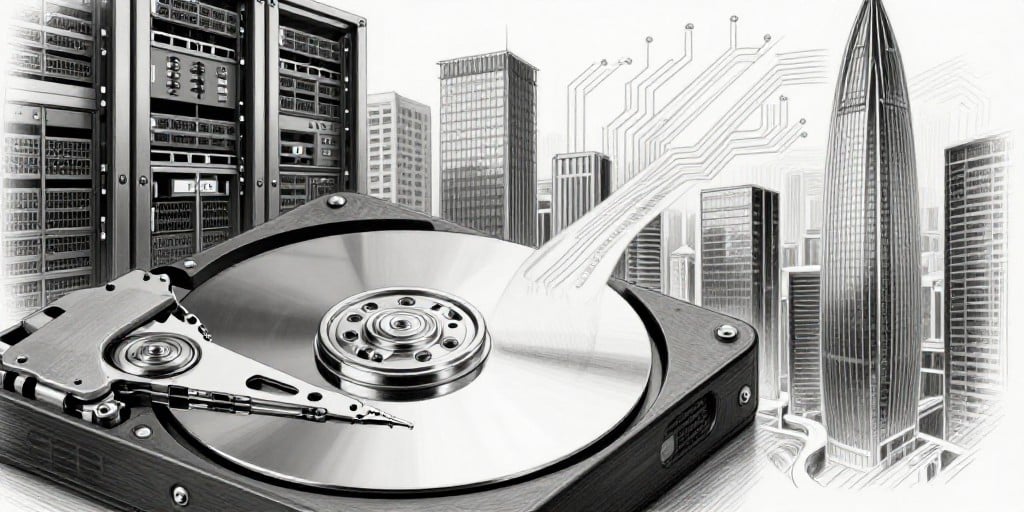
KAIFA’s business model revolves around the manufacturing and marketing of computer hardware, peripheral equipment, and communication devices. The firm’s flagship products—magnetic heads and hard disks—serve critical roles in data storage solutions that underpin cloud computing, enterprise servers, and consumer electronics.
Despite the recent market softness, KAIFA’s balance sheet remains solid. The company’s market capitalization stands at approximately 91.2 billion CNY, and its price‑earnings ratio is 75.89, indicative of the premium placed on growth prospects within the technology hardware domain. KAIFA’s recent trading activity aligns with broader sector trends, as investors weigh the potential for renewed demand in data center expansion and AI infrastructure deployment.
Industry Developments: Opportunities and Challenges
The broader semiconductor ecosystem has been in flux, as evidenced by the discussion surrounding long‑term capital needs in the industry. In July, Malaysian officials highlighted the necessity of upgrading the capital ecosystem to support the full value chain—from design to manufacturing. Although Malaysia’s focus is geographically distinct, the underlying message resonates globally: capital allocation and risk assessment are critical to sustaining growth in high‑technology hardware production.
Meanwhile, in the United States, storage giant Micron announced a plan to invest over 250 billion US $ domestically by 2035, signaling sustained demand for storage solutions. This, coupled with the rapid revenue growth projected for domestic storage leaders such as 兆易创新 (Zhao Yi Xian Zhuan), suggests that the demand for core hardware components—an area where KAIFA holds expertise—may recover as the AI and cloud computing sectors accelerate.
Forward Outlook
KAIFA’s management continues to emphasize the company’s strategic focus on high‑performance storage technologies. The firm’s product portfolio positions it to benefit from the ongoing shift toward larger, more efficient data storage solutions required by AI and machine‑learning workloads. While short‑term market sentiment remains cautious, the long‑term trajectory of the data storage segment remains bullish, driven by increasing data generation and the need for reliable, high‑capacity storage.
Investors should monitor several key indicators:
- Demand from AI and cloud providers – Growth in these sectors translates directly into higher sales of magnetic heads and hard disks.
- Supply‑chain resilience – Any disruptions in component availability could constrain production capacity, impacting revenue.
- Capital allocation – As the broader market stabilizes, funding for research and development in next‑generation storage technologies will become pivotal.
In summary, KAIFA’s performance is tightly intertwined with the fortunes of the global data infrastructure market. While recent market volatility has exerted downward pressure on its share price, the firm’s core competencies and strategic positioning provide a foundation for future growth as the demand for advanced storage solutions continues to expand.