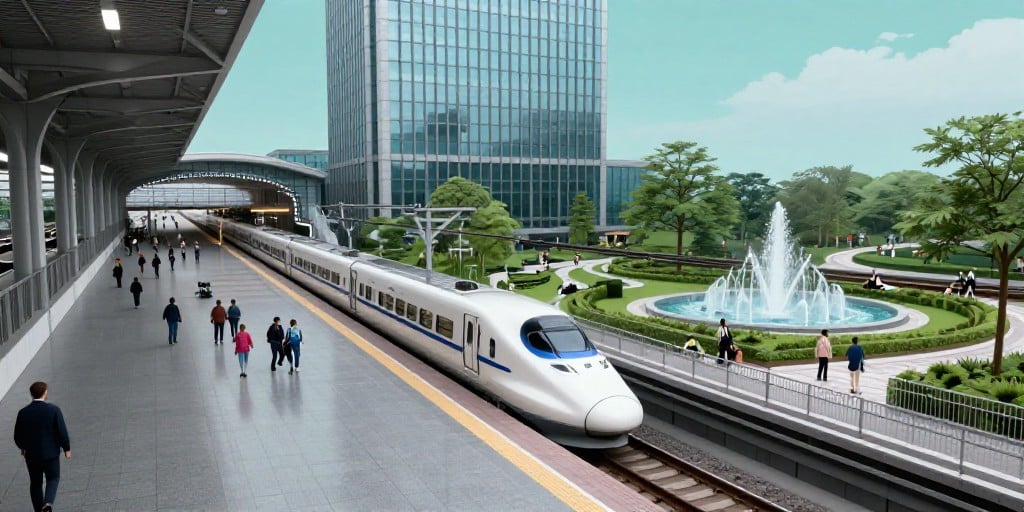
Keikyu Corporation, a prominent player in the industrials sector, particularly within the ground transportation industry, has recently been the subject of intense scrutiny and analysis. As a company listed on the Tokyo Stock Exchange, Keikyu’s financial performance and strategic initiatives are closely monitored by investors and industry experts alike. With a market capitalization of 432.22 billion JPY, the company’s influence in the transportation sector is undeniable, yet its diversified interests raise questions about its core competencies and strategic focus.
As of November 5, 2026, Keikyu’s stock closed at 1563.5 JPY, reflecting a significant recovery from its 52-week low of 1422 JPY on June 22, 2026. However, it remains below its 52-week high of 1668 JPY, achieved on July 28, 2026. This volatility in stock price underscores the challenges Keikyu faces in maintaining investor confidence amidst a rapidly evolving transportation landscape.
Keikyu Corporation’s primary business revolves around providing rail and bus mass transit services in Tokyo, Yokohama, and the Miura Peninsula. This core operation is critical, given the increasing demand for efficient and reliable public transportation in one of the world’s most densely populated regions. However, Keikyu’s strategic diversification into non-transportation sectors, including real estate development, hotel operation, leisure facilities, and supermarket chain operation, has sparked debate about the company’s long-term vision and operational focus.
The company’s price-to-earnings ratio of 15.65 suggests a moderate valuation, yet it raises questions about the sustainability of its earnings given its diversified portfolio. Critics argue that Keikyu’s foray into non-core businesses may dilute its focus and resources, potentially undermining its competitive edge in the transportation sector. The integration of real estate and leisure facilities near its railway system, while potentially lucrative, also exposes Keikyu to market risks outside its traditional expertise.
Moreover, the company’s strategic decisions must be evaluated in the context of broader industry trends. The ground transportation sector is undergoing significant transformation, driven by technological advancements and shifting consumer preferences. Keikyu’s ability to innovate and adapt to these changes will be crucial in maintaining its market position. The company’s investment in non-transportation interests must be carefully balanced to ensure it does not detract from its core mission of providing efficient and reliable transit services.
In conclusion, Keikyu Corporation stands at a crossroads, with its diversified interests offering both opportunities and challenges. The company’s financial performance, strategic initiatives, and ability to navigate industry trends will be critical in determining its future trajectory. Investors and stakeholders must remain vigilant, scrutinizing Keikyu’s decisions to ensure they align with the company’s long-term vision and core competencies. As Keikyu continues to evolve, its success will depend on its ability to balance diversification with a steadfast commitment to its foundational transportation services.