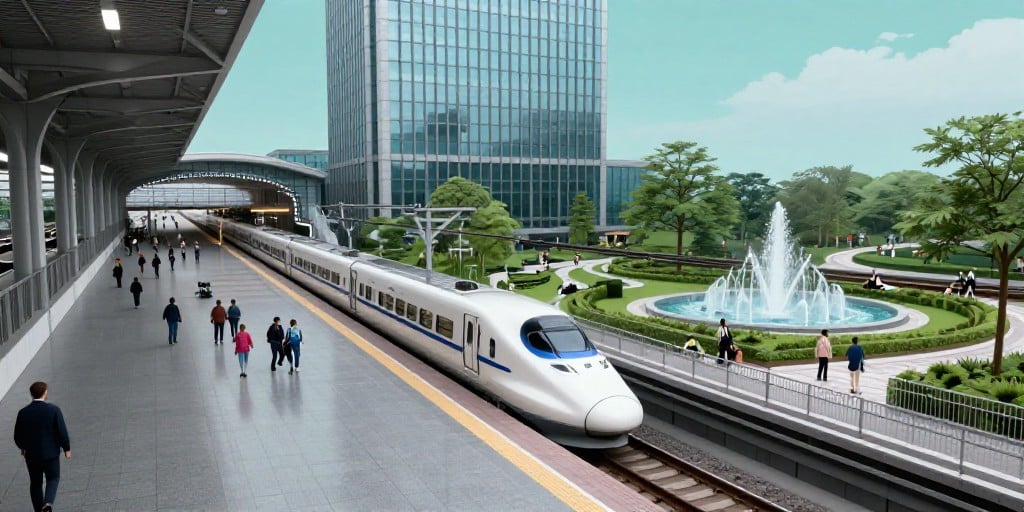
The current market position of Keikyu Corp demands a rigorous examination of its operational breadth and its ability to sustain value within the highly competitive industrial sector. Operating primarily within the ground transportation industry, the company has established a significant footprint, providing essential rail and bus mass transit services across the critical corridors of Tokyo, Yokohama, and the Miura Peninsula. However, as the company navigates the complexities of the Tokyo Stock Exchange, the question remains whether its diversified model is a robust engine for growth or merely a defensive hedge against the volatility of transit demand.
Keikyu Corp’s strategic architecture relies heavily on a non-transportation ecosystem designed to capture consumer spending around its railway network. By integrating real estate development, hotel operations, leisure facilities, and supermarket chains, the company attempts to create a closed-loop economic environment. This vertical integration is intended to maximize the utility of its transit assets, turning mere commuters into lifelong consumers of its secondary services. Yet, this reliance on localized, non-transportation interests places a heavy burden on the company to maintain high occupancy and consumption rates in an increasingly unpredictable economic landscape.
Financial metrics provide a sobering look at the company’s current standing. With a market capitalization of 418,580,000,000 JPY, Keikyu Corp is a substantial player, yet its stock performance reveals a period of notable fluctuation. The 52-week high of 1,668 JPY, achieved in July 2026, stands in stark contrast to the 52-week low of 1,422 JPY recorded in June 2026. As of the close on November 19, 2026, the price sat at 1,595.5 JPY. While the stock has recovered significantly from its lows, it remains below its annual peak, raising questions about its momentum.
With a Price-to-Earnings (P/E) ratio of 16.45, investors are forced to decide if the company’s diversified portfolio justifies its current valuation. Is the synergy between its transit lines and its real estate and retail interests sufficient to drive premium returns, or is the company simply a massive industrial entity struggling to outpace the rising costs of maintaining extensive infrastructure? For Keikyu Corp, the path forward requires more than just maintaining service; it requires proving that its multifaceted business model can deliver consistent, aggressive growth in a saturated market.