
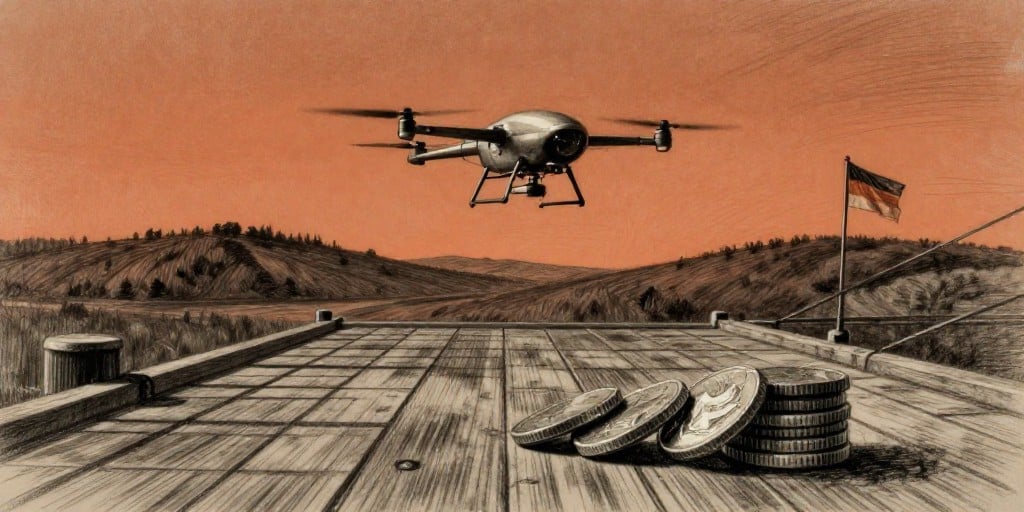
Kratos Defense & Security’s Rapid Ascension in the Defense Sector
Kratos Defense & Security Solutions Inc. (NASDAQ: KRATOS) has once again proven that it can transform modest beginnings into a formidable presence in the global defense market. Within a single day, the company captured headlines that span from impressive long‑term investor returns to strategic expansions and potential blockbuster contracts with the German military. Each development underscores the company’s core strengths—weapon‑system lifecycle support, advanced surveillance, and, most prominently, its portfolio of unmanned aerial systems (UAS).
Long‑Term Investor Returns That Speak Volumes
A recent Benzinga feature highlighted that an investment of merely $100 in Kratos Defense & Security ten years ago would have yielded a staggering return today. This narrative is not anecdotal; it is rooted in the company’s consistent growth trajectory, culminating in a 52‑week high of $134 and a market capitalization exceeding $10 billion. The company’s price‑earnings ratio of 317.66 reflects both high investor confidence and the premium placed on its cutting‑edge defense technologies. For those who entered the market during the company’s early stages, the payoff has been disproportionate to the risk, a testament to Kratos’ strategic vision and execution.
Scaling Production to Meet Growing Demand
Kratos’ recent expansion of its Oklahoma City manufacturing facility—reported by Global News Wire—signals a decisive move to accelerate production of its flagship UAS platforms: the Valkyrie, Firejet, and other jet‑drone systems. By increasing capacity in a hub that already supports advanced aerospace manufacturing, the company is positioning itself to meet escalating orders from both the U.S. Department of Defense and international allies. This expansion not only reduces lead times but also enhances the company’s bargaining power in future procurement negotiations.
Anticipating a Billion‑Dollar German Contract
The Handelsblatt article paints a vivid picture of the German Armed Forces’ ambition to field 500 high‑performance combat drones by 2029, a move that could secure a multi‑billion‑dollar order for suppliers. While the German government has not formally announced a contract, the strategic landscape is unmistakable: major defense contractors—including Rheinmetall, Airbus, and the U.S.‑based startup Kratos—are all vying for participation. The fact that Kratos is a key partner in Airbus’ joint venture to develop the Valkyrie for the Bundeswehr places the company squarely in line for potential involvement.
Kratos’ involvement with the Valkyrie—a drone capable of carrying up to 500 kg of ordnance over ranges exceeding 1,000 km—aligns perfectly with the German military’s requirement for deep‑strike unmanned platforms that can operate alongside manned fighters. If the German procurement cycle follows the aggressive timeline hinted at by insiders, Kratos’ advanced manufacturing capabilities and proven combat‑ready systems could enable it to secure a substantial share of the order, whether through a direct contract or as a component supplier in a consortium.
Strategic Implications for Stakeholders
For investors, Kratos’ dual narrative of historic returns and forward‑looking production capacity presents a compelling case. The company’s focus on high‑value, technology‑dense defense solutions positions it favorably against competitors that rely on more commoditized contracts. Moreover, the potential German deal—whether as a lead contractor or a critical component supplier—could catalyze further revenue growth and bolster the company’s cash flow, thereby supporting dividend prospects or additional research and development investment.
For defense analysts, Kratos’ trajectory underscores the increasing importance of integrated, end‑to‑end systems in modern warfare. Its blend of weapon‑system lifecycle support, surveillance, and IT engineering offers a comprehensive suite that meets the evolving needs of U.S. and allied forces. The company’s rapid scaling of production facilities demonstrates a readiness to transition from prototype to mass‑production, an essential capability when governments are pressed for speed and reliability.
For policymakers, the story illustrates the strategic advantage of investing in domestic defense innovation hubs. By expanding manufacturing capabilities in regions such as Oklahoma City, Kratos strengthens the U.S. industrial base and ensures that critical defense technologies can be produced domestically, reducing supply‑chain vulnerabilities.
Conclusion
Kratos Defense & Security Solutions Inc. is not merely riding a wave of market optimism; it is actively shaping the future of unmanned warfare. The convergence of robust investor returns, strategic production expansion, and the looming prospect of a high‑stakes German contract creates a synergistic environment that could propel the company into an even more influential position within the global defense ecosystem. Stakeholders who recognize and capitalize on these dynamics will be best positioned to benefit from Kratos’ continued ascent.