
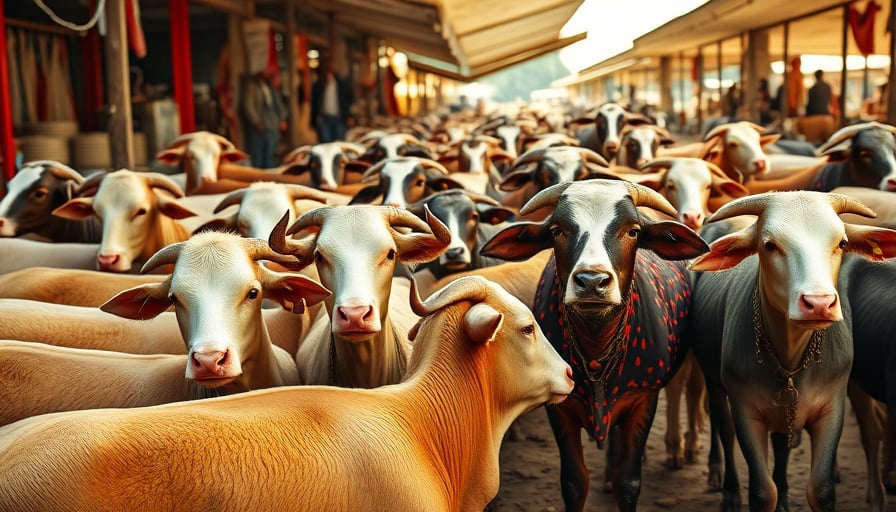
The live cattle market, a critical component of the raw materials sector, has recently been the focus of significant attention due to its performance on the Chicago Mercantile Exchange (CME). As of December 4, 2025, the close price for live cattle stood at $227.15, reflecting a dynamic market influenced by various economic factors.
Market Overview
The live cattle market has experienced notable fluctuations over the past year. The 52-week high, recorded on August 26, 2025, reached $246.775, indicating a period of robust demand and favorable market conditions. Conversely, the 52-week low, observed on December 9, 2024, was $187.825, highlighting the volatility and sensitivity of the market to external pressures.
Economic Influences
Several factors have contributed to the recent pricing trends in the live cattle market. Supply chain disruptions, changes in consumer demand, and shifts in feed costs have all played pivotal roles. Additionally, broader economic indicators, such as inflation rates and currency fluctuations, have impacted the market’s stability.
Market Dynamics
The live cattle market’s performance is closely tied to the agricultural sector’s health and the broader economic environment. As a raw material, live cattle are subject to the same market forces that affect other commodities, including geopolitical tensions and trade policies. The CME remains a primary exchange for trading live cattle futures, providing a platform for market participants to hedge against price volatility.
Future Outlook
Looking ahead, the live cattle market is expected to continue its trajectory of fluctuation, influenced by ongoing economic developments and market sentiment. Analysts suggest that monitoring feed costs, consumer demand trends, and global economic conditions will be crucial for predicting future price movements.
In conclusion, the live cattle market remains a vital component of the raw materials sector, with its performance closely watched by investors and industry stakeholders. As the market navigates through economic uncertainties, its resilience and adaptability will be key factors in shaping its future trajectory.