
Market Context and Recent Catalysts
On 7 May 2026 the Shanghai Stock Exchange’s three major indices all posted gains, reflecting a broader rally in China’s photovoltaic sector. The China Securities Index – Photovoltaic Industry climbed 1.6 %, buoyed by significant moves in constituent stocks such as Junda Shares, Laplace, Maiwei, and several others. Within this environment, the Yinhua Photovoltaic ETF (516880) advanced 1.42 %, trading volume surpassing 16 million CNY and expanding its net assets to 12.08 billion CNY. The ETF’s top holdings include TBEA, Longi Green Energy, SunPower, TCL Technology, and Tongwei, underscoring investors’ continued confidence in China’s solar leaders.
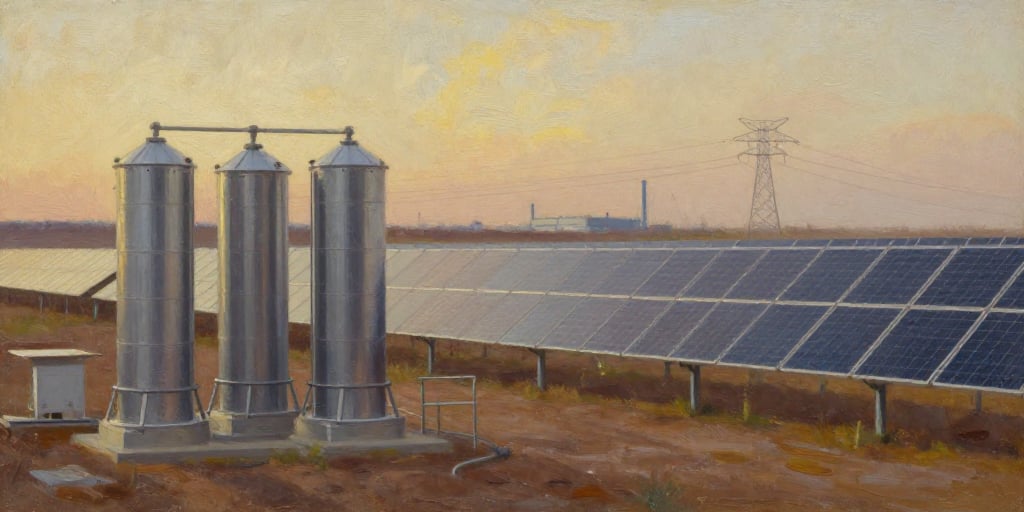
A key driver of the sector’s optimism was the formal inauguration of China Datang’s Zhongwei Yun Base – a 500 MW photovoltaic plant that marks the first large‑scale “算电协同” (electricity‑computing collaborative) green‑energy supply project in the country. The plant’s operational status signals a tightening of China’s green‑energy supply chain and reinforces the country’s ambition to deliver clean power directly to data‑center and high‑tech consumers. The project’s launch is expected to lift demand for monocrystalline silicon, a core input for Longi’s product suite.
Longi’s Performance Amid Industry‑Wide Struggles
Despite the favorable backdrop, the photovoltaic industry remains under pressure. According to a recent first‑quarter earnings report, the sector’s 22 leading firms recorded total revenue of 95.9 billion CNY, a decline of more than 11 % YoY, and a consolidated loss of 10.6 billion CNY. Longi Green Energy, together with Tongwei and TCL Zhonghuan, has reported ten consecutive quarters of net loss, a trend that highlights the sector’s protracted “anti‑congestion” phase and the need for structural adjustments.
Longi’s own fundamentals reflect this challenge. As of 29 April 2026, the share price stood at 16.46 CNY, a moderate 3 % drop from its 52‑week high of 23.57 CNY. The market cap is 124.7 billion CNY, and the price‑earnings ratio is a negative 18.08, indicating that investors still view the company’s earnings prospects skeptically despite its leading market position.
Strategic Shift Toward Energy Storage
In the same period, Longi’s chairman, Zhong Bao‑shen, announced a strategic vision to bring the company’s energy‑storage business to parity with its photovoltaic operations within five years. At the company’s earnings conference on 30 April, Chairman Zhong outlined an expected 6 GWh of storage shipments for the current year, with further targets yet to be defined. The company has pursued this objective through a 62 % stake in Suzhou Jing‑Control Energy Technology, a specialist in lithium‑ion battery storage systems, and through the establishment of a U.S. subsidiary to navigate regulatory requirements.
This move positions Longi against earlier‑mover competitors such as JinkoSolar, Trina Solar, and SunPower, who have already built substantial storage portfolios. By aligning its storage offering with its photovoltaic business, Longi seeks to diversify revenue streams and mitigate the cyclical nature of solar module sales.
Market Implications
The launch of the Zhongwei Yun Base, coupled with the rising prominence of energy‑storage investments, suggests that Longi is well‑placed to capitalize on the next phase of China’s renewable‑energy evolution. While industry earnings remain under pressure, the company’s dual focus on monocrystalline silicon manufacturing and storage technology may provide a competitive advantage as demand for integrated solar‑storage solutions grows.
Investors should monitor Longi’s quarterly performance for signs of cost optimization and margin improvement, as well as the progress of its storage deployment. The company’s negative P/E and declining share price underline the short‑term valuation headwinds, yet its strategic positioning and ETF inclusion signal a longer‑term upside potential amid China’s aggressive clean‑energy agenda.