
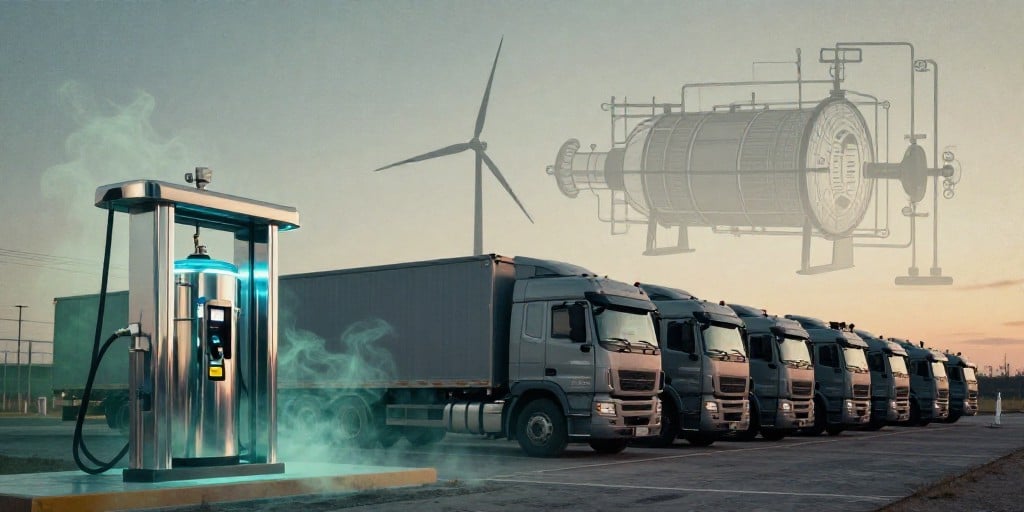
NEL ASA, a prominent player in the hydrogen industry, has been recognized for its pivotal role in advancing transition technologies, particularly for heavy-vehicle fleets. As the hydrogen market evolves, the company’s strategic initiatives are increasingly relevant amid the current economic and infrastructural challenges.
Operating under the Oslo Bors ASA, NEL ASA is a company within the Industrials sector, specifically in the Electrical Equipment industry. The company, which trades in Norwegian Krone (NOK), has a market capitalization of 4.28 billion NOK. Despite a negative price-to-earnings ratio of -3.47, NEL ASA has demonstrated resilience with a close price of 2.33 NOK as of June 25, 2026. The company’s stock has experienced fluctuations, with a 52-week high of 3.955 NOK on May 25, 2026, and a low of 1.919 NOK on February 25, 2026.
Founded in 1927 and headquartered in Oslo, Norway, NEL ASA has transitioned from its former identity as DiaGenic ASA to its current name in October 2014. The company specializes in hydrogen solutions, offering a comprehensive suite of products and services for producing, storing, and distributing hydrogen globally from renewable energy sources. NEL ASA operates through three primary segments: Hydrogen Fueling, Hydrogen Solutions, and Hydrogen Electrolyser.
The Hydrogen Fueling segment is notable for its H2Station hydrogen fueling stations, which cater to both fuel cell electric vehicles and conventional vehicles, including cars, buses, trucks, and forklifts. These stations are designed to provide fast fueling and extended range, addressing the needs of diverse applications. Additionally, NEL ASA’s Hydrogen Solutions segment focuses on hydrogen plants based on water electrolysis technology, serving various industries. The company also engages in real estate businesses, further diversifying its portfolio.
In the context of the hydrogen market, NEL ASA, alongside Trimble and dynaCERT, has been highlighted for its potential to influence the adoption of hydrogen technologies, particularly in emerging economies. The commentary underscores the importance of practical, interim solutions as the transition to battery or fuel-cell systems for large fleets is recognized as a long-term endeavor. Hydrogen is positioned as a near-term alternative, offering a flexible and emission-free mobility solution.
The strategic importance of NEL ASA within the sector is evident as it contributes to shaping a more sustainable and efficient transportation landscape. The company’s efforts in advancing hydrogen technologies are crucial in addressing the significant infrastructure challenges and sluggish economic conditions that currently impede the broader adoption of clean energy solutions. As the hydrogen market continues to evolve, NEL ASA’s role as a key player in this transition is likely to grow, reinforcing its position as a leader in the industry.