Netlist Inc. Accelerates the DDR5 AI Memory Revolution
Netlist Inc. has just unveiled its next‑generation LIGHTNING™ Ultra‑Low‑Latency (ULL) DDR5 RDIMM family, targeting the high‑stakes world of Agentic AI and memory‑intensive enterprise workloads. The company, which has long specialized in computer memory subsystems for servers, is now positioning itself as the critical enabler of the forthcoming wave of AI‑powered data centers.
A Technological Leap for Agentic AI
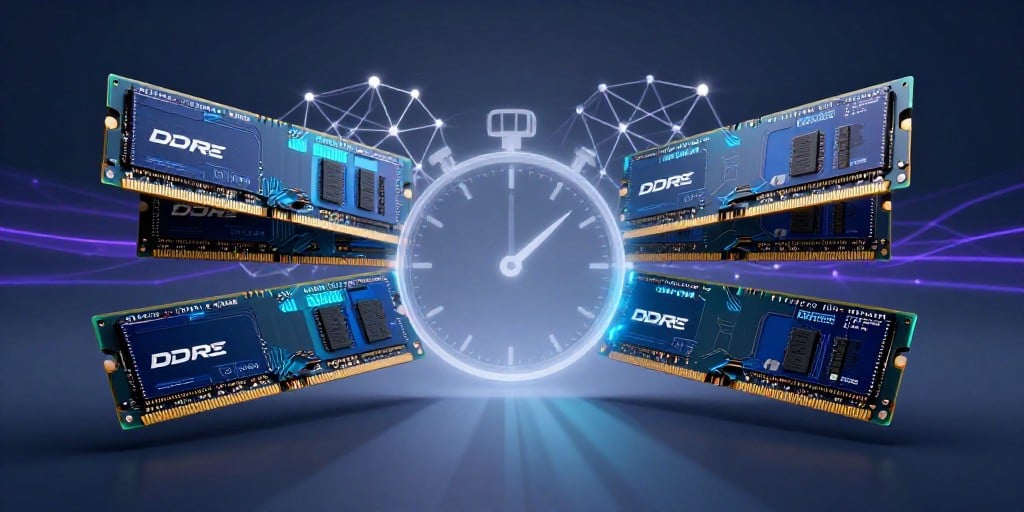
The newly announced DDR5‑6000 and DDR5‑6400 products are engineered on Netlist’s proven ULL architecture, delivering up to 10 % lower loaded memory latency compared with conventional DDR5 RDIMMs. Internal tests on the latest Intel and AMD server platforms confirm this advantage, while third‑party evaluations indicate meaningful performance gains for latency‑sensitive workloads such as large language models (LLMs), vector databases, and retrieval‑augmented generation (RAG). By offering a JEDEC‑compatible, drop‑in solution, Netlist eliminates the typical integration headaches that accompany specialized memory modules.
Why Latency Matters
When AI models grow to billions of parameters, the data they must access during inference is no longer confined to processor caches. Main‑memory latency becomes a bottleneck, throttling throughput and inflating response times. Netlist’s ULL architecture is designed to keep memory‑resident datasets within reach, thereby enhancing the responsiveness of both workstations and servers that run Agentic AI workloads.
Market Context: A $6.8 Billion Opportunity
The DDR5 AI server memory market is projected to swell from $2.14 billion in 2025 to $6.80 billion by 2035, a 12.25 % CAGR. This growth is driven by:
| Driver | Impact |
|---|---|
| 256 GB DDR5 modules | Enables higher server capacities without increasing DIMM slots |
| MRDIMM and CXL expansion | Provides the bandwidth and capacity required for accelerator‑rich systems |
| Servers >2 TB DDR5 | Expected to generate a $4.42 billion market by 2035 |
North America dominates the scene, capturing 50 % of the 2025 market value, followed by Asia Pacific (28 %) and Europe (14 %). Netlist’s products are perfectly aligned with these trends, offering the low‑latency, high‑capacity memory that AI data centers will demand.
Netlist’s Strategic Positioning
- Specialized Focus – Unlike generic memory vendors, Netlist concentrates on the niche of memory subsystems for high‑performance computing. This focus has allowed the company to develop deep expertise in ULL technology.
- OEM Partnerships – By targeting original equipment manufacturers, Netlist secures a pipeline of large orders from server builders who prioritize performance.
- Scalable Innovation – The company’s roadmap includes continued expansion of the LIGHTNING line, ensuring that it can keep pace with the escalating bandwidth and capacity needs of AI workloads.
Financial Reality Check
Despite a market capitalization of $2.05 billion, Netlist’s valuation metrics are a stark reminder of the risks inherent in the sector:
- P/E Ratio: 2,257.69 – a figure that reflects either future growth expectations or potential overvaluation.
- Stock Volatility: The 52‑week low of $0.45 and high of $7.00 indicate significant price swings, underscoring the speculative nature of the company’s stock.
- Recent Price: $4.85 on 2026‑09‑10, suggesting a modest valuation relative to its market cap.
While the company’s financials suggest that investors may be cautious, the strategic relevance of its products in a rapidly expanding market cannot be dismissed. Netlist’s next‑gen DDR5 RDIMMs are poised to become a cornerstone for the next wave of AI servers, and the company’s focus on ultra‑low latency could give it a decisive edge over competitors.
Bottom Line
Netlist Inc. is not merely adding another DDR5 module to its catalog; it is delivering a performance‑critical solution that addresses the core latency bottleneck of Agentic AI. In a market that is projected to reach $6.8 billion by 2035, Netlist’s ULL technology positions it as a key player in the next era of AI infrastructure. Investors and OEMs alike should take note: the company’s innovations are not just incremental—they are foundational to the performance and scalability demands that will define AI workloads in the coming decade.