
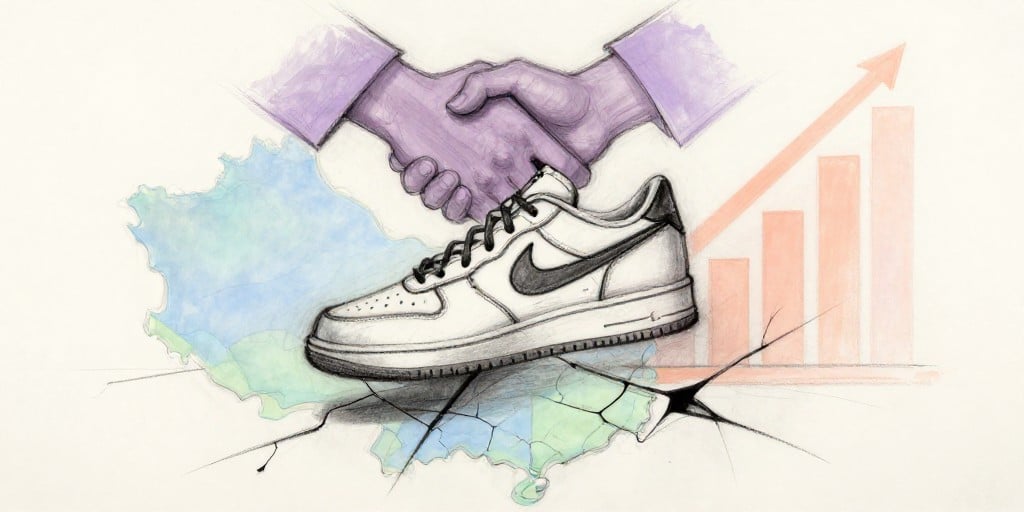
Nike Inc. Faces Market Pressure Amid China Channel Exit and Ongoing Intellectual‑Property Concerns
Nike Inc. (NYSE: NKE) has announced the termination of its direct sales platform in mainland China effective January 1, 2027, after 27 years of partnership with local distributor Taobo International. The decision follows a sustained decline in demand for the brand’s flagship Air Jordan and other high‑profile lines, and a broader shift in consumer preferences toward competitors such as Hoka, On Running, and Salomon.
1. Channel Strategy Shift
- Termination of Taobo partnership – On July 22, 2026, Taobo International released a public notice stating that Nike will cease platform sales in mainland China.
- Rationale – Nike cited the need to regain control over pricing and brand positioning. The move is intended to curb the proliferation of discounted and counterfeit products that have eroded consumer trust.
2. Sales and Financial Impact
- Market contraction – Nike’s 2026‑Q2 revenue for Greater China fell to US $1.297 billion, a 12 % year‑on‑year decline. This represents the eighth consecutive quarter of negative growth.
- Valuation pressure – The company’s market capitalization fell from over US $94 billion at the end of 2025 to US $62.6 billion on July 23, 2026. This represents a loss of approximately US $31.5 billion in one year, roughly the value of a single Adidas Inc. (NASDAQ: ADS) firm.
3. Counterfeit Enforcement
- Vietnam seizure – U.S. Homeland Security information prompted Vietnamese authorities to raid a factory in Ho Chi Minh City, seizing nearly 50,000 pairs of counterfeit Nike, Nike Air, and Air Jordan shoes valued at about US $3.8 million.
- Nike’s position – The company has stated it has never authorized the manufacturer (MP Company) or any of its affiliates to use its trademarks.
4. Macro‑Economic Context
- U.S. tariff policy – President Trump’s reinstatement of a 10–12.5 % duty on imports from 60 economies, targeting forced‑labour goods, may indirectly affect Nike’s supply chain costs and pricing strategy.
- Commodity prices – The rise in WTI crude to US $89.31, driven by Middle East tensions, increases raw‑material costs, potentially compressing margins across the apparel sector.
5. Strategic Implications
Nike’s decision to exit the Chinese direct‑sales channel reflects a broader realignment toward controlled, direct‑to‑consumer operations. The brand is likely to consolidate its focus on premium and digitally‑enabled product lines, while tightening enforcement against intellectual‑property infringements abroad. The company must monitor the impact of U.S. tariff changes on its global supply chain and adjust pricing strategies accordingly to maintain profitability within its consumer‑discretionary segment.