
NIO Inc. Advances Its Battery‑Swap Ecosystem Amid Expanding Global Reach
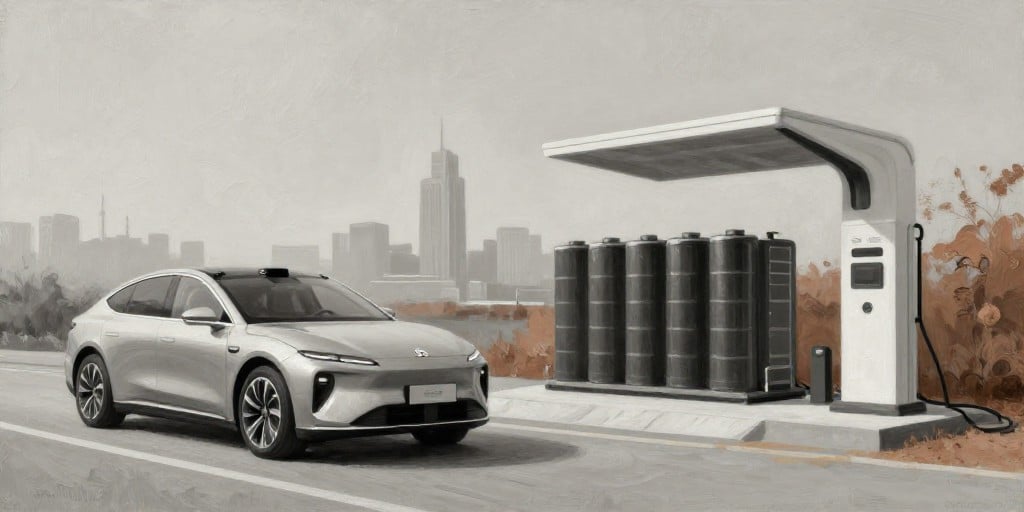
NIO Inc. (09866.HK) has marked a significant milestone in its battery‑swap strategy, launching the first batch of its fifth‑generation swap stations across seven major Chinese cities on 7 August 2026. The new stations, located in Beijing, Shanghai, Guangzhou, Suzhou, Hefei, Chengdu and Quanzhou, were inaugurated with the completion of the company’s 4,000th swap station at the Qiaoxiang Gymnasium in Quanzhou. The facility is the first of its class and integrates the newly deployed “Firefly” platform into the national network.
The rollout is part of NIO’s broader charging and battery‑swap infrastructure, which now encompasses 9,184 service points nationwide: 4,012 battery‑swap stations, 5,172 charging stations, and 29,855 charging piles. Together, the network supports more than 120 million battery swaps to date, a figure that underscores the company’s commitment to delivering a seamless ownership experience for its premium EV clientele.
In the same week, NIO’s flagship model, the ES9, completed its 20,000th delivery, an achievement that underscores the firm’s robust demand generation. The delivery was personally overseen by founder, chairman and CEO William Li, who presented the vehicle to Xiao Wenhua, chairman of Huaxiangyuan Tea Industry, further highlighting the company’s outreach beyond the automotive sector.
Financially, NIO’s stock has shown resilience. As of 6 August 2026, the share price traded at HKD 36.86, positioned well below its 52‑week low of HKD 34.82 yet comfortably within the range of its 52‑week high of HKD 61.75. The company’s market capitalization stands at HKD 92.705 billion, reflecting investor confidence in its long‑term strategy despite a price‑earnings ratio of –8.95, which signals that earnings remain negative but are expected to turn positive as scale and margins improve.
The expansion of the swap network comes at a time when the Chinese market is experiencing a surge in firm orders for high‑performance SUVs, exemplified by Haval’s H10, which has secured over 31,800 units. NIO’s aggressive deployment of battery‑swap infrastructure positions it to capture a larger share of the premium EV segment, where convenience and charging speed are paramount.
Externally, geopolitical developments—most notably the U.S. Department of Defense’s expanded blacklist of companies tied to the Chinese military—have raised concerns about supply chain vulnerability for Chinese automakers. While NIO is not currently listed, the broader environment underscores the importance of maintaining robust domestic infrastructure and a diversified supplier base. The company’s focus on battery technology and autonomous charging solutions may serve as a buffer against external pressures, reinforcing its competitive moat.
In sum, NIO’s rapid deployment of fifth‑generation swap stations, coupled with record delivery figures and a growing charging network, signals a decisive move toward operational excellence. The company’s strategic initiatives align with its long‑term vision of becoming a global leader in electric mobility, leveraging technology, scale, and customer experience to navigate an increasingly complex market landscape.