
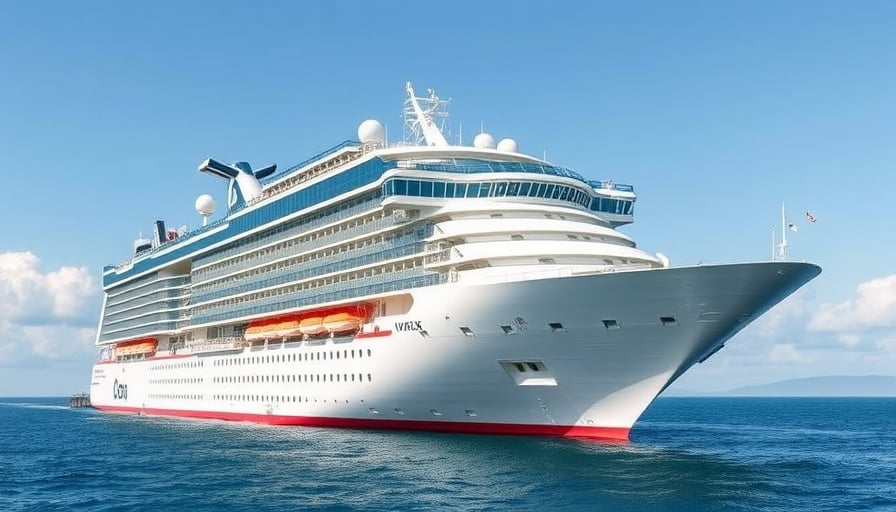
Norwegian Cruise Line Holdings Ltd. Faces Activist‑Led Turnaround Effort
Norwegian Cruise Line Holdings Ltd. (NCLH) has entered a pivotal phase as activist investment firm Elliott Management disclosed a stake of more than 10 % in the company on February 17 , 2026. The move has immediately positioned Elliott as a key player in the cruise operator’s governance and strategy, with a clear mandate to catalyze a turnaround of what Elliott describes as an underperforming, “laggard” business.
Elliott’s Letter to the Board and Shareholders
In a letter that was made public on February 12 , 2026, Elliott demanded that the board of directors take decisive action to address the company’s prolonged weak performance. The correspondence outlined a comprehensive board overhaul, the implementation of a new business plan, and the execution of strategic initiatives that could unlock “more than 150 % upside for shareholders.” The letter also highlighted the need for a fresh focus on capital discipline, cost management, and fleet optimization.
Elliott’s presentation, released alongside the letter, underscored a series of potential operational efficiencies and revenue‑generation tactics. These include accelerated deployment of newer, fuel‑efficient vessels, a tighter alignment of itineraries with high‑margin destinations, and a more aggressive marketing push through its direct consumer channels. The firm also called for a review of the company’s incentive sales programs and a recalibration of its pricing strategy to better capture premium market segments.
Market Reaction and Stock Performance
The announcement sent NCLH’s shares higher on February 17 , 2026, with an intraday surge of approximately 7 % as investors reacted to the prospect of a decisive change in corporate governance and strategy. The stock closed at $24.35, up from $22.50 the previous trading day, reflecting a renewed investor confidence. Analysts noted that the market’s response was amplified by NCLH’s 52‑week low of $14.21, which left a substantial upside potential relative to the current price.
Despite the positive short‑term movement, several research houses—including Citi Research—issued cautionary notes on the feasibility of Elliott’s ambitious turnaround plan. Citi highlighted that the company’s long‑standing capital constraints, high debt levels, and competitive pressure from larger cruise operators could impede the execution of Elliott’s proposed reforms. The research team also flagged potential regulatory hurdles in the U.S. and European markets that could delay fleet expansion and new route approvals.
Strategic Context
Norwegian Cruise Line has historically positioned itself as a flexible, mid‑priced player in the global cruise market, offering a diverse range of itineraries and themed cruises. Its primary operations are centered in Miami, United States, and the company markets through retail, travel agents, international and incentive sales, and direct consumer channels. While the company has a market capitalization of approximately $10.97 billion and a price‑earnings ratio of 17.23, its performance has lagged behind peers, prompting the activist intervention.
Elliott’s stake is not only significant in magnitude but also in influence. By aligning its interests with a broad base of shareholders, the firm positions itself to leverage its position in corporate governance forums and to advocate for changes that could improve operational efficiency and profitability. The firm’s track record in extracting value from underperforming companies lends credibility to its approach, although the execution risk remains high given the cyclical nature of the cruise industry and the lingering impact of global travel disruptions.
Forward‑Looking Outlook
The key question for NCLH will be whether the board can accommodate Elliott’s proposed changes without diluting the company’s strategic focus. A successful collaboration could unlock value for shareholders, improve the company’s competitive stance, and set a new trajectory for growth in the post‑pandemic cruise landscape. Conversely, a failure to implement the necessary reforms could result in continued underperformance and shareholder erosion.
Investors will likely monitor the board’s response to Elliott’s letter and the company’s next quarterly report for tangible progress indicators. Any sign of concrete action—such as board resignations, new executive appointments, or the announcement of a revised strategic roadmap—will be crucial in determining the trajectory of NCLH’s turnaround effort.