Ripple’s Ascendant Trajectory: Bank Charter, Stablecoin Expansion, and Market Implications
Ripple, the blockchain enterprise behind the XRP ledger, has reached a series of milestones that collectively signal a new chapter in its pursuit of mainstream financial integration. In the past week, the company secured the final regulatory approval for its national trust bank, broadened its stablecoin reach through a partnership with Robinhood, and deepened relationships with institutional partners such as BNY Mellon and BlackRock. These developments intersect with broader market dynamics that are reshaping the U.S. cryptocurrency landscape.
1. Regulatory Milestone: Final OCC Approval for Ripple National Trust Bank
On 27 October 2026, Ripple announced that the U.S. Office of the Comptroller of the Currency (OCC) had granted the final approval necessary to establish Ripple National Trust Bank. The approval, confirmed by multiple outlets—including CryptoPotato, Decrypt, CoinGape, and Crypto‑News‑Flash—enables Ripple to operate as a federally supervised national trust bank, a first for a technology‑centric fintech company.
This charter permits Ripple to issue and manage its own stablecoin, RLUSD, under the regulatory framework that traditionally applied to traditional banks. The move is expected to increase institutional confidence in Ripple’s digital‑asset products, streamline compliance for on‑broadening use cases, and provide a robust platform for cross‑border settlements that leverage the XRP ledger.
2. Stablecoin Expansion: RLUSD Now on Robinhood’s Platform
Shortly after the bank charter announcement, Ripple and Robinhood expanded their partnership to bring RLUSD to both retail and institutional markets. The collaboration, reported by CoinTelegraph, Decrypt, and CoinGape, positions RLUSD as a readily accessible stablecoin for the 28.6 million Robinhood customers. Robinhood’s decision follows a recent earnings report that highlighted rising crypto revenue, indicating that the brokerage sees stablecoins as a key driver for future growth.
Robinhood’s integration of RLUSD is not merely a distribution channel. The partnership also leverages Ripple’s treasury software and trading‑loan infrastructure, offering users liquidity solutions and institutional-grade settlement services. The combined offering is poised to compete with established stablecoins such as USDC and USDT, especially in markets where regulatory clarity and institutional trust are paramount.
3. Institutional Partnerships and Tokenized Asset Initiatives
Ripple’s strategic alliances extend beyond retail platforms. On 27 October 2026, the company announced a deeper partnership with BNY Mellon aimed at exploring tokenized trade finance on the XRP ledger. Articles from Coingape and CryptoBriefing detail how BNY Mellon will expand its digital‑asset custody services through Ripple, advancing use cases such as tokenized trade finance and other tokenized asset classes.
In a related development, BlackRock joined Ripple‑partnered SBI Holdings and Startale to link tokenized money‑market funds (MMFs) with the Japanese yen stablecoin, JPYSC. This memorandum of understanding, highlighted by Coingape, signals a growing appetite for tokenized funds among legacy asset managers. The partnership could pave the way for broader institutional adoption of blockchain‑based asset servicing, especially in the Asia‑Pacific region.
4. Market Dynamics and Price Implications
Despite these positive news streams, XRP’s price performance has remained muted. At 26 October 2026, the coin closed near parity with the U.S. dollar at $0.999863, slightly below its 52‑week low of $0.994589 recorded in early November 2025. Bitcoinist noted that the price did not rally significantly following the bank charter approval. Analysts attribute this to several factors:
- Regulatory Lag – While the OCC approval is a significant regulatory win, market participants often require additional evidence of operational rollout before translating sentiment into price action.
- Liquidity Constraints – The XRP liquidity pool, though sizable, may still be insufficient to absorb large inflows resulting from new stablecoin integrations, particularly in a market that has seen heightened volatility in the past months.
- Macroeconomic Headwinds – Global interest‑rate tightening and inflationary pressures have weighed on risk‑seeking assets, including digital currencies.
Conversely, a CryptoPotato technical analysis identified a potential bullish trend, noting a 15 % drop over the previous month but still trading around $1.30. While this suggests a potential upside, market observers caution that short‑term price movements may not yet reflect the long‑term structural benefits stemming from Ripple’s expanded banking and stablecoin ecosystem.
5. Strategic Outlook
Ripple’s trajectory illustrates a multi‑layered strategy:
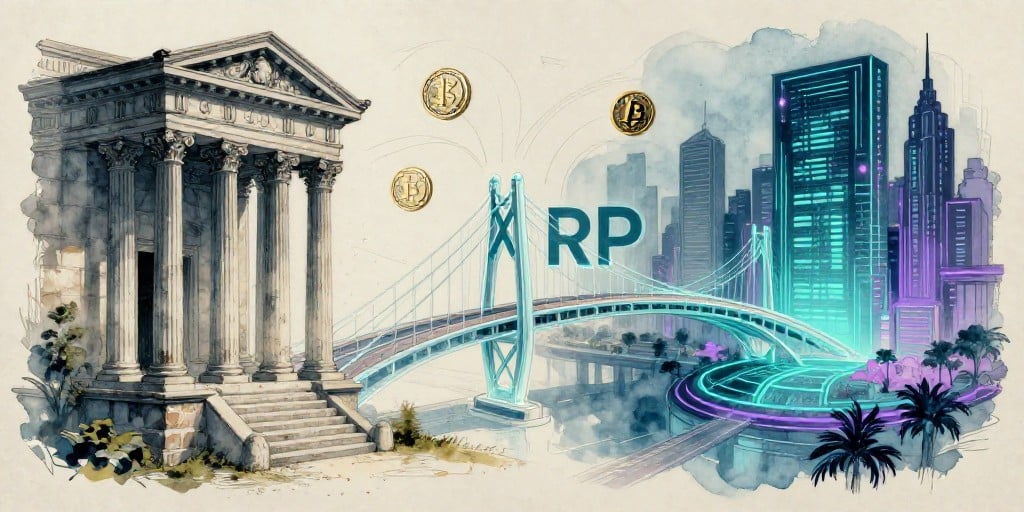
- Regulatory Integration – The national trust bank charter provides a bridge between traditional financial regulation and digital‑asset innovation.
- Stablecoin Ecosystem Growth – RLUSD’s presence on Robinhood and potential further integrations position Ripple as a key player in the U.S. stablecoin market.
- Institutional Adoption – Partnerships with BNY Mellon and BlackRock signal a willingness among legacy institutions to engage with tokenized asset classes on the XRP ledger.
- Market Positioning – While immediate price gains remain elusive, the underlying infrastructure developments could yield long‑term value for both Ripple and its ecosystem partners.
In sum, Ripple’s recent confluence of regulatory success, platform expansion, and institutional collaboration sets the stage for a more integrated, bank‑backed presence in the U.S. crypto economy. Stakeholders will continue to monitor how these moves translate into operational execution, user adoption, and, ultimately, market valuation.