
2026‑01‑28 Market Review: Why Risen Energy’s Shares Remain Over‑Sold
The Shenzhen Stock Exchange closed with a muted 0.27 % rise in the CSI 300, but the broader market was fragmented: 1,739 shares surged while 3,640 fell. Amid this turbulence, Risen Energy (SZ:300806) remained on the sidelines, its price languishing at ¥21.26—well below its 52‑week high of ¥24.91 and a stark contrast to the 52‑week low of ¥8.20. The company’s negative earnings‑price ratio of –8.97 underscores a deep under‑valuation that is unlikely to be corrected without decisive strategic moves.
A Solar Giant in the Age of Space‑PV
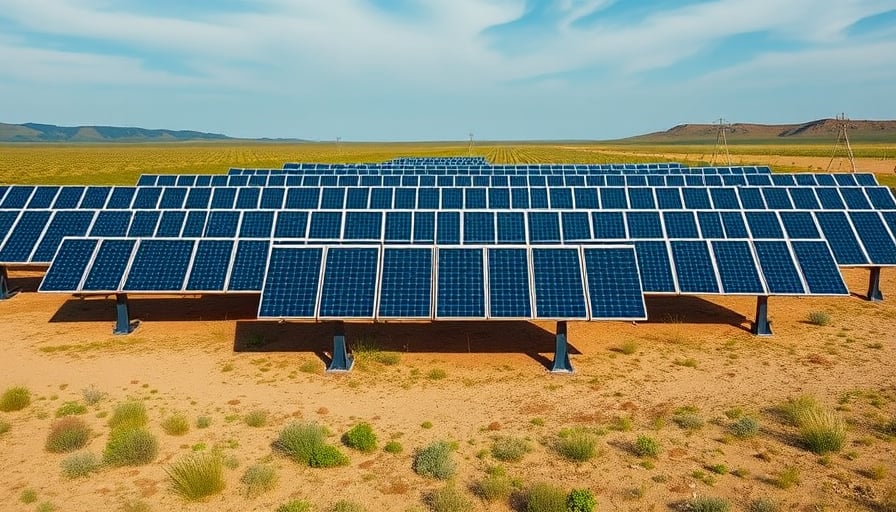
Risen Energy, founded in 2002 and listed on the Shenzhen Stock Exchange in 2010, has built a reputation around high‑performance, black and smart modules, BIPV solutions, and small‑area panels. Its product portfolio extends to solar backup systems—including lamps and pumps—that cater to both domestic and international markets. However, the company’s revenue streams are still largely tethered to the traditional terrestrial PV market, which is now being eclipsed by the meteoric rise of “space‑PV” concepts.
On January 26, Tesla CEO Elon Musk announced that SpaceX and Tesla will jointly pursue a 100 GW annual solar manufacturing capacity within three years, effectively setting the stage for a new, megamillion‑dollar industry. The announcement spurred a “space‑PV” craze in A‑shares, with firms such as 明阳智能 (Mingyang Smart), 拓日新能 (Tuorich New Energy), and 协鑫集成 (Xiangxin Integration) hitting consecutive limits. Yet, these companies are still early‑stage players, and their business models remain speculative.
Risen Energy is not a direct participant in this space‑PV race. Its focus on terrestrial modules and backup systems means it misses out on the high‑growth segment that investors are flocking to. While the company’s established manufacturing base and diversified product line provide stability, they also tether it to a slower‑growing segment that is vulnerable to price wars and regulatory changes.
Financing Momentum vs. Fundamental Weakness
The Shenzhen market saw a modest increase in the total financing balance on the ChiNext index, rising by 17.48 billion yuan to 593.7 billion yuan. However, only 479 stocks benefited from this injection, and Risen Energy was not listed among them. The absence of fresh capital inflow suggests that institutional investors are not seeing a clear path to a turnaround for Risen Energy. In contrast, the top 35 stocks with financing balance growth included companies like 泽润新能 (Zerun New Energy), which received a staggering 65.33 % jump in financing balance.
Moreover, Risen Energy’s price‑earnings ratio is negative—a clear sign that the market does not yet expect earnings growth. The company’s valuation has deteriorated relative to its peers in the semiconductor and photovoltaic equipment sectors, whose price‑earnings ratios hover near or above industry averages.
Market Sentiment and Liquidity Concerns
Trading volume on the day was 29.654 trillion yuan, an increase of 704.29 billion yuan from the previous day, yet the number of stocks that rose (1,739) was still dwarfed by those that fell (3,640). Risen Energy’s limited liquidity and lack of significant price movement further dampen investor enthusiasm. Its trading activity remains subdued compared to the high‑volume, high‑volatility stocks that dominated the ChiNext “limit‑up” and “limit‑down” lists.
The “龙虎榜” (trading desk leaderboard) data from January 27 shows that deep‑stock‑trade seats (ShenStock) appeared in 20 of the top 47 active stocks. Risen Energy was not among these, indicating that both institutional and foreign investors are avoiding the stock. This avoidance is likely due to the company’s weak growth prospects and the broader market’s pivot toward high‑growth, high‑valuation space‑PV names.
The Bottom Line
Risen Energy’s current trajectory is a textbook case of a company trapped in a legacy business model while the industry accelerates toward an entirely new frontier. Its stock price reflects the market’s skepticism: a negative earnings‑price ratio, absence from financing inflows, and lack of institutional attention.
Unless Risen Energy can pivot to capture the emerging space‑PV market—by investing in cutting‑edge module technologies, forging partnerships with space‑flight companies, or securing long‑term contracts with governments and telecom operators—the company’s shares will continue to languish. Investors should treat Risen Energy not as a value play but as a cautionary example of the dangers of clinging to outdated revenue streams in an era of rapid technological disruption.