
Rivian Automotive Inc. – Market and Operational Developments
Production and Vehicle Availability
- The company’s first mass‑produced electric pickup, the R2, has entered delivery in residential areas.
- As of the latest reporting, the R2’s Vehicle Identification Number (VIN) assignments approached 6,000 units, signaling a near‑completion of the first production shift.
- Production capacity is slated to expand with a second shift scheduled to commence shortly.
Recall and Safety Compliance
- Rivian has extended its 2025 turn‑signal recall to include all R1 vehicles manufactured up to May. The recall covers a broader range of models than initially announced, reflecting the company’s ongoing commitment to safety compliance across its product line.
Partnerships and Strategic Collaborations
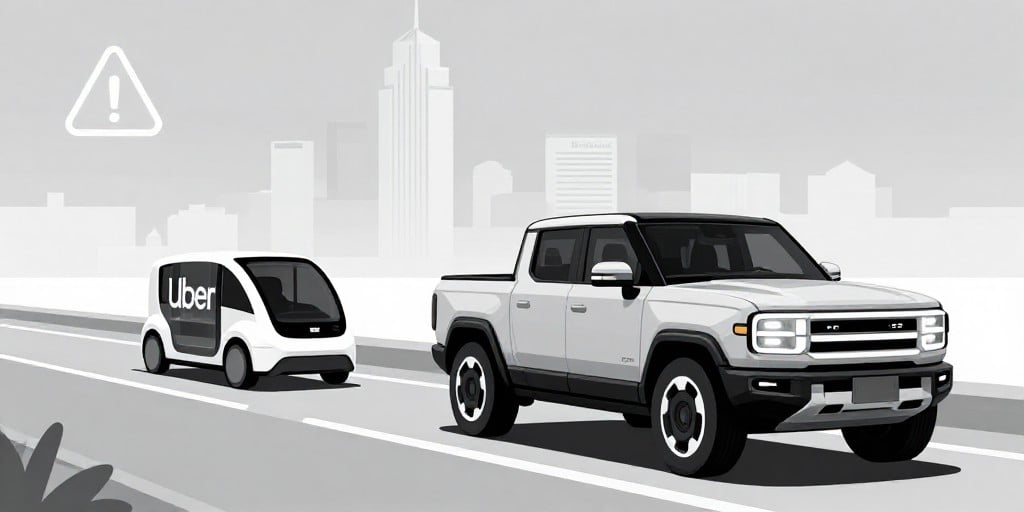
- Uber’s autonomous ride‑hailing initiative has announced a partnership with Rivian to deploy up to 50,000 fully autonomous R2 robotaxis. The initial launch is targeted for 2028 and is part of Uber’s broader plan to field 120,000 robotaxis across 15 cities.
- The collaboration leverages NVIDIA technology for Level 4 autonomous driving, positioning Rivian as a key component in Uber’s robotaxi network.
Investor Activity and Ownership
- BlackRock increased its stake in Rivian to 56 million shares in the second quarter, marking the highest shareholding recorded for the firm.
- Despite this significant institutional investment, Rivian’s share price has experienced a modest decline, down 1 % to $16.25 in early Tuesday trading. This movement occurred alongside a 5 % drop in NIO, while Tesla and Lucid remained flat.
Financial Position and Valuation
- The company’s market capitalization stands at approximately $23.17 billion, with a price‑to‑earnings ratio of –5.92, indicating that current earnings are negative relative to the share price.
- Analysts remain divided on the valuation of Rivian’s R2 growth against its cash burn. A recent analysis on Zacks questions whether the stock is a prudent buy under these conditions.
Management and Corporate Governance
- Rivian’s Vice President of Enterprise Technology departed after 3.5 years in the role, potentially impacting the company’s technology strategy and execution.
Consumer and Service Feedback
- Customers have expressed concerns over the discontinuation of rental car services, which coincided with the scaling back of service operations ahead of the R2 production wave.
Competitive Context
- Rivian’s positioning is frequently compared to ultra‑luxury EV manufacturers such as Ferrari N.V., with analyses suggesting that Rivian’s mass‑market approach may limit its pricing power relative to high‑end competitors.
These developments collectively illustrate Rivian Automotive’s current trajectory, encompassing production milestones, safety initiatives, strategic partnerships, investor dynamics, and market perception.