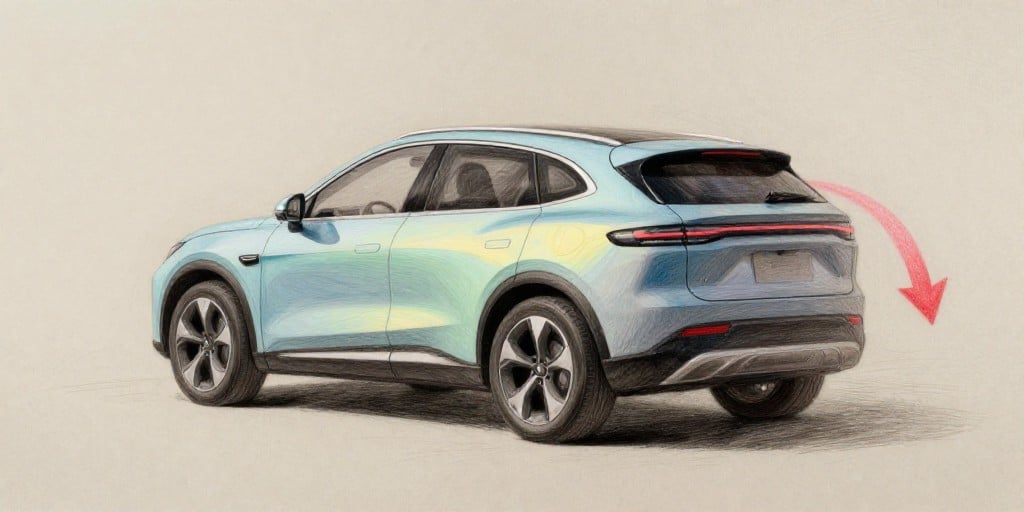
Rivian’s Stock Surge Is More Than a “Buy” Signal
Rivian Automotive Inc. (NASDAQ: RIVN) has just become the subject of a flurry of institutional activity, yet the underlying fundamentals still scream caution. The company’s market cap of $18.7 billion sits on a foundation of negative earnings and a price‑to‑earnings ratio of –5.37, a red flag that cannot be ignored by the most skeptical analysts.
Institutional Confidence Rises
BlackRock, Vanguard, Capital Group, State Street, JPMorgan, Fidelity – Each of these heavyweight asset managers has either increased or maintained significant holdings in Rivian. BlackRock lifted its stake to record levels, Vanguard trimmed Lucid and raised Rivian to a Q3 record, while Capital Group boosted its position to the largest since 2022. State Street’s 19‑th consecutive quarter of stake‑increases and JPMorgan’s record holdings underscore a trend: large institutional investors are betting that Rivian’s narrative will continue to outshine its financial reality.
René and Renaissance – While Renaissance slashed its holdings in Rivian, it simultaneously purchased shares in competitors, illustrating that not all investors are aligned. Dimensional and UBS, on the other hand, are openly bullish, with UBS estimating a $17 upside – a figure that, if achieved, would still leave Rivian well below its 2025 high of $22.69.
The R2 Story: Performance vs. Promises
The new R2 vehicle, the cornerstone of Rivian’s next‑generation strategy, has delivered a 248‑mile range on its first highway test – a figure that falls 28 % short of its own estimate. While the number may satisfy some casual buyers, it raises serious questions about Rivian’s ability to meet the aggressive milestones it has set. The company’s press release from November 13th claims record deliveries, yet the 248‑mile performance suggests a gap between marketing and engineering.
Moreover, the R2’s electric‑bike competitor, a USB‑C charging model, is available for 75 % less than Rivian’s own bike. This price disparity is not merely a marketing tactic; it signals a potential erosion of Rivian’s premium brand positioning and a widening margin pressure that could hurt profitability.
Analyst Sentiment: Buy or Burn?
- Stifel – The firm has maintained a “Buy” recommendation since 2023, a stance that now feels increasingly outdated given Rivian’s current valuation and earnings trajectory.
- UBS – Their $17 target is ambitious, yet it ignores the company’s negative earnings and the risk that the R2’s performance shortfall will translate into lower sales.
- The Fool – The website’s recent “Buy” rating is based on institutional buying momentum rather than sustainable fundamentals, a classic example of herd mentality.
The Broader Context
The 2026 Los Angeles Auto Show, highlighted by PRNewswire, showcased a diverse range of electric, hybrid, and gasoline vehicles, placing Rivian in direct competition with brands that offer comparable technology at lower price points. The show’s emphasis on “hands‑on” experiences underscores a market that values real‑world performance over speculative hype – a reality that Rivian has yet to fully prove.
Bottom Line
Rivian’s recent institutional inflows and bullish analyst commentary paint a rosy picture that belies the stark financial picture. The company’s negative earnings, under‑delivered R2 range, and price‑competition challenges suggest that the stock’s current trajectory is fragile. Investors should weigh the short‑term buying pressure against long‑term sustainability, recognizing that a “Buy” recommendation in the face of negative fundamentals is a cautionary tale rather than a green light.