
Rosneft’s Strategic Surge Amid a Turbulent Energy Landscape
In the unforgiving arena of global oil, Rosneft Oil Co PJSC has not merely survived the seismic shocks of 2026; it has reshaped its trajectory, turning geopolitical turbulence into a catalyst for expansion. The company’s latest announcements—spanning the Arctic frontier, China‑Russia trade, and a bold stance against OPEC’s traditional dominance—paint a picture of a firm that is both resilient and strategically opportunistic.
Arctic Ambitions: Vostok Oil and the Northern Sea Route
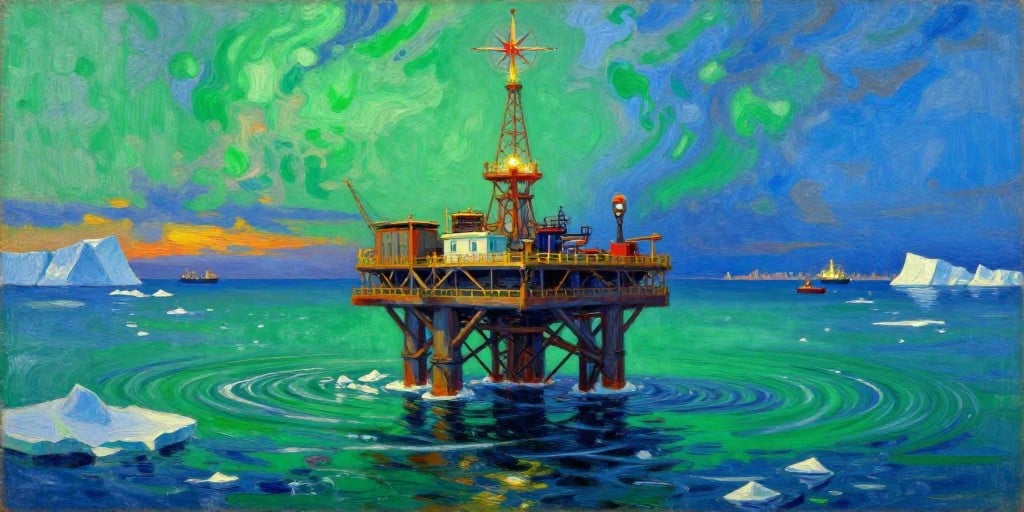
On September 5, 2026, Rosneft celebrated the inaugural loading of crude onto the high‑ice‑class tanker Valentin Pikul at the newly constructed Sever Bay terminal, the world’s northernmost port. This event, heralded by CEO Igor Sechin, signals the operational commencement of the Vostok Oil project on the Taimyr Peninsula—a venture explicitly backed by President Vladimir Putin. Sechin’s public pledge to supply 30 million tons of oil from Vostok in 2027 underscores the company’s aggressive production targets.
The choice of the Northern Sea Route (NSR) as the primary logistics corridor is not incidental. With the Hormuz crisis exposing the fragility of traditional shipping lanes, Rosneft is betting on the NSR’s growing viability. Sechin’s remarks—“China has priority access to the Northern Sea Route”—demonstrate an alignment with Beijing’s logistical priorities, thereby securing a strategic partnership that mitigates Western sanctions and sanctions‑related disruptions.
China: The New Vanguard of Global Oil Markets
Rosneft’s CEO has repeatedly positioned China as the new arbiter of oil market stability, a narrative that has gained traction amid OPEC’s waning influence. Sechin’s statements on the Russia‑China business forum in Vladivostok and subsequent media appearances make a compelling case:
- Trade Surges: Russia’s oil exports to China rose more than 50‑fold over three decades, surpassing $200 billion, with 2026 figures showing 67 million metric tons in the first seven months.
- Market Share Gains: China’s share of Russia’s oil imports reached a record 23%, reflecting a deepening dependency that benefits both economies.
- Cost Savings: China saved over $27 billion by sourcing oil from Russia, illustrating the economic advantage of bypassing traditional suppliers.
- Supply Security: Sechin emphasizes China’s proactive stockpiling and its role in stabilizing global markets, suggesting that Beijing’s initiatives are a reliable counterbalance to OPEC’s traditional market‑making.
By positioning itself as a conduit for China’s energy security, Rosneft not only secures a lucrative export market but also leverages China’s diplomatic weight to offset Western isolation.
Market Performance in a Volatile Context
Despite the macro‑economic turbulence, Rosneft’s share price—closing at 319.1 RUB on 1 September 2026—remains firmly anchored within its 52‑week high of 518.7 RUB and 52‑week low of 286.85 RUB. The company’s market capitalization, towering at 3.336 trillion RUB, and a modest price‑earnings ratio of 2.2, suggest a valuation that remains attractive to investors willing to bet on long‑term energy dominance.
The Moscow Stock Exchange’s overall sentiment towards large Russian corporates has been markedly negative, with major firms experiencing steep declines amid geopolitical sanctions. Yet Rosneft’s strategic initiatives—especially the Vostok project and its alignment with China—offer a counter‑narrative of growth and resilience, standing in stark contrast to smaller firms that are “penned in” by economic pressures.
Critical Assessment
While the company’s public statements and operational milestones paint an optimistic picture, several critical questions remain:
- Operational Viability in the Arctic: The Vostok project’s success hinges on complex logistics, high capital expenditure, and environmental challenges. Any delay or cost overrun could erode the projected 30 million‑ton supply target.
- Dependence on China: While China’s market share is expanding, it also poses a risk of concentration. A sudden shift in Chinese policy or a geopolitical pivot could destabilize Rosneft’s export strategy.
- Regulatory and Sanction Exposure: Rosneft’s continued reliance on Western technology and finance may expose it to renewed sanctions, especially as global powers recalibrate their strategies post‑Hormuz crisis.
Nevertheless, the company’s proactive stance—expanding into the Arctic, securing alternative routes, and aligning with a rising global power—demonstrates a clear intent to navigate the post‑COVID, post‑sanction energy era with strategic foresight.
In a market where large Russian corporates are grappling with unprecedented pressure, Rosneft’s narrative of resilience and expansion offers a compelling case for investors and policymakers alike: the future of energy is not only about extraction but also about strategic positioning in a rapidly evolving geopolitical landscape.