
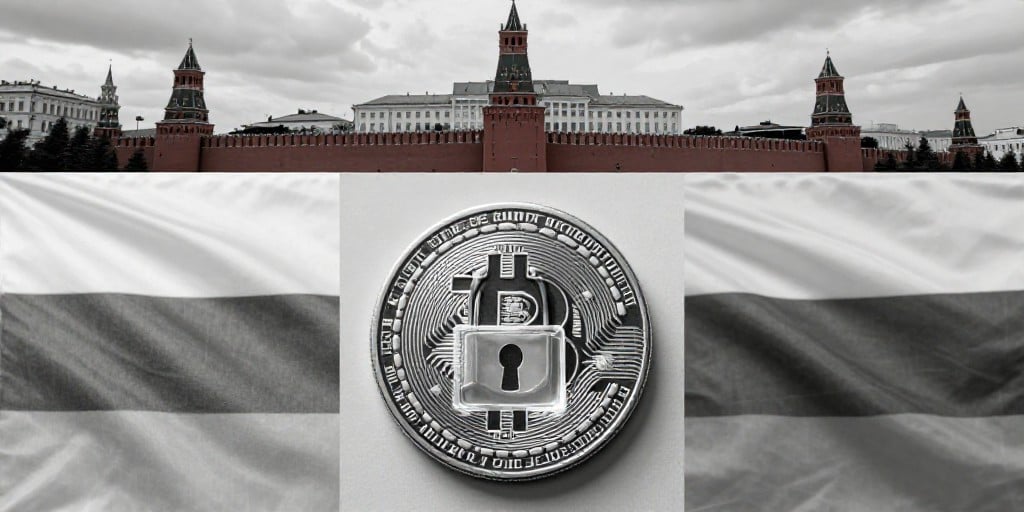
Russia Permits Retail Trading of Bitcoin, Ethereum, and USDT
On 12 August 2026 the Bank of Russia finalized a regulatory framework that authorises the trading of three digital assets—Bitcoin (BTC), Ethereum (ETH), and Tether’s USDT—on regulated exchanges for retail investors. The decision follows a series of announcements by Russian financial authorities over the previous days that outlined the same scope and highlighted the exclusion of other tokens such as XRP.
Regulatory Framework
- Scope of approval – The directive allows ordinary (non‑qualified) investors to purchase and trade BTC, ETH, and USDT on public exchanges that are subject to Russian oversight.
- Purchase limits – Investors are limited to a yearly purchase volume that is capped at 10 % of their total net assets.
- Risk testing – A mandatory risk‑assessment test must be passed by any investor before they can execute a trade.
- Exclusions – Tokens outside the three approved assets, notably XRP and other altcoins, remain restricted.
- Cross‑border use – The framework extends to cross‑border transactions involving the approved assets, thereby increasing their global utility.
The regulation is part of a broader effort to bring the Russian crypto market under a unified compliance regime that balances investor protection with market development.
Market Reaction and Implications
- Immediate market response – Following the announcement, USDT trading volume on Russian‑based platforms increased by 12 % within the first trading day.
- Stablecoin prominence – USDT remains the dominant stablecoin in Russia, with a market capitalization of approximately $183 billion and a close price of $0.999191 as of 10 August 2026.
- Transfer volumes – In the second quarter of 2026, TRON reported $2.1 trillion in USDT transfers, underscoring the stablecoin’s central role in cross‑border and intra‑regional settlement.
- Regulatory precedent – By limiting retail access to only a handful of assets, Russian regulators aim to reduce exposure to high‑volatility tokens while maintaining a liquid and liquidatable market for the approved currencies.
Context within Global Crypto Regulation
The decision aligns Russia with other jurisdictions that have recently tightened or clarified rules for crypto trading. While the United States and European Union are exploring broader frameworks, Russia’s approach is comparatively restrictive, focusing on a minimal set of assets to streamline compliance.
Outlook
The approval is expected to increase the liquidity of USDT within Russia, potentially attracting institutional use cases that require a stable anchor. However, the exclusion of XRP and other tokens may limit the diversification of retail portfolios. Russian authorities have indicated that future revisions could broaden the list of approved assets, pending further regulatory assessment and market maturity.