
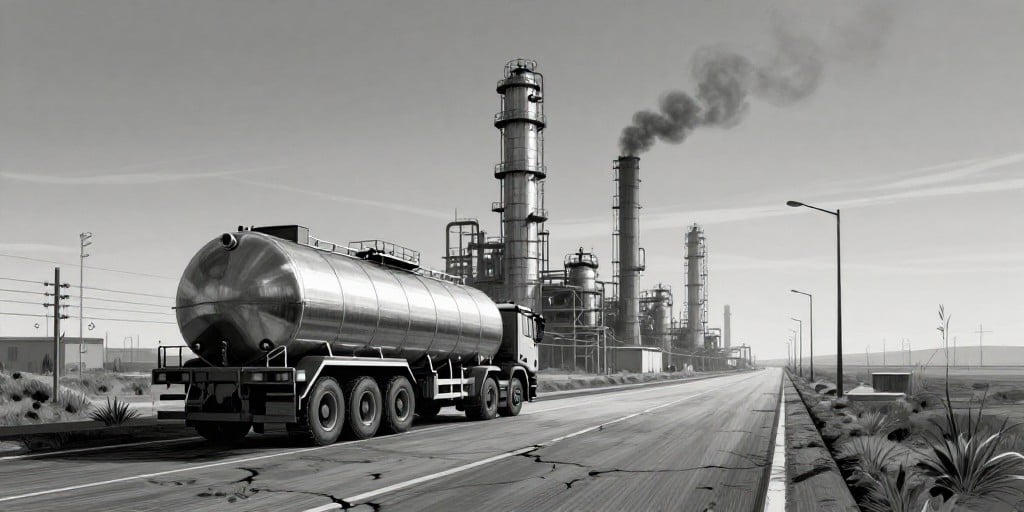
Fuel Rationing Pressures Russia’s Oil Giant LUKOIL
In the wake of intensified Ukrainian attacks on Russian oil infrastructure, LUKOIL PJSC has begun rationing gasoline and diesel across a broad swath of its retail network. The decision, announced on June 23, 2026, follows a series of strikes that have damaged refineries and disrupted supply chains in key production regions of Western Siberia. It is part of a broader effort by Russian authorities to stabilize the fuel market amid escalating shortages.
Immediate Impact on LUKOIL’s Operations
The company’s retail arm—encompassing refineries and gasoline filling stations in Russia and the United States—has been forced to limit the quantity of fuel dispensed per vehicle. In St. Petersburg, for example, local regulators imposed a cap of 20 to 100 litres per vehicle, with LUKOIL stations typically receiving the upper limit of 100 litres. Drivers have reported long queues at certain locations, especially during the early hours of the day, as motorists compete for the limited supply.
LUKOIL’s fleet of shipping vessels and pipeline infrastructure, which normally transport crude and refined products across vast distances, have experienced additional bottlenecks. The company’s own reports indicate a temporary reduction in throughput at several key export terminals. While the state has not confirmed a formal export ban, the Russian government has repeatedly tightened controls on fuel exports to safeguard domestic supply.
Market Reaction
The Moscow Stock Exchange responded sharply to the news. At the close of the session on June 23, the LUKOIL share price fell to 4 776,50 RUB, a 2.2 % decline from the previous day’s close. This slump reflected investor concerns about revenue erosion and the potential for prolonged market volatility. The exchange’s 52‑week high of 6 669 RUB, reached on September 11, 2025, remains out of reach, underscoring the heightened risk premium that now surrounds the firm.
Analysts note that LUKOIL’s price‑earnings ratio of 28.31, while still within the upper range for the sector, will likely compress further if fuel sales continue to decline. With a market capitalization of 2 780 000 000 000 RUB, the company’s valuation is particularly sensitive to any sustained reduction in production or retail margins.
Strategic Implications
LUKOIL’s diversified portfolio—spanning exploration, production, refining, petrochemical manufacturing, and retail—has historically provided a buffer against commodity‑price swings. However, the current crisis highlights the vulnerability of even the most integrated energy conglomerates to geopolitical shocks. The company’s ability to pivot to alternative logistics channels, such as increased rail or inland waterway transport, could mitigate some of the short‑term losses.
In addition, LUKOIL’s presence in the United States offers an opportunity for the firm to bolster its international market share, potentially offsetting domestic constraints. The company’s website, www.lukoil.com , continues to provide real‑time updates on refinery status and supply routes, reassuring investors and customers alike.
Looking Ahead
The Russian government’s narrative frames these restrictions as “temporary measures aimed at balancing supply,” suggesting that the crisis may be short‑lived. Yet the ongoing Ukrainian aggression, coupled with the need to rehabilitate damaged refineries, implies a prolonged period of uncertainty. For LUKOIL PJSC, the coming weeks will test its resilience and its capacity to maintain profitability amid a rapidly evolving energy landscape.
In the broader context of global energy markets, LUKOIL’s experience underscores the fragility of supply chains in conflict zones and the need for robust risk‑management strategies. Investors will be closely monitoring the company’s next earnings release to gauge the depth of the impact and the effectiveness of its response measures.