
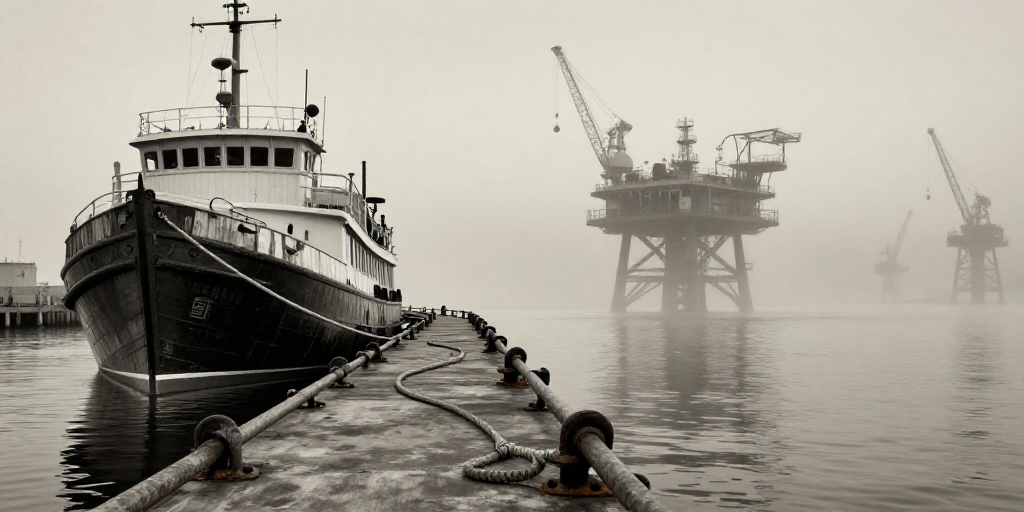
Seatrium Ltd. Navigates Legal and Strategic Waters
The Singapore‑listed marine engineering firm Seatrium Ltd. (SGX: SEATRIUM) has recently resolved a high‑profile legal matter and positioned itself for further expansion in the Asian tug‑boat market. These developments arrive against the backdrop of a steady recovery in global offshore construction and a firm commitment to strengthening internal controls.
Deferred Prosecution Agreement and U.S. Penalty
On 24 April 2026, the Singapore High Court approved a deferred prosecution agreement with Seatrium concerning allegations of corruption in Brazil. The agreement entails a US$110 million penalty, marking the first such case in Singapore involving a corporate entity. The court’s decision means the company will not face prosecution for the misconduct, provided it complies with the agreed conditions.
Seatrium has pledged to tighten its internal controls to mitigate the risk of future corruption. While the penalty is substantial, the settlement preserves the company’s operational continuity and protects its reputation in a market where regulatory compliance is increasingly scrutinized.
Strategic Expansion of the Tug‑boat Fleet
Simultaneously, Seatrium’s tug‑boat division has been absorbed by Boluda Towage, a subsidiary of Boluda Corporación Marítima and MSC. The acquisition, announced on 24 April 2026, adds a significant number of tugs and shore‑based towing services to Boluda’s portfolio, extending its presence into Southeast Asia’s critical port hubs.
Boluda’s expansion strategy has long targeted the Asia‑Pacific region, and the purchase of Seatrium’s Singapore‑based tug fleet aligns with its objective of securing a foothold in the world’s most active maritime corridors. For Seatrium, the divestiture provides liquidity and a streamlined focus on its core offshore construction and engineering capabilities.
Legacy of the Jurong Shipyard Merger
Seatrium’s trajectory can be traced back to its origins as Jurong Shipyard Ltd., later rebranded as Sembcorp Marine Ltd. in 2000. The merger of two shipyards was a pivotal moment that forged the company into a major offshore oil and wind asset. According to a Fortune feature dated 23 April 2026, executive Chris Ong was instrumental in turning the merged entity into a profitable giant in the offshore sector, underscoring the company’s resilience and adaptability.
Market Implications
- Share Price: With the latest closing price at SGD 2.41 and a 52‑week high of SGD 2.51, the market remains cautiously optimistic. Investors are watching how the new internal‑control framework and the divestiture will affect long‑term profitability.
- Revenue Streams: Seatrium’s primary focus—turnkey offshore newbuilding and conversions, gas terminals, FLNGs, and various support vessels—continues to command high margins in a recovering energy market.
- Strategic Focus: By divesting its tug operations, Seatrium is channeling resources into its flagship offshore projects and high‑value naval support contracts, positioning itself to capture growth in the renewable energy and offshore support arenas.
Forward‑Looking Outlook
The confluence of a settled legal challenge and a strategic asset reallocation signals a company intent on refining its risk profile while sharpening its competitive edge. Seatrium’s commitment to internal controls, coupled with its focus on high‑margin offshore projects, suggests a trajectory of sustainable growth. Market participants should monitor compliance updates and the performance of its flagship vessels as indicators of future earnings resilience.