Shell plc Navigates a Volatile Energy Landscape
The London‑listed energy giant has continued to execute a disciplined strategy amid a turbulent oil market. With Brent crude hovering around the $100‑per‑barrel threshold and geopolitical tensions keeping supply chains on edge, Shell’s recent corporate actions underscore a focus on core assets and capital efficiency.
1. Asset Portfolio Rationalisation
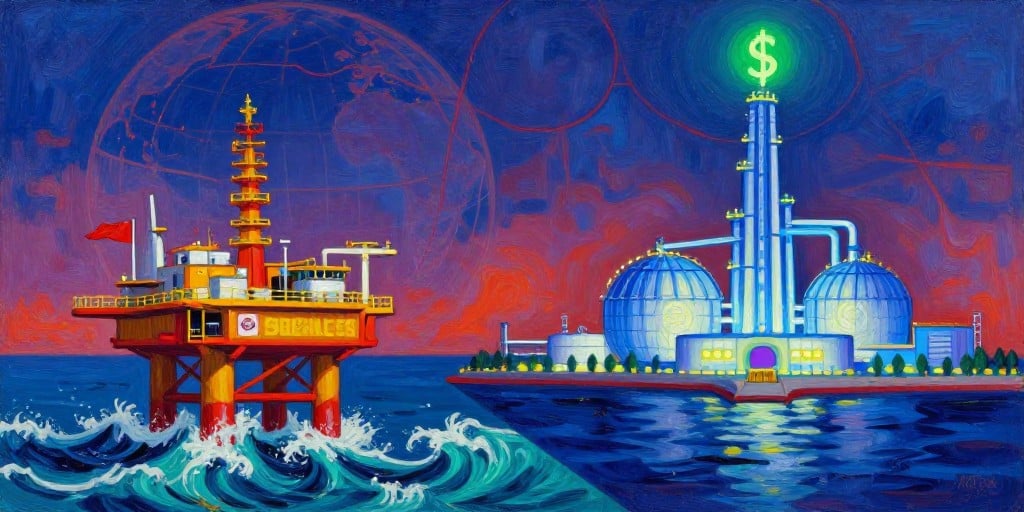
On 22 September, Shell Offshore Inc.—a subsidiary of Shell plc—completed the sale of its interest in a Gulf of America platform. The divestiture aligns with Shell’s long‑term portfolio optimisation, allowing the company to redeploy capital toward higher‑margin projects and to strengthen its balance sheet in an environment where oil prices have become increasingly unpredictable. The transaction also reflects the broader industry trend of shedding non‑strategic offshore assets to concentrate on cleaner, more resilient energy streams.
2. Expansion of LNG Canada
Earlier in the week, Bloomberg reported that Shell and its partners in Canada’s largest liquefied natural gas (LNG) facility were poised to approve a doubling of the LNG Canada project. This capital commitment signals Shell’s continued commitment to natural gas as a bridge fuel. By scaling up LNG Canada, the company aims to capture a larger share of the North American LNG market, diversify its product mix, and secure long‑term supply contracts that can buffer volatility in oil pricing.
3. Share‑Purchase Programme
Shell also announced a transaction in own shares on 24 September, purchasing a significant number of its own shares. This move is part of an ongoing share‑repurchase programme that underlines management’s confidence in the company’s intrinsic value and its commitment to delivering shareholder returns. Given the current market’s modest upside—FTSE 100 rose 0.1% to 10,692.62 points at 10:37 UTC—this buyback could be interpreted as a tactical deployment of excess cash in a low‑valuation environment.
4. Market Context and Investor Sentiment
European equity markets ended the week on a cautiously optimistic note. The STOXX 50 finished 0.35% higher at 5,360.46 points, while the FTSE 100 remained buoyant, trading above 10,690 points despite a broader slide in oil‑heavy constituents. Oil prices themselves eased off recent highs, a development that may provide temporary relief for Shell’s upstream operations. Nonetheless, the looming political debate over new “tank‑discount” schemes in Germany suggests that regulatory risk will remain a factor for energy firms across the continent.
5. Forward Outlook
- Capital Allocation: Shell will likely continue to prioritize projects that balance profitability with carbon‑transition risk, particularly the LNG Canada expansion and potential downstream integration opportunities.
- Shareholder Returns: The share‑repurchase programme, coupled with a stable dividend policy, positions Shell to remain an attractive yield generator for income‑focused investors.
- Risk Management: With Brent trading around the critical $100 mark and geopolitical uncertainties persisting, Shell’s hedging strategies and cost‑control initiatives will remain key to sustaining earnings.
In an industry marked by rapid price swings and regulatory shifts, Shell plc’s recent moves reflect a pragmatic approach: divesting non‑core assets, expanding in high‑growth LNG markets, and reinforcing shareholder value through disciplined capital deployment. Investors and analysts alike will be watching closely as the company executes these strategies in the coming quarters.