
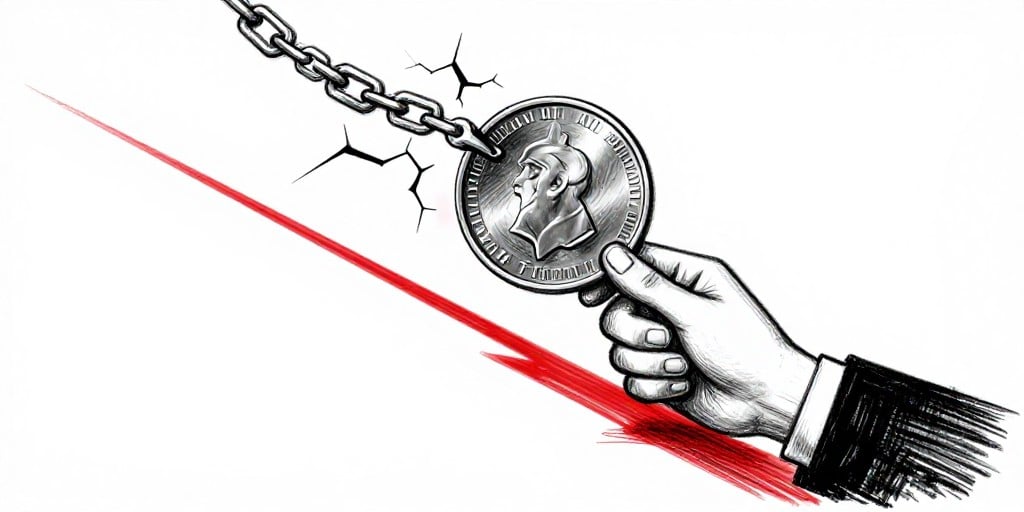
Silver’s Slumping Trajectory Amid Weak Fundamentals and Divergent Sentiment
Silver, traded on the New York Mercantile Exchange in U.S. dollars, closed at $60.30 on 9 July 2026. The metal sits roughly midway between its 52‑week high of $121.30 (28 January) and low of $36.35 (31 July 2025). Despite a brief rally that pushed the price past $60 on 10 July, technical analysis points to a sustained downtrend and imminent support at the $55 level.
Technical Weakness Persists
Several market‑watching outlets confirm that bearish momentum continues to dominate the silver scene.
- TalkMarkets (10 July 22:14 UTC) projects a “Lower High Structure Holds” and identifies a key support near $55.00, with indicators warning of further downside.
- TalkMarkets (8 July 17:51 UTC) highlighted the 200‑day simple moving average as a critical threshold; falling below it suggests a bearish bias and a potential test of $55.
- An Elliott‑Wave assessment (9 July 17:34 UTC) identified a corrective Zig‑Zag pattern near $63.29, implying that a reversal would likely move lower rather than higher.
- Business‑Standard (10 July 07:53 UTC) cautioned that rate‑hike risks could curb upside momentum, reinforcing the narrative that the metal is vulnerable to macro‑economic tightening.
Collectively, these signals portray a market where sellers are poised to defend resistance levels and buyers struggle to sustain gains.
Short‑Term Catalysts and Counter‑Signals
The price rally that nudged silver above $60 on 10 July was largely driven by two temporary factors:
- A weakening U.S. dollar, which historically lifts silver prices as the metal becomes cheaper for non‑USD buyers.
- Falling oil prices, which reduce the demand for silver as an industrial input in refining and other energy‑related processes.
While these conditions temporarily buoyed the price, they do not address the underlying structural deficits identified by technical analysts. The rally is therefore likely to be short‑lived, with the metal reverting to the prevailing trend.
Market Sentiment and Broader Context
Investor sentiment remains cautious. Several regional reports (e.g., MoneyControl and Jinse) noted only marginal declines in bullion prices, reflecting uncertainty amid geopolitical tensions in the Middle East and fluctuating U.S. equity markets. The broader commodities landscape—particularly the simultaneous decline in gold and modest rise in copper—suggests that silver is not benefiting from a generalized commodity rally.
Implications for Traders and Investors
- Short‑term traders should monitor the $55 support area closely. A breach could trigger a rapid decline, whereas holding above this level might offer a limited upside until broader market conditions change.
- Long‑term holders ought to reassess the silver allocation in the context of its current valuation relative to its 52‑week range and the potential impact of future U.S. monetary policy tightening.
- Portfolio managers should consider diversifying exposure to other metals or inflation‑hedging assets if they fear a continued downtrend.
Conclusion
Silver’s recent price action—though briefly buoyed by a softer dollar and falling oil—has not shaken the bearish fundamentals that dominate its technical profile. The metal’s trajectory appears locked in a downward channel, with the next critical juncture at the $55 support level. Unless macro‑economic conditions shift dramatically, traders should prepare for continued volatility and potential further declines.