
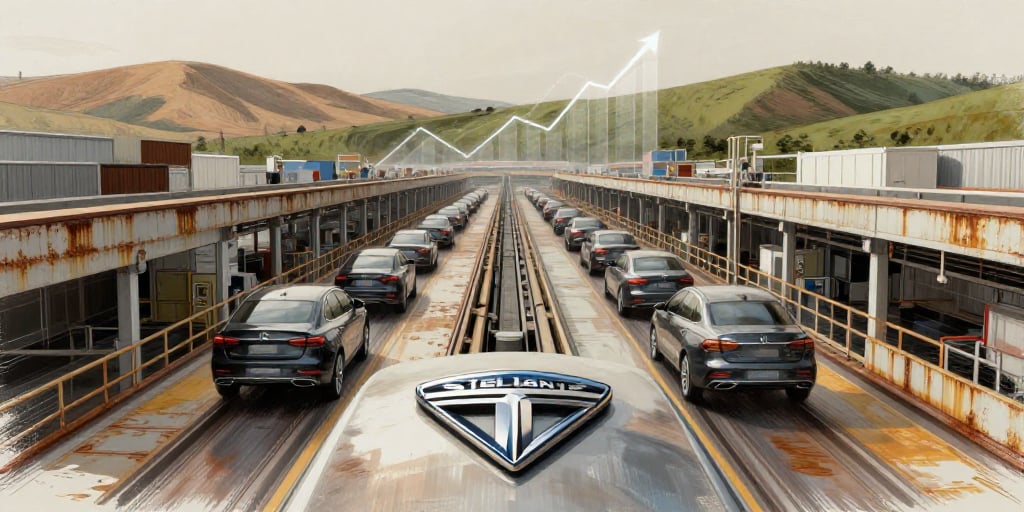
Stellantis NV: Profit Revival Amid Strategic Turmoil and External Threats
Stellantis NV (STLA) has returned to profitability in the first quarter of 2026, a turnaround that follows a turbulent 2025 where the company posted a $26.3 billion net loss after substantial write‑downs. The shift away from an aggressive electric‑vehicle (EV) push, once a cornerstone of the company’s strategy, appears to have paid off, with the firm now reporting a 12 % increase in shipments and a 6 % rise in net revenues, as highlighted in the company’s earnings call on 1 May 2026.
Market Reaction and Analyst Consensus
Despite the positive financials, the market reacted with caution. Shares of Stellantis fell sharply after President Trump announced a 25 % tariff on European cars and trucks—a move that could erode the firm’s already fragile profit margins. Morningstar’s commentary underscored this concern, noting the immediate sell‑off following the tariff announcement. Nevertheless, Freedom Broker upgraded the stock to “Buy” after the Q1 results, a sentiment echoed by German investors via de.investing.com. This upgrade reflects confidence that the company’s core brands—Ram and Jeep—continue to drive U.S. demand and that the revenue growth trajectory is sustainable.
Labor and Legal Headwinds
Stellantis faces significant internal pressures. The United Automobile Workers (UAW) have threatened a strike vote at the Michigan plant, a potential disruption that could hamper production during a period when the company is already adjusting its supply chain. Additionally, the Schall Law Firm has announced that investors can lead a securities‑fraud lawsuit against STLA, hinting at possible governance or compliance issues that could further strain investor sentiment.
Strategic Partnerships and Brand Expansion
On the upside, Stellantis is actively broadening its global footprint. Reports from tecnoandroid.it indicate that the company is negotiating with Hongqi, a luxury Chinese marque, to assemble vehicles in Spain. This partnership could open a lucrative market and diversify the firm’s revenue streams beyond the traditional Western focus. Moreover, the company’s design initiative, Drive for Design 2026, has spotlighted six emerging designers, signalling a commitment to brand innovation and a future‑oriented product pipeline.
Financial Snapshot
- Closing price (29 Apr 2026): €6.215
- 52‑week high (4 Dec 2025): €10.494
- 52‑week low (22 Mar 2026): €5.31
- Market cap: €18.0 bn
- P/E ratio: –0.96 (negative, reflecting recent losses)
The company’s negative price‑earnings ratio is a vestige of its 2025 loss; however, the shift back to profitability is expected to normalize this metric over the next 12‑18 months.
Conclusion
Stellantis NV stands at a crossroads: it has managed to claw back profitability and secure analyst support, yet it remains vulnerable to external shocks—most notably the impending U.S. tariff and potential labor unrest. Its strategic pivot away from an aggressive EV push may have stabilized its financials, but it also raises questions about long‑term competitiveness in a market increasingly focused on electrification. Investors must weigh these factors carefully: while the company’s core brands and new partnerships provide a solid foundation, the looming tariffs and labor disputes could erode gains and reignite volatility in the near term.