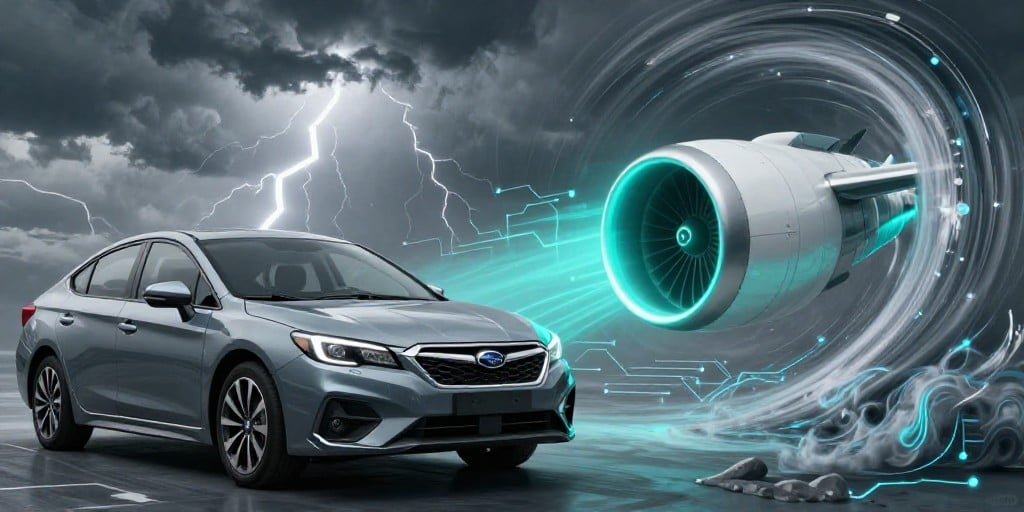
Subaru Corporation, a titan in the automobile industry, has recently been the subject of intense scrutiny and analysis. As a leading manufacturer based in Tokyo, Japan, Subaru has carved out a significant niche in the Consumer Discretionary sector, particularly within the Automobiles industry. The company’s diverse portfolio, which spans passenger cars, motor vehicle parts, and a variety of related products, underscores its commitment to innovation and customer satisfaction. However, recent financial metrics and market performance raise critical questions about its future trajectory.
As of September 15, 2026, Subaru’s close price stood at 2,625.5 JPY, a stark contrast to its 52-week high of 3,642 JPY recorded on December 15, 2025. This decline is indicative of broader market challenges and internal strategic missteps. The 52-week low of 2,247.5 JPY, observed on May 10, 2026, further highlights the volatility and uncertainty surrounding the company’s stock performance. With a market capitalization of 1,826,209,923,072 JPY, Subaru’s financial health is robust, yet the ratio price earnings of 22.27 suggests a potential overvaluation, raising concerns among investors about the sustainability of its growth.
Subaru’s strategic diversification into the aerospace sector, including the development and production of aircraft parts such as wings and combat helicopters, as well as system integration technology, represents a bold move to mitigate risks associated with the automotive market. However, this diversification also introduces new complexities and challenges. The integration of such disparate industries requires significant investment and expertise, and the returns on these ventures remain uncertain. Critics argue that Subaru’s foray into aerospace may dilute its core competencies and divert resources from its primary automotive business.
Moreover, Subaru’s global operations, while expansive, face increasing competition from both established players and emerging markets. The company’s ability to maintain its competitive edge hinges on its capacity to innovate and adapt to rapidly changing consumer preferences and technological advancements. The pressure to transition towards electric vehicles and sustainable practices is mounting, and Subaru’s response to these trends will be pivotal in determining its long-term success.
In conclusion, while Subaru Corporation remains a formidable force in the automobile industry, its recent financial performance and strategic decisions warrant a critical examination. The company’s ability to navigate the complexities of market volatility, industry diversification, and technological disruption will be crucial in shaping its future. Investors and stakeholders must remain vigilant, as the path ahead is fraught with both opportunities and challenges.