
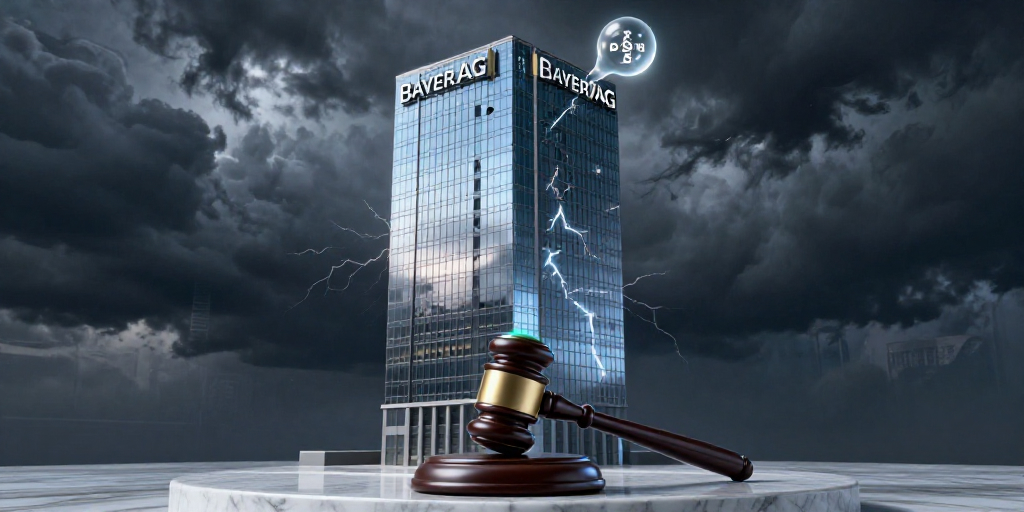
Bayer AG Faces Supreme‑Court Crossfire on Glyphosat While Stock Rests in a Low‑Mile Zone
Bayer AG’s share price closed at €38.38 on 26 April 2026, a steep decline from its 52‑week high of €49.78 reached on 16 February, and a far‑away echo of the €22.02 low hit on 14 May 2025. The German conglomerate’s market capitalisation, a staggering €37.7 billion, belies a company wrestling with a litigation storm that could threaten its profitability and reputation.
The Supreme‑Court Showdown
On 27 April, the United States Supreme Court opened its doors to Bayer’s bid to quash a wave of lawsuits linked to its flagship weedkiller, Roundup—the very product built around the herbicide glyphosate. The case, Monsanto v. Durnell (now involving Bayer after its 2018 acquisition of Monsanto’s pesticide arm), has become a litmus test for the balance between federal and state law, the legality of liability waivers, and the extent to which chemical manufacturers can sidestep responsibility for health risks.
Bayer’s legal team presented a “sincere and transparent” argument that the company had complied with all regulatory requirements and that state‑level suits were “unnecessary and harmful.” The Supreme Court, however, was uneasy and divided. Several justices expressed doubts about whether federal EPA approvals could override state demands for explicit warning labels—a question that strikes at the heart of the United States’ federalism.
The court’s deliberation is not merely a legal formality. The outcome will determine whether Bayer can avoid liability for the billions already spent settling Roundup claims and whether future lawsuits could trigger further $10 billion+ payouts. In a climate where public scrutiny over chemical safety is mounting, the decision will reverberate beyond Bayer’s balance sheet, touching the entire agro‑chemical industry.
Financial Ramifications
The after‑hours trading on Xetra showed the Bayer stock slightly pressured, dropping from the mid‑$30s to €38.38. This modest decline belies the massive potential risk: if the Supreme Court sides against Bayer, the company could face millions of dollars in new liabilities and an erosion of investor confidence. Conversely, a favourable ruling could stabilize the stock and vindicate the company’s stance that it has adhered to all regulatory standards.
With a price‑to‑earnings ratio of –10.42, the stock is trading in a negative earnings zone, reflecting the burden of ongoing litigation costs and the uncertainty surrounding the court’s decision. Investors who view Bayer’s litigation as a “**beyond‑price” risk factor" should reassess their positions, as the company’s earnings potential is now inextricably tied to a single legal outcome.
Strategic Context
Bayer’s product portfolio is diversified: from pharmaceuticals (aspirin, antibiotics, anti‑infectives, oncology drugs) to crop protection, diagnostics, and animal health products. Yet the glyphosate controversy has eclipsed these segments, drawing headlines worldwide—from a “todkranke BVB-fan” who celebrated a game against Bayer’s sponsor to the Center for Food Safety’s advocacy for science‑based regulation in Washington, D.C.
The company’s public image is also at stake. While Bayer boasts a long history of medical innovation, the glyphosate litigation has painted it as a “chemical profiteer” in the public eye. A Supreme Court decision that forces Bayer to acknowledge fault could exacerbate this negative perception, further denting the company’s brand and its ability to secure future contracts and partnerships.
The Bottom Line
Bayer AG stands at a critical juncture. The Supreme Court’s decision on 27 April is not merely a legal milestone; it is a financial pivot point that could reshape the company’s earnings trajectory and market valuation. Investors, regulators, and the public will be watching closely, as the verdict will determine whether Bayer can continue to market its products without the looming specter of monumental lawsuits.
In a world where corporate responsibility increasingly intersects with consumer safety, Bayer’s fate in the U.S. courts will either cement its status as a compliant, responsible global player—or it will plunge the company into a prolonged legal and financial quagmire that could eclipse its diversified product lines and historic contributions to health care and agriculture.