
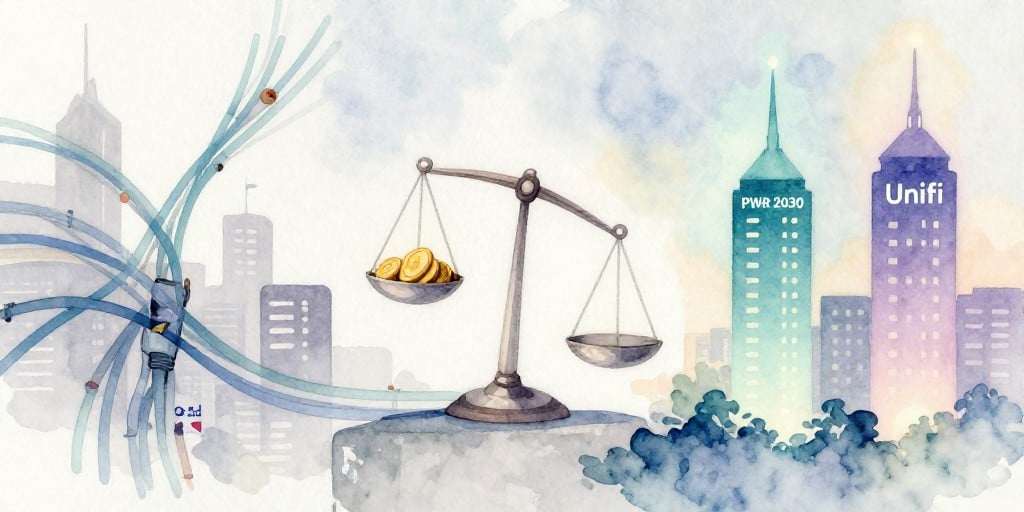
Telekom Malaysia’s Q2 performance reveals a precarious balance between revenue growth and escalating costs
Telekom Malaysia Berhad (TM) delivered a mixed financial picture for the second quarter ended 30 June 2026. Net profit slipped 9.3 % year‑on‑year to RM 365.48 million from RM 402.98 million, despite a 6.8 % rise in revenue to RM 2.96 billion. The company’s cost‑pressure narrative is unmistakable: the employee voluntary separation programme (Prihatin) and the high‑profile sponsorship of the 2026 FIFA World Cup have swollen operating expenses, eroding the profit margin that had been a hallmark of TM’s recent performance.
Revenue growth still robust but thin margins
While the 6.8 % increase in revenue is commendable, it is largely driven by sustained demand for data and information services across consumer and business segments. TM’s flagship Unifi broadband and mobile platforms continue to expand their subscriber base, buoyed by the recent 40 000‑download milestone for Unifi TV’s free live‑streaming of the World Cup. This digital push underlines the CEO’s commitment to the “PWR 2030” strategy, which aims to integrate wide‑band, mobile and smart‑home services into a unified ecosystem.
Costs outpace revenue gains
The company’s management has flagged two key cost drivers. First, the Prihatin programme, a voluntary separation initiative, is generating one‑off expenses that have not yet been fully absorbed into the operating model. Second, the World Cup sponsorship—while providing marketing visibility—has imposed a sizeable, one‑off cost that is reflected in the current quarter’s expense line. These initiatives, although strategically aligned with long‑term brand building, have not yet produced a commensurate return on investment, leading to a sharp contraction in net profit.
Capital expenditure and dividend policy
Capital spending remains high, with RM 5.56 billion recorded in the first half of FY 2026, indicating a continued push to upgrade 5G capacity and network infrastructure. Despite the earnings dip, TM has maintained its RM 0.07 per share dividend—a significant drop from the RM 0.12 per share paid in the prior year—signalling that the board is prioritising cash‑flow preservation over shareholder returns in the short term. The dividend is scheduled for ex‑date 4 September and payment 18 September.
Market reaction and valuation
The stock’s recent price trajectory—closing at MYR 8.07 with a 52‑week high of MYR 8.30 and low of MYR 6.80—reflects investor caution. At a price‑to‑earnings ratio of 18.99, TM trades on the higher end of the sector, suggesting that the market still believes in its growth potential but demands proof that cost management will improve profitability. The market cap of MYR 30.9 billion underscores the company’s stature as a leading telecoms provider, yet the valuation is under pressure as earnings volatility increases.
Outlook
Management remains optimistic about the Salam submarine cable project linking East and West Malaysia, viewing it as a critical enabler of national connectivity. However, the company must demonstrate that its investment in the World Cup and employee programme translates into sustained revenue lift. Investors will be watching closely whether TM can:
- Contain operating costs and eliminate one‑off expenses without stalling innovation.
- Translate digital initiatives such as Unifi TV and AI‑driven services into higher-margin revenue streams.
- Deliver on the PWR 2030 promise, balancing aggressive infrastructure spending with disciplined financial stewardship.
Until TM shows that its strategic spending is delivering tangible earnings benefits, the stock will likely remain a high‑risk, high‑reward proposition for those willing to ride the volatility of Malaysia’s telecom sector.