
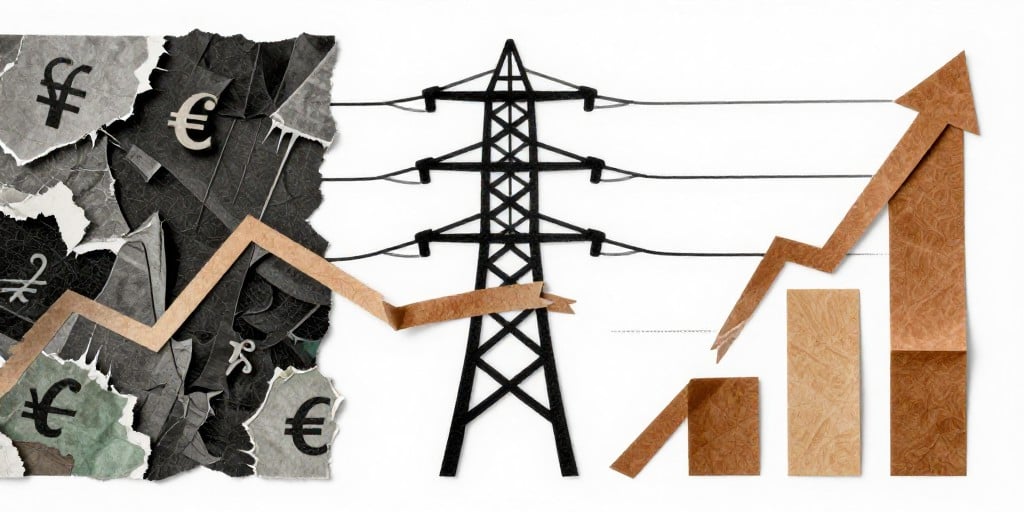
Tenaga Nasional Berhad: Navigating a Challenging Quarter Amid Strong Operational Growth
Tenaga Nasional Berhad (TNB) reported a 23.3 % decline in its second‑quarter net profit, settling at RM 888.8 million for the six months ended 30 June 2026. The dip follows a robust first‑half performance, where the company posted a net profit of RM 1.986 billion, a 10.4 % year‑over‑year fall, but still reflected a 7.5 % increase in revenue to RM 35.39 billion.
What Drove the Profit Erosion?
- Foreign‑exchange pressure – The Malaysian ringgit’s depreciation against major currencies translated into significant forex losses, offsetting gains from higher electricity sales.
- Rising operating expenses – Capital outlays for grid reinforcement and renewable‑energy integration surged, reflecting TNB’s commitment to modernising the national grid and accelerating the country’s energy transition.
Despite these headwinds, TNB’s operating profitability improved, underscoring the company’s resilience in the face of market volatility.
Dividend Policy and Shareholder Returns
On 27 August 2026, TNB declared a 25‑sen per share dividend, signalling confidence in its cash‑flow position and a continued commitment to rewarding shareholders.
Strategic Investments and Contracts
- RM 56 billion was earmarked for projects that secure power supply, meet rising demand, and expedite Malaysia’s shift to cleaner energy sources.
- TNB secured a RM 69.5 million contract with Jati Tinggi Group for the construction of a 132/33 kV gas‑insulated switchgear (GIS) substation in Kelantan, further expanding the company’s transmission infrastructure.
These initiatives demonstrate TNB’s proactive stance toward maintaining grid reliability while embracing the global energy transition.
Market Snapshot
| Metric | Value |
|---|---|
| Close price (25 Aug 2026) | RM 14.30 |
| 52‑week high | RM 14.90 |
| 52‑week low | RM 12.50 |
| Market cap | MYR 83,356,730,000 |
| P/E ratio | 17.34 |
The shares have traded within a narrow range, reflecting investor caution amid the broader economic backdrop of global energy market turbulence and regional geopolitical tensions. Nevertheless, the company’s fundamental strength—highlighted by a solid market cap and a respectable P/E—suggests that TNB remains an attractive long‑term investment for those seeking exposure to the utilities sector.
Bottom Line
While the recent quarter has delivered a sharp profit contraction, Tenaga Nasional’s strategic focus on grid upgrades, renewable integration, and secure supply contracts positions it to weather short‑term forex shocks and capitalize on the long‑term transformation of Malaysia’s energy landscape. Investors observing the company’s performance will likely weigh the company’s disciplined capital discipline against the backdrop of a recovering global economy and evolving regulatory incentives for clean energy.