
Incident Details
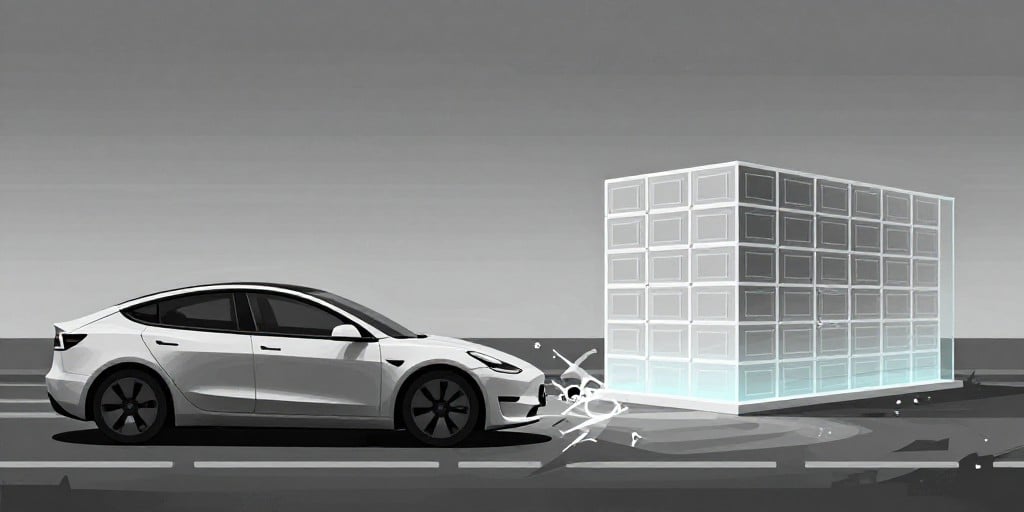
On 19 June 2026, a Tesla Model 3 operating in an automated driving assistance mode crashed into a residence in Harris County, Texas, killing 76‑year‑old Martha Avila. The vehicle was reported to be in “Full Self‑Driving” (FSD) mode at the time of impact. Tesla confirmed that the FSD feature was active during the collision and stated that the driver had overridden the system, thereby attributing responsibility to the operator.
The Harris County Sheriff’s Office documented that the driver had claimed to be using an automated driving assistance system. The crash prompted immediate inquiries from multiple regulatory bodies.
Regulatory Response
NHTSA Investigation
The U.S. National Highway Traffic Safety Administration (NHTSA) opened a formal special investigation into the fatal crash. Senators, including the Democratic leadership, have called for a thorough examination of Tesla’s safety protocols and the reliability of its FSD system. The investigation focuses on whether the system’s design and driver‑interface mechanisms could have contributed to the incident.
International Probes
- Texas State and Local Authorities – The Texas Department of Motor Vehicles and the local police force have launched independent inquiries into the incident.
- Federal and International Agencies – The Federal Trade Commission (FTC) and the United Kingdom’s Highway Agency have expressed concerns over potential data privacy and safety compliance issues related to Tesla’s autonomous features.
- European and Asian Regulators – While the European Union is awaiting a wider decision on Tesla’s supervised self‑driving software (expected in October), Finland has indicated it may approve Tesla’s system earlier than the EU consensus. In Asia, the Nasdaq’s performance was negatively impacted by a wave of sell‑offs following the news.
Market Impact
Stock Performance
- NASDAQ Trading – Tesla’s shares were trading at $405.05 on 21 June 2026, a decline from the 52‑week high of $498.83 (21 Dec 2025).
- Price‑to‑Earnings Ratio – At the time of reporting, Tesla’s P/E stood at 362.39, reflecting high investor expectations relative to earnings.
- Investor Sentiment – Early on 23 June, market data indicated a sell‑off in Tesla’s shares, mirroring a broader decline in SpaceX’s stock. This movement was attributed to the fatal crash investigation and concerns over the company’s safety record.
Analyst Outlook
Financial analysts highlighted the potential long‑term impact on Tesla’s valuation should regulatory findings require costly design modifications or result in liability settlements. Conversely, some analysts noted that the company’s market capitalization of $1.5 trillion and its diversified product line may buffer short‑term volatility.
Business Development
Megapack Partnership
On 23 June 2026, Tesla and NatPower announced a $5 billion agreement to deliver 25 GWh of Megapack storage systems. The collaboration aims to expand Tesla’s energy storage portfolio, targeting commercial and utility‑scale deployments. The deal aligns with Tesla’s broader strategy of integrating battery technologies across automotive, home, and grid‑scale applications.
Strategic Positioning
Despite regulatory scrutiny, Tesla continues to pursue growth in clean‑energy solutions. The company’s focus on battery energy storage, solar products, and its own sales and service network remains a core element of its business model, as outlined in its corporate description.
Summary
The fatal Texas crash involving a Tesla Model 3 in FSD mode has triggered investigations by the NHTSA, state authorities, and international regulators. The incident has led to a measurable decline in Tesla’s share price and raised questions about the safety of its autonomous driving systems. Concurrently, Tesla secured a substantial partnership with NatPower to expand its Megapack energy storage offerings, underscoring its continued commitment to diversified clean‑energy solutions.