
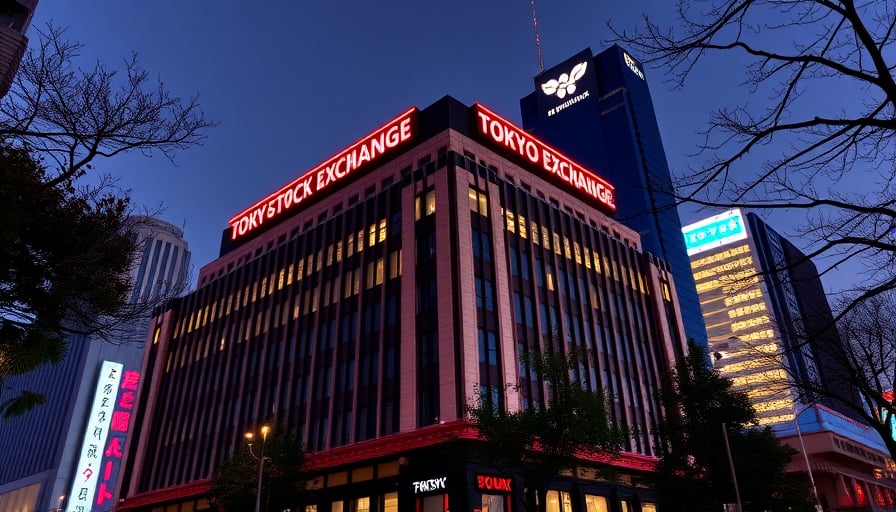
Nikkei 225 Surges Amid Geopolitical Tension and Wall Street Optimism
The Tokyo Stock Exchange’s benchmark index, Nikkei 225, closed the session on 27 January 2026 at 53 333.54, a 0.9 % gain over the previous day’s 52 800.2 closing level. The rise pushed the index to a fresh record close, surpassing the 52‑week high of 54 487.3 set on 13 January.
Drivers of the Rally
U.S. Trade Policy Reversal The rally followed a sharp reversal in U.S. trade policy. President Donald Trump’s recent threat to impose tariffs on South Korean imports—an event that had dampened Asian markets the day before—was abruptly withdrawn. The news relieved the “geopolitical shock” that had weighed on Asian equities, as reported by Avanza on 26 January.
Strong U.S. Earnings Outlook U.S. markets provided the impetus for the jump. Wall Street indices advanced, with the S&P 500 and Nasdaq posting gains that were echoed across the globe. Finanznachrichten highlighted that the Nasdaq and S&P 500 were “firmly” climbing, while the Dow was “bucking” the uptrend. The optimism was further underpinned by robust tech earnings reports and expectations of continued artificial‑intelligence momentum, as noted by Guampdn.
Positive Global Sentiment Despite lingering caution over central‑bank policy, global sentiment improved. Finanznachrichten described a “cautious optimism” that translated into buying pressure in Tokyo. The CME FedWatch indicator, which tracks expectations for the Fed’s next rate decision, showed a shift toward lower probability of a hike, adding to the bullish backdrop.
Market Reaction to Geopolitical Developments
The day before the rally, Asian markets had largely trended lower. On 26 January, Nikkei 225 fell 1.8 %, as investors braced for potential U.S. tariffs on Canadian goods—a development reported by Avanza and Investing.com. The sharp drop underscored the sensitivity of Japanese equities to U.S. trade policy. The subsequent reversal on 27 January demonstrates the market’s quick recalibration when geopolitical risk subsides.
Technical Perspective
The index’s 52‑week low of 30 792.7 (set on 6 April 2025) remains distant, suggesting that the recent rally is not yet a full cycle of recovery. However, the current close of 53 333.54 sits well above the 50‑day moving average, reinforcing the bullish narrative. If the trend continues, traders will watch for a potential break above the 54 487.3 52‑week high, which could signal a new phase of upside.
Conclusion
The Nikkei 225’s 0.9 % ascent on 27 January is a clear illustration of how geopolitical uncertainty can swiftly alter market dynamics. A single policy reversal—Trump’s withdrawal of the tariff threat—paired with positive U.S. earnings signals and a supportive global sentiment, lifted Tokyo’s benchmark to a fresh record high. Investors should remain vigilant for any resurgence of trade tensions, but the current trajectory suggests a robust, if cautious, optimism for the Japanese equity market.