
Taiwan Semiconductor Manufacturing Co. (TSMC): The Imperative Pivot in a Fragmenting Foundry Landscape
TSMC, the titan of pure‑play foundry services, stands at the epicenter of an industry that is reshaping itself around artificial intelligence, geopolitical tension, and shifting customer loyalties. Even as its market cap surpasses US $61 trillion TWD and its 52‑week high of TWD 2 440 lingers just out of reach, the company’s trajectory is being dictated by a confluence of forces that threaten its historic dominance.
1. Capacity Constraints and Competitive Pressures
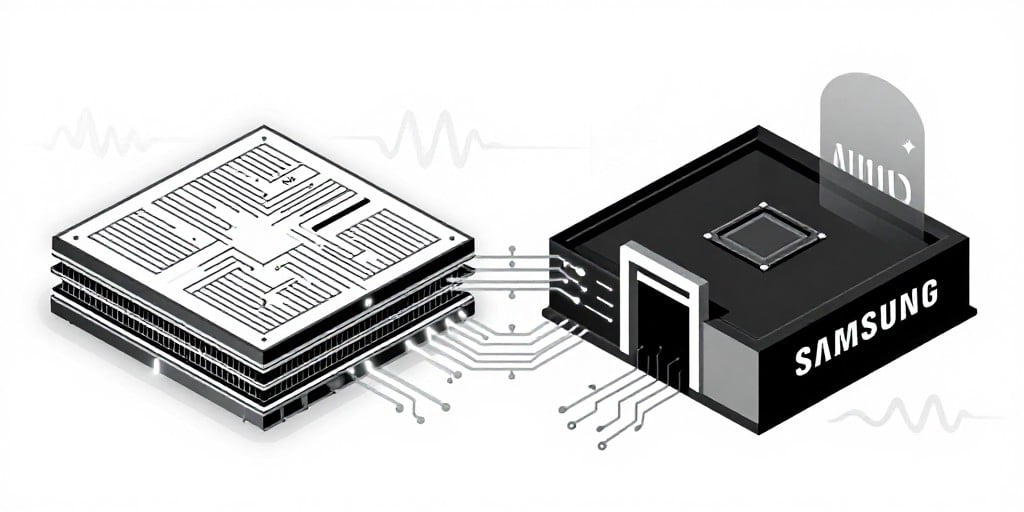
Recent reports from TipRanks and feeds.feedburner.com highlight that TSMC’s silicon output is tightening. Samsung Electronics is aggressively courting high‑profile clients such as AMD, Google, and BYD, positioning itself as a viable alternative when TSMC’s foundry slots become scarce. The narrative is clear: the long‑standing monopoly is eroding, and every chip shortage is a potential revenue drain for TSMC.
The Zacks analysis underscores this tension, suggesting that TSMC’s valuation—already high at a P/E of 32.27—may be over‑extended if capacity limits continue to stifle growth. In a market where competitors can offer similar node technology with marginally lower prices, the price‑sensitivity of the end‑users (especially AI and automotive sectors) could erode TSMC’s margins.
2. Strategic Alliances to Offset Shortages
TSMC’s 10‑year advanced packaging deal with Amkor in Arizona is a calculated move to mitigate the capacity bottleneck. By securing a local packaging and testing partner, TSMC aims to streamline the post‑wafer process and reduce lead times for its U.S. customers. However, this partnership is also a concession: it signals that the company needs external resources to meet demand, hinting at an inability to scale its own facilities quickly enough.
The deal was announced just days before a TalkMarkets article noted that Apple’s forthcoming high‑end 2028 iPhone upgrade would demand a fresh wave of chips. With Apple’s plan to produce chips domestically, Intel’s involvement, and the potential for a new Apple‑Intel collaboration (as reported by TipRanks), TSMC must be prepared to allocate scarce capacity to multiple high‑value customers simultaneously.
3. AI Chip Boom: Opportunity Versus Vulnerability
The artificial intelligence (AI) sector is a double‑edged sword for TSMC. On one side, AI workloads drive unprecedented demand for cutting‑edge process nodes, providing a revenue springboard. On the other, the industry is consolidating around a handful of AI‑specific architectures. TipRanks’ comparison between Cerebras Systems and TSMC illustrates that while TSMC offers broad‑spectrum manufacturing, newer entrants focus narrowly on AI workloads, potentially capturing market share in this high‑growth niche.
Meanwhile, Finanznachrichten reported that a startup, OpenAI Architect Labs, is attempting to accelerate chip design via AI—an innovation that could reduce the design cycle time and lower the barrier to entry for new foundries. If successful, this could intensify the competitive pressure on TSMC, especially if these startups partner with alternative manufacturing partners.
4. Geopolitical Headwinds and Regulatory Scrutiny
A InsideMonkey piece flagged Taiwan chip curbs on China, highlighting the vulnerability of TSMC to geopolitical shocks. While TSMC’s operations are global, a sudden shift in Taiwan’s export controls could ripple across the supply chain, forcing the company to re‑allocate resources or negotiate new terms with its customers. This uncertainty is a stark reminder that TSMC’s market dominance is not solely a function of technology but also of political stability.
5. Financial Performance and Investor Sentiment
In Q1, TSMC’s performance buoyed Giverny Capital Asset Management, as reported by Yahoo Finance. Yet the Zacks analysis suggests that at TWD 426 per share—well below the 52‑week high—investors are questioning whether the stock remains in a bubble territory. The TipRanks ETF coverage shows that AI supercycle funds are rallying, but the underlying hardware providers are under pressure to deliver on their high valuation assumptions.
TSMC’s current trading price of TWD 2 385 (as of June 16, 2026) sits comfortably above the 52‑week low but still distant from its peak. With a P/E of 32.27, the company is priced for continued growth, but any slowdown in AI demand, intensified competition from Samsung, or a regulatory clampdown could precipitate a sharp correction.
6. Conclusion: The Imperative of Strategic Flexibility
TSMC’s trajectory is a cautionary tale about the limits of scale in an era of rapid technological change and geopolitical fragmentation. The company’s capacity constraints, coupled with rising competition and the shifting dynamics of AI chip demand, compel it to adopt a more flexible, partnership‑centric strategy. While the 10‑year advanced packaging deal and the alliance with Apple’s domestic chip strategy are steps in the right direction, TSMC must accelerate its own capacity expansion or risk ceding ground to rivals that are faster, more agile, and less geopolitically exposed.
The stakes are high: TSMC’s future growth hinges on its ability to balance its current market dominance with the imperative to innovate, scale, and safeguard against an increasingly complex global supply chain. If it fails to do so, the very valuation that fuels its expansion could become the catalyst for its decline.