
Ningbo Tuopu Group Co. Ltd.: A Tale of Growth, Volatility, and Strategic Shifts
The Shanghai‑listed auto‑component maker, ticker 601689, has once again found itself at the center of market chatter. On 12 February 2026, the company announced its first extraordinary general meeting (EGM) of the year, confirmed by a legal opinion from Shanghai’s Guohao Law Firm. The meeting, however, did not produce any resolutions—a silent but telling sign of internal deliberation amid a turbulent operating environment.
Earnings Forecast: “增收不增利” and Marginal Profit Decline
In an earnings preview released on 12 February, Tuopu projected 2025 revenue of ¥287.5 bn–303.5 bn, an 8.1 %–14.1 % rise year‑on‑year. Yet net profit was expected to decline by 3.4 %–13.3 % to ¥26.0 bn–29.0 bn, with non‑core earnings slipping 0.3 %–11.3 % to ¥24.2 bn–27.2 bn. Analysts have dubbed this “增收不增利” (growth without profit), echoing a broader trend of margin compression in the auto‑components sector. The root causes, per management, are volatile raw‑material prices and intensified price competition, especially in overseas markets where new plants have been launched.
The forecast came on the heels of a 2025 operating performance report that highlighted the firm’s efforts to deepen customer R&D collaboration, accelerate platform‑based productization, and expand internationally. Yet these initiatives have not yet translated into a robust earnings cushion, as the company’s P/E ratio of 45.74 underscores a market pricing in a high growth premium that is fragile under current cost pressures.
Strategic Pivot to Robotics and AI
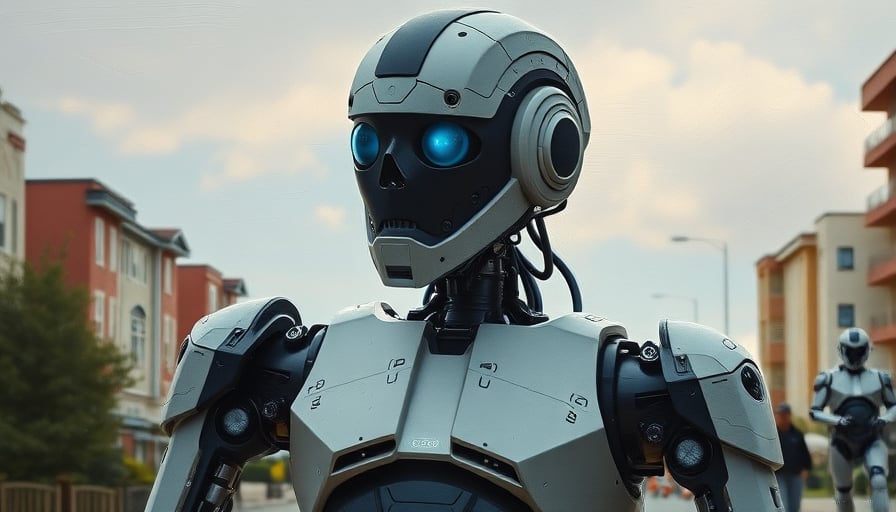
Tuopu is not idle. The firm is actively courting the burgeoning robotics and AI space, a move mirrored by peers such as Tesla, Chery, and Xiaopeng, who have shifted portions of their production lines to robot manufacturing. As reported by Shanghai Securities on 13 February, the auto‑industry’s “智能化转型” (intelligent transformation) is reshaping the very definition of automotive value creation.
Tuopu’s own R&D portfolio—vibration‑control mechanisms, molding, suspension systems—aligns with the skill sets needed for precision robotics. Moreover, the State Council’s recent push for “算力+电力” (compute‑plus‑power) synergy and the central government’s emphasis on AI‑related “大模型” (large‑model) technology provide a favorable policy backdrop. If Tuopu can harness these trends, it may turn the current profit squeeze into a new revenue engine.
Market Reaction and Liquidity Dynamics
On 12 February, the company’s shares traded at ¥72.01, trailing the 52‑week high of ¥86.88. The smart‑vehicle ETF (516380) saw Tuopu dip 0.92 %, while the optional‑consumption ETF (562580) recorded a 0.91 % decline. Despite these setbacks, the broader automotive sector posted a modest –0.48 % decline on 13 February, yet attracted ¥7.38 bn of net institutional inflow, reflecting a lingering confidence in auto‑components as a foundational industry.
The day’s macro‑environment was less favourable for equities overall, with the Shanghai Composite index falling 1.26 %. Nonetheless, the fund flows suggest that institutional investors are selectively targeting resilient players like Tuopu, perhaps betting on a turnaround driven by new product lines and cost‑control measures.
Governance and Shareholder Activity
The EGM’s lack of resolutions could signal that the board is waiting for clearer signals from the market or from the company’s operational metrics before making strategic commitments. However, the accompanying legal opinion indicates that the meeting was conducted in compliance with statutory requirements, and no material misinformation was disclosed.
A separate report on 12 February highlighted that the company’s chairman and his family have recently liquidated shares amounting to ¥900 million (approximately CNY 9 bn), a move that raises questions about insider confidence. While insider sales are not uncommon in Chinese A‑shares, the timing—right after a profit‑decline forecast—may erode investor sentiment unless offset by a credible turnaround plan.
Bottom Line
Ningbo Tuopu Group sits at a crossroads. On one hand, its earnings trajectory is under pressure, with a forecast that suggests revenue growth without a corresponding profit lift. On the other, the company is aligning itself with the next wave of industrial transformation: robotics and AI, buoyed by supportive government policy and a shifting automotive paradigm.
Investors will likely weigh the company’s high valuation (P/E > 45) against the potential upside of its strategic pivot. The absence of decisive actions at the 2026 EGM, coupled with insider sales, will remain a red flag. Yet the firm’s established technical base, international reach, and recent capital infusions for research projects provide a platform that, if leveraged effectively, could redefine its market position and restore profitability.
In a market where margins are shrinking and innovation cycles are shortening, Tuopu’s future will hinge on how quickly and successfully it can convert its R&D prowess into profitable, AI‑driven product lines. The next quarter will be decisive.