
Uber Technologies Inc. Accelerates Into the Autonomous Future While Solidifying Mapping Dominance
Uber Technologies Inc., the San Francisco‑based industrial technology leader, has taken decisive strides on two fronts that will define its competitive positioning over the next decade: the unveiling of a production‑ready robotaxi and the renewal of a worldwide mapping partnership with TomTom. Together, these moves underscore Uber’s relentless pursuit of technological sovereignty while exposing strategic vulnerabilities in an increasingly crowded autonomous‑mobility landscape.
The Robotaxi Reveal: A Bold Statement or a Mere Marketing Gimmick?
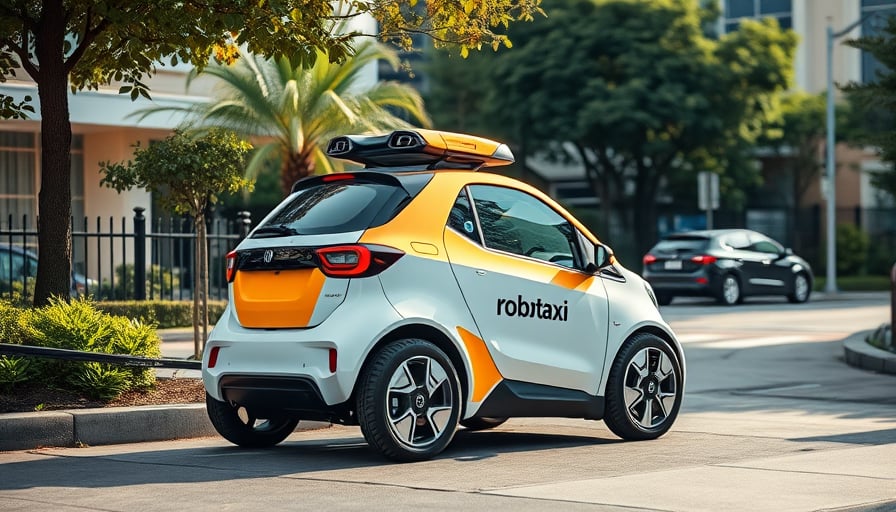
On January 5, 2026, during the Consumer Electronics Show in Las Vegas, Uber announced a production‑intention robotaxi alongside Lucid Group and Nuro. The vehicle, described as “the most luxurious robotaxi in the industry,” promises an “unprecedented in‑cab experience.” It marks the first time Uber has publicly demonstrated a fully autonomous, commercially viable ride‑share platform that can operate without human intervention.
However, the announcement raises critical questions:
- Operational Readiness – Autonomous on‑road testing began in December, merely weeks before the CES reveal. While the rapid timeline signals confidence, it also suggests that the system may still face significant regulatory and safety hurdles before it can scale.
- Competitive Pressure – Nvidia’s recent launch of the Alpamayo autonomous‑driving AI models injects fresh competition into the AI and robotics space. If Nvidia’s open‑source solution gains traction, Uber’s proprietary stack could lose its edge, especially as Tesla and other OEMs continue to refine their own autonomous fleets.
- Financial Implications – Uber’s market cap, hovering at $172 billion, and its price‑earnings ratio of 10.20, reflect a valuation that may not fully account for the heavy R&D expenditures required to bring a robotaxi to market. Investors will scrutinize whether the robotaxi can generate sufficient revenue to justify the capital outlay.
Despite these risks, Uber’s robotaxi announcement signals an aggressive commitment to dominate the autonomous mobility sector. By partnering with Lucid and Nuro, Uber leverages complementary expertise: Lucid’s luxury platform, Nuro’s autonomous testing capabilities, and Uber’s vast global network. This triangulation could accelerate time‑to‑market and reduce development costs, potentially delivering a scalable solution that redefines the ride‑share model.
TomTom Partnership Renewal: Reinforcing the Backbone of Uber’s Ecosystem
Simultaneously, Uber reaffirmed its worldwide agreement with TomTom, a Dutch mapping and location‑technology company. TomTom will continue to provide maps, APIs, and live services across all Uber platforms—a critical component for navigation, surge pricing, and real‑time routing.
The renewal carries several strategic implications:
- Operational Dependence – Uber remains heavily reliant on third‑party mapping data. Any disruption in TomTom’s services could expose Uber to significant operational risk, especially as the company expands into autonomous and delivery segments where precise location data is paramount.
- Competitive Leverage – TomTom’s integration with Amazon’s Alexa custom assistant, as highlighted by a concurrent partnership announcement, suggests that the mapping provider is diversifying its ecosystem. Uber must ensure it retains a competitive edge in providing seamless navigation and location intelligence.
- Revenue Synergy – The continued partnership allows Uber to monetize its mapping services more efficiently, potentially offsetting the capital expenditures associated with the robotaxi project.
Market Context and Investor Sentiment
Uber’s share price, at $80.74 on January 4, 2026, sits comfortably below its 52‑week high of $101.99 but above the low of $60.63. The company’s valuation metrics—particularly its P/E ratio of 10.20—indicate that investors expect modest growth, yet the recent announcements suggest a potential upside if the robotaxi and mapping initiatives succeed.
Yet, the broader market environment cannot be ignored. The automotive and technology sectors have witnessed significant consolidation, with Nvidia’s AI initiatives and Tesla’s aggressive self‑driving roadmap intensifying competitive pressure. Uber’s strategic moves must therefore be evaluated against a backdrop of rapid technological evolution and shifting consumer expectations.
Conclusion: A Calculated Gambit
Uber’s dual announcements—launching a production‑ready robotaxi and renewing its TomTom partnership—are more than corporate milestones; they represent a calculated gambit to secure a foothold in the autonomous mobility arena while reinforcing its operational backbone. The company is betting that its expansive global network, combined with cutting‑edge autonomous technology and robust mapping services, will deliver a sustainable competitive advantage.
However, the path ahead is fraught with technical, regulatory, and competitive challenges. Uber’s success will hinge on its ability to translate these bold announcements into reliable, profitable services that resonate with consumers worldwide. The next few years will test whether Uber can turn this vision into a market reality or whether it will become another cautionary tale of overambitious technology deployment.