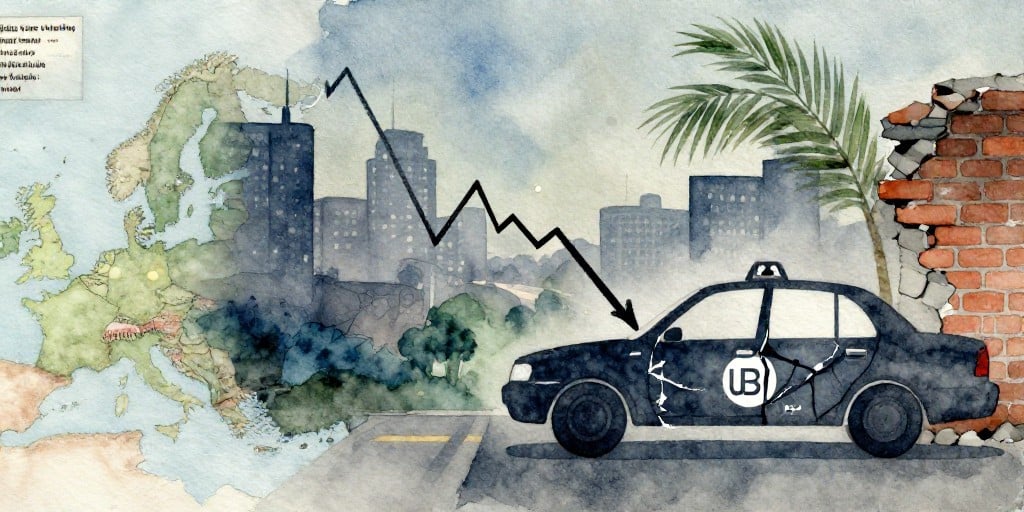
Uber Technologies Inc.: Navigating Regulatory Scrutiny, Strategic Innovation, and Market Perceptions
The ride‑hailing platform’s latest disclosures reveal a company at the intersection of evolving regulatory frameworks, technological experimentation, and industry consolidation. While analysts have questioned the durability of Uber’s moat, recent moves demonstrate an ambition to diversify revenue streams and reinforce its market position.
1. Regulatory Pressure on Personalised Pricing
The U.S. Federal Trade Commission’s request for data from Walmart, Uber, Delta, and other retailers underscores heightened scrutiny of algorithms that enable personalised pricing. Uber’s inclusion in the request signals the agency’s intent to probe the company’s data‑driven pricing models, which have long been touted as a competitive advantage. Compliance will necessitate a robust data governance framework, potentially increasing operational overhead but also offering an opportunity to refine transparency practices.
2. Blockchain‑Enabled Corporate Investment
In a bold experiment, Uber joined HSBC and Franklin Templeton in deploying a public blockchain for corporate investment. The initiative, reported by Bloomberg, allowed the company to allocate corporate funds through a distributed ledger, enhancing traceability and reducing counterparty risk. This move positions Uber at the forefront of fintech innovation, aligning its brand with cutting‑edge financial infrastructure while potentially unlocking new revenue channels through tokenized assets.
3. Market Perception of Uber’s Competitive Edge
An analysis on Seeking Alpha, cited by ariva.de, argues that the market overestimates Uber’s competitive moat and underappreciates its downside risk. The platform’s dominant position is challenged by increasing regulatory constraints and intensifying competition from both traditional ride‑share incumbents and emerging delivery services. Investors must weigh these factors against Uber’s sizable market cap of $133.32 bn and a price‑to‑earnings ratio of 14.33, which reflects moderate valuation pressure.
4. Industry Consolidation and the Delivery Segment
While Uber’s core ride‑share business remains robust, the broader mobility ecosystem is experiencing consolidation. DoorDash’s acquisition of Instacart for $17 bn illustrates a strategic pivot toward grocery and on‑demand delivery—a segment where Uber operates through Uber Eats. Delivery Hero’s continued growth, highlighted in nebenwerte‑magazin.com and finanzen.net, further illustrates the attractiveness of integrated logistics platforms. These developments suggest that Uber’s expansion into delivery must be pursued with strategic partnerships or acquisitions to maintain scale.
5. Financial Performance Context
With a closing price of $65.27 on 27 Oct 2026, Uber sits near the bottom of its 52‑week range (low $64.69). The company’s market cap and P/E ratio indicate a moderate valuation relative to industry peers. Any shift in regulatory posture or consolidation activity will likely reverberate through investor sentiment, affecting both short‑term trading dynamics and long‑term capital allocation decisions.
6. Forward‑Looking Outlook
Uber’s current trajectory reflects a dual strategy: leveraging blockchain technology to modernise corporate finance and responding to FTC scrutiny by tightening data practices. Simultaneously, the company must navigate competitive pressure from Delivery Hero and DoorDash while safeguarding its ride‑share moat. Successful execution will hinge on:
- Regulatory Compliance – Demonstrating transparent pricing models and robust data protection to mitigate FTC risks.
- Strategic Partnerships – Exploring collaborations in the delivery space to capture synergies with DoorDash and Instacart.
- Technological Innovation – Expanding blockchain initiatives to create new investment products and improve operational efficiency.
- Capital Discipline – Managing cash flows prudently amid market volatility and potential merger‑acquisition activity.
In sum, Uber Technologies Inc. stands at a pivotal juncture. By addressing regulatory challenges, capitalising on blockchain experimentation, and actively engaging in the evolving delivery landscape, the company can reinforce its competitive stance and deliver sustained shareholder value.