
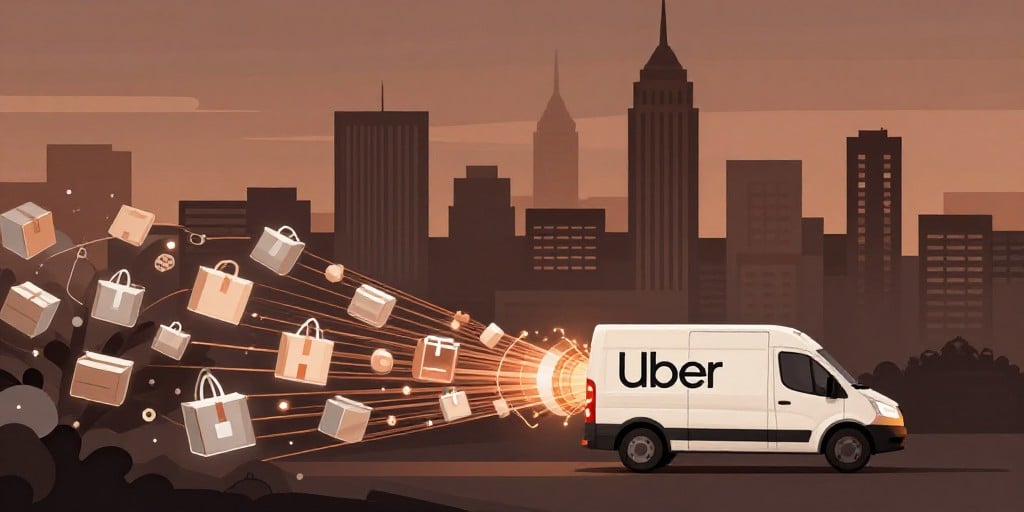
Uber Technologies Inc. Positions Itself for a Major Expansion in the Global Food‑Delivery Market
Uber Technologies Inc. (NASDAQ: UBER) announced on 16 July 2026 its intent to acquire Germany‑based Delivery Hero SE in a transaction valued at $14.8 billion. The deal, which has already been structured through a Business Combination Agreement, will create one of the world’s largest delivery‑platform conglomerates, expanding Uber’s reach to almost one hundred markets worldwide.
Deal Structure and Valuation
The purchase price of $14.8 billion translates to a $41.50 per‑share offer for Delivery Hero’s shares, a premium that reflects Uber’s strategic focus on scaling its food‑delivery business. The agreement is being executed via a Delaware‑based subsidiary of Uber, with the intent to merge Delivery Hero into Uber’s operating framework. The transaction is expected to close within the next 90 days, pending regulatory approvals and customary closing conditions.
Market Impact
- Geographic Reach: Uber will immediately gain full operating rights in all of Delivery Hero’s existing markets, which include key European, Latin American, and Asian territories. The combined entity will have an estimated $10 billion in annual gross transaction volume (GTV) from food delivery alone, positioning it as a direct competitor to Amazon Fresh, DoorDash, and Deliveroo.
- Competitive Landscape: By absorbing Delivery Hero, Uber will neutralize one of its most significant rivals in the German and broader European markets. The deal also allows Uber to leverage Delivery Hero’s established logistics network and local brand equity, especially in high‑growth markets such as Spain, where brands like Glovo were previously considered.
- Financial Outlook: Uber’s current Price‑to‑Earnings ratio of 18.05 and a market cap of $147.9 billion suggest that the acquisition is priced at a level consistent with the company’s valuation multiples. Analysts anticipate that the integration will generate synergies of $800 million annually, primarily through cost efficiencies in driver management and platform technology.
Strategic Rationale
Uber’s leadership has repeatedly underscored the importance of a diversified platform. While its ride‑hailing business continues to dominate, the food‑delivery segment has become a critical growth engine, especially in the post‑pandemic recovery period. The Delivery Hero acquisition:
- Deepens Uber’s presence in high‑density urban markets where food‑delivery margins remain robust.
- Expands the company’s merchant ecosystem, creating cross‑sell opportunities for Uber’s payment and logistics services.
- Bolsters Uber’s global brand, reinforcing its narrative as a “platform of platforms” capable of serving a wide array of consumer needs.
Forward‑Looking Perspective
With Delivery Hero’s infrastructure, Uber is poised to accelerate the rollout of autonomous delivery vehicles in select European markets, leveraging the company’s existing investments in driver‑less technology. Furthermore, the expanded platform will provide a richer data set for Uber’s AI‑driven demand forecasting models, enabling more precise pricing and efficient dispatch.
In the broader industrial context, Uber’s move signals a shift toward consolidation among platform operators. As regulators scrutinize data privacy and labor practices, Uber’s ability to integrate Delivery Hero’s operations under a unified compliance framework will be crucial. Successful integration could set a precedent for future acquisitions in the gig‑economy space, potentially reshaping the competitive dynamics of both ride‑hailing and food‑delivery sectors.
Bottom line: The acquisition of Delivery Hero is a decisive step for Uber Technologies Inc., transforming it from a primarily mobility company into a global omnichannel platform that commands significant influence across transportation, logistics, and consumer services. The strategic breadth and scale gained from this deal will likely drive sustainable growth and create enduring competitive advantages in the years ahead.