
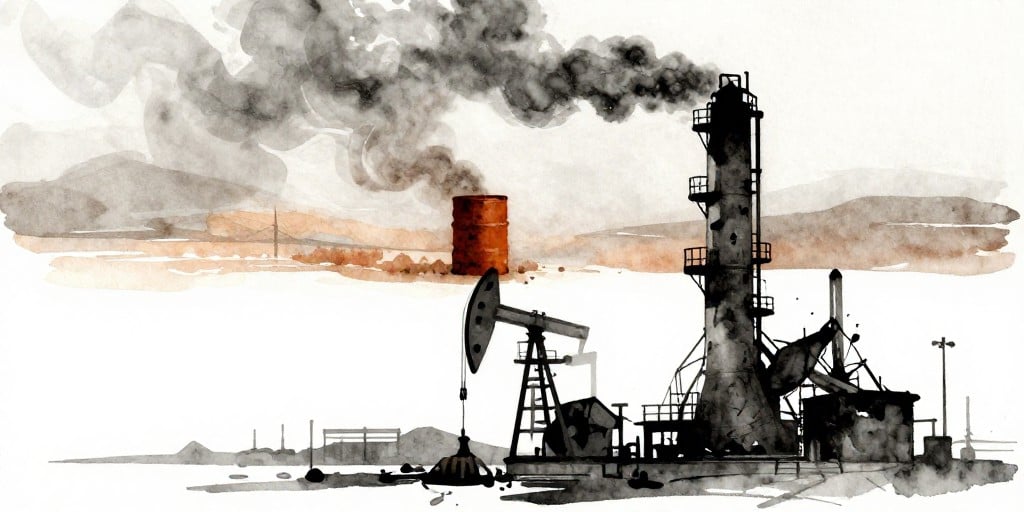
LUKOIL PJSC Faces Intensifying Pressure on Its Energy Infrastructure
On 21 August 2026, LUKOIL PJSC—Russia’s largest non‑state oil producer—experienced a series of events that underscored the vulnerability of its core assets amid the ongoing Russo‑Ukrainian conflict. Two separate reports from OilPrice.com and Bloomberg.com confirmed that Ukraine’s air‑strike campaign targeted the company’s Perm refinery, a 260,000‑barrel‑per‑day facility located in the Urals region. The same day, Novinite.com and TASS reported that U.S. authorities extended the deadline for discussions concerning LUKOIL’s foreign assets, notably its Bulgarian oil holdings.
1. Attacks on the Perm Refinery
Ukraine’s strategic focus has shifted toward crippling Russian energy production. The Perm refinery, situated roughly 1,500 km east of Moscow, had previously sustained damage from a drone strike in late July. The new assault, carried out with long‑range weapons, further diminished Russia’s refinery output—a trend that has pushed export volumes to the lowest levels since April 2026. The refinery’s closure has amplified fuel shortages across Russia, prompting several regions to re‑introduce rationing measures and exposing the fragility of the nation’s supply chain.
The attacks also carry broader geopolitical ramifications. The ongoing pressure on Russian refineries has intensified diplomatic tensions, with Ukraine urging Western allies to reinforce Patriot air‑defence supplies. Concurrently, Moscow has intensified its own offensive operations, targeting Ukrainian infrastructure, including major cities and Black Sea ports.
2. U.S. Extension of the LUKOIL Licensing Deadline
In a separate development, U.S. officials extended the general license governing discussions over LUKOIL’s foreign assets until 19 September 2026. This extension, reported by TASS, allows continued negotiations concerning LUKOIL’s Bulgarian oil assets and other overseas holdings. The U.S. extension reflects a cautious approach: while the U.S. maintains sanctions against the company, it also recognizes the need for a structured dialogue to address the complexities of asset ownership, transfer, and compliance with international law.
The Novinite.com coverage of the extension highlights the significance of LUKOIL’s Bulgarian assets for the company’s global portfolio. These assets have been under scrutiny by Western regulators, and the extended deadline may provide an opportunity for LUKOIL to secure a more favorable arrangement or to restructure its international presence.
3. Impact on LUKOIL’s Financial Position
Despite the operational setbacks, LUKOIL’s market capitalization remains substantial at approximately 5.49 trillion RUB. However, the company’s price‑to‑earnings ratio of 57.58 indicates heightened market expectations for recovery and resilience. The Perm refinery’s loss of production capacity directly affects revenue streams, while the potential reallocation of foreign assets could alter the company’s balance sheet and earnings projections.
The close price of 4,288 RUB as of 17 August 2026, set against a 52‑week high of 6,669 RUB and a low of 3,952.5 RUB, reflects volatility driven by both geopolitical risks and supply‑chain disruptions. Investors must weigh the short‑term operational losses against the long‑term strategic benefits of maintaining a diversified asset base across Russia, the United States, and Europe.
4. Outlook
The convergence of military strikes against LUKOIL’s core refining capacity and the U.S. extension on asset licensing suggests a turbulent period ahead. While the company’s core operations in Western Siberia and its domestic pipeline network remain operational, the loss of a key refinery underscores the necessity of robust risk mitigation strategies.
Looking forward, LUKOIL must navigate:
- Operational Resilience: Enhancing protective measures for critical infrastructure and accelerating the development of alternative refining capacities.
- Regulatory Compliance: Engaging with U.S. authorities to resolve outstanding sanctions issues and to secure the future of its Bulgarian oil assets.
- Market Confidence: Communicating transparently with shareholders about contingency plans and projected timelines for restoration of full operational capacity.
The situation remains fluid, and LUKOIL’s ability to adapt to the evolving geopolitical landscape will be pivotal in maintaining its position as a leading player in the global energy sector.