
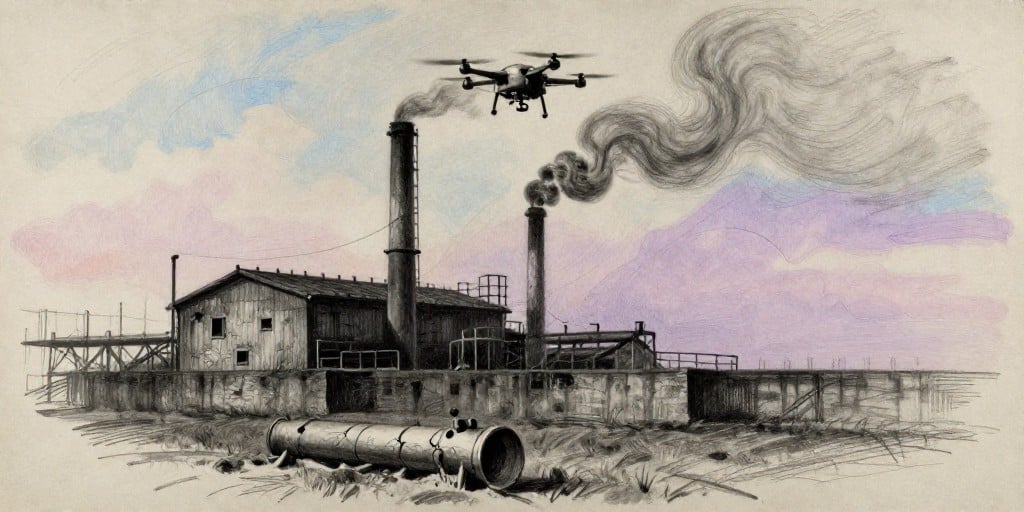
Impact of Ukraine’s Drone Campaign on Russian Fuel Supplies and Rosneft’s Operations
Recent Ukrainian drone attacks on Russian oil refineries have intensified fuel shortages across the country, prompting the Russian government to impose new restrictions on gasoline sales. The incidents underscore the vulnerability of key energy infrastructure and affect the operations of Rosneft Oil Co. PJSC, a major Russian oil producer listed on the Moscow Stock Exchange.
Drone Strikes on Major Refineries
On 28 June 2026, Ukrainian forces struck the Slavyansk‑na‑Kubani refinery in the Krasnodar region, igniting a blaze and damaging an electric transmission line and a gas pipe. The facility, with an approximate capacity of 100 000 barrels per day, supplies fuel to Russian‑occupied Crimea and has been repeatedly targeted since the start of the conflict.
The same day, a drone attack hit a refinery in the Yaroslavl region. The Yaroslavl refinery, jointly owned by Rosneft Oil Co. and Gazprom PJSC, is Russia’s fifth‑largest facility with an annual output of about 15 million tons (≈ 300 000 barrels per day). Although officials did not report physical damage, the attack was confirmed by regional authorities.
Consequences for Fuel Availability
President Vladimir Putin acknowledged a “certain deficit” of fuel, citing the cumulative effect of these attacks on the nation’s energy supply. The Ukrainian campaign has led to widespread shortages, long queues at gas stations, and the introduction of fuel rationing in many regions.
In response, the Russian government declared a “high state of readiness” in the Irkutsk region and enacted new sales limits. Rosneft fuel stations are now subject to a daily cap of 50 litres per vehicle. Other stations may impose lower limits, and the sale of fuel in containers has been banned. These measures aim to reduce congestion at service stations and mitigate the impact of the ongoing supply crisis.
Implications for Rosneft Oil Co. PJSC
Rosneft, a key player in Russia’s oil and natural gas sectors, operates refineries in Western Siberia, Sakhalin, the North Caucasus, and the Arctic. The Yaroslavl refinery, a critical node for supplies to central and north‑western Russia, is directly owned by Rosneft. Damage or operational disruptions at this facility, coupled with nationwide fuel shortages, could affect the company’s output and revenue streams.
As of 27 June 2026, Rosneft’s share price stood at 327 RUB, with a 52‑week high of 518.7 RUB and a low of 292.15 RUB. The company’s market capitalization is approximately 3.05 trillion RUB, and its price‑earnings ratio is 2.2, indicating modest valuation relative to earnings.
Given the current geopolitical tensions and the increasing frequency of targeted attacks on energy infrastructure, Rosneft’s operational resilience and its ability to maintain supply chains will be critical to sustaining market confidence and meeting domestic fuel demands.