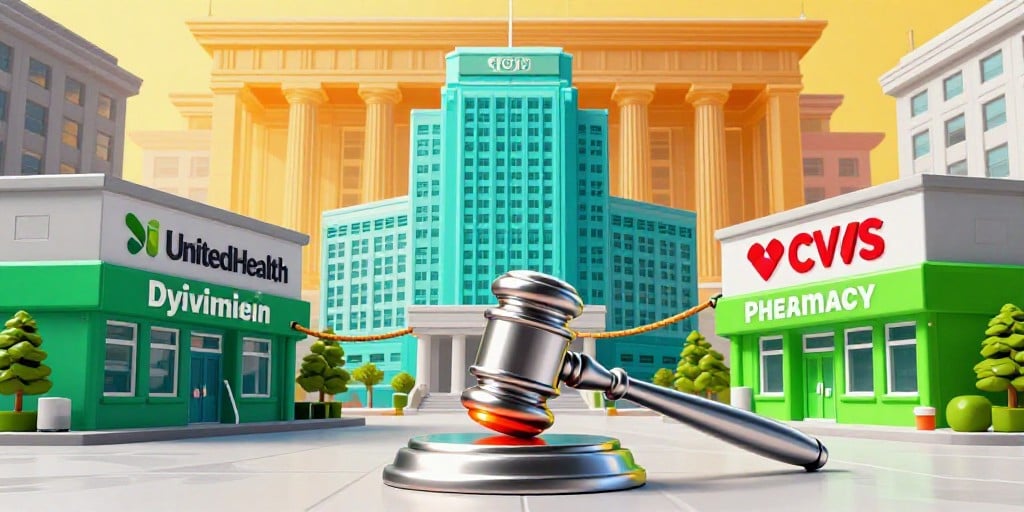
UnitedHealth Group Faces a Tightly Packed Landscape of Strategic Moves
UnitedHealth Group (NYSE: UNH), the preeminent health‑care provider with a market cap of $359 billion, has entered a season of pivotal corporate and regulatory developments that could redefine its trajectory. On the same day that its board approved a quarterly dividend, the company was thrust into the cross‑hairs of political critique, potential asset divestitures, and sector‑wide investment scrutiny.
Dividend Approval Signals Confidence, but Raises Questions About Capital Allocation
On November 4, 2026, UnitedHealth’s board granted a quarterly dividend, signaling management’s confidence in the firm’s cash‑flow stability and commitment to rewarding shareholders. With a closing price of $404.44 and a 52‑week high of $461.62, the dividend underscores the company’s robust profitability (P/E 22.96). Yet the announcement occurs against a backdrop of significant strategic uncertainty. Investors now ask: Is the dividend a distraction from more urgent questions about the firm’s long‑term growth strategy?
Political Pressure and Antitrust Scrutiny Intensify
On November 2, Elizabeth Warren publicly accused the Trump‑era DOJ of granting UnitedHealth “more power” in its $3.3 billion acquisition of Amedisys. The claim, lodged in a high‑profile statement, raises the specter of renewed antitrust investigations. UnitedHealth’s consolidation strategy—expanding through acquisitions such as Amedisys—has already attracted regulatory attention, and the latest allegation could prompt a re‑examination of the deal’s compliance with competitive‑market standards. For a company that prides itself on providing employer‑based health‑benefit solutions globally, any perceived overreach threatens both its market reputation and its operational freedom.
Asset Divestiture or Spin‑Off? The CVS Split Riddle
The November 4 Forbes article warns that a forthcoming CVS split could force UnitedHealth to divest or spin off assets. If CVS, a major retail‑pharmacy partner, undergoes restructuring, UnitedHealth may need to re‑evaluate its Optum and other provider‑centric holdings. The prospect of shedding valuable assets not only impacts revenue streams but also challenges UnitedHealth’s integrated care model—one that has been a cornerstone of its competitive advantage in the health‑care services sector.
Analyst Signals of Undervaluation
In a separate press release on November 2, BetterInvesting Magazine identified UnitedHealth as an “undervalued stock” for its January‑February 2027 issue. This endorsement comes at a price near $404, comfortably above the 52‑week low of $255.97 yet below the high of $461.62. The magazine’s recommendation hints at a bullish view that the market has yet to fully price in UnitedHealth’s long‑term earnings prospects. However, this optimism must be tempered by the looming regulatory and operational uncertainties detailed above.
Broader Market Context and Midterm Election Uncertainty
The broader market narrative, as highlighted in a CNBC piece on November 3, suggests that the upcoming midterm elections could “jolt” stocks, especially if a Democratic sweep of Congress materializes. While the S&P 500’s current upside provides a short‑term buffer, UnitedHealth’s performance could still be influenced by shifts in health‑policy legislation, insurance regulations, and employer‑benefit mandates. The firm’s exposure to federal policy—particularly in employer‑sponsored health‑benefit programs—makes it a candidate for volatility tied to political outcomes.
Sector Momentum and Peer Comparisons
Biotechnology and health‑care indices (XLV, XBI, UNH) have shown modest gains, with UnitedHealth contributing to the upward trend of the XLV sector. Yet the sector’s overall strength is tempered by caution around genomics stocks. Analysts on Zacks have questioned whether Optum Insight’s spending will translate into sustainable profit growth, hinting that UnitedHealth’s internal capital allocation may not yield the expected returns.
Bottom Line
UnitedHealth Group sits at a crossroads:
- Dividend payout signals short‑term shareholder appeasement but may divert attention from structural challenges.
- Political scrutiny could trigger antitrust investigations that constrain future acquisitions or compel divestitures.
- Potential CVS split introduces uncertainty regarding asset retention and partnership stability.
- Market sentiment remains bullish, yet the firm’s valuation may be influenced by upcoming political shifts and sectoral dynamics.
Investors and stakeholders must weigh UnitedHealth’s robust financial foundation against a backdrop of regulatory headwinds, strategic asset realignments, and a political climate that could reshape the health‑care landscape. The company’s ability to navigate these multifaceted pressures will determine whether it can sustain its industry dominance or will be forced to recalibrate its growth strategy in the face of external challenges.