
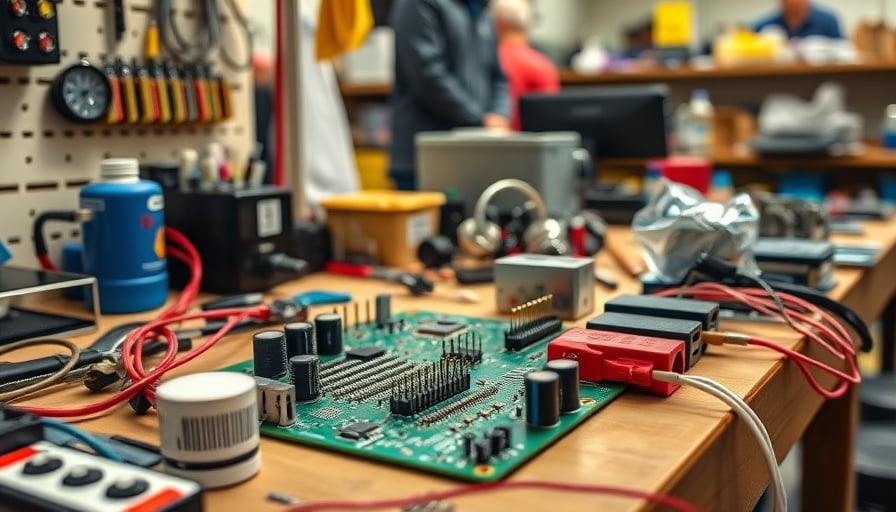
Vicor Corporation, a prominent player in the Electrical Equipment industry, has recently been the subject of scrutiny due to its financial performance and corporate actions. As a design house, manufacturing establishment, and marketer of modular power components and complete power systems, Vicor operates from Andover, United States, and serves a global market through independent distributors. Despite its strategic positioning within the Industrials sector, the company’s financial metrics and recent insider activities raise critical questions about its future trajectory.
As of December 14, 2025, Vicor’s closing price stood at $95.59, a notable decline from its 52-week high of $102.19 on December 10, 2025. This peak was followed by a significant drop to a 52-week low of $38.92 on April 29, 2025, highlighting the volatility in its stock performance. Such fluctuations underscore the challenges Vicor faces in maintaining investor confidence amidst a competitive and rapidly evolving market landscape.
The company’s valuation metrics further compound these concerns. With a price-to-earnings (P/E) ratio of 54.36, Vicor appears overvalued compared to industry standards, suggesting that investors may be paying a premium for its shares without commensurate earnings growth. This high P/E ratio, coupled with a price-to-book ratio of 6.93, indicates that the market may be overestimating the company’s intrinsic value, potentially leading to future corrections.
Moreover, recent insider trading activities have added to the uncertainty surrounding Vicor. On December 12, 2025, insider Jason Carlson sold 7,639 shares, a move that could be interpreted as a lack of confidence in the company’s near-term prospects. Insider sales often serve as a red flag for investors, prompting them to reassess their positions and the company’s future performance.
Despite these challenges, Vicor continues to play a crucial role in the conversion of primary power into direct current for electronic circuits, a critical function in numerous electronic products across North and South America and internationally. However, the company’s ability to capitalize on this demand and translate it into sustainable financial performance remains in question.
In conclusion, while Vicor Corporation maintains a significant presence in the Electrical Equipment industry, its financial metrics and recent insider activities suggest potential vulnerabilities. Investors and stakeholders must remain vigilant, critically assessing the company’s strategic initiatives and market positioning to navigate the uncertainties ahead. As Vicor navigates these challenges, its ability to innovate and adapt will be crucial in determining its long-term success in a highly competitive industry.