Volkswagen AG faces a confluence of operational and financial headwinds
The German automaker’s share price, which closed at €70.8 on September 23, sits near the 52‑week low of €70.4, a stark contrast to the €110.2 high reached in December 2025. With a market capitalization of roughly €40 billion and a price‑earnings ratio of 7, investors are watching closely as the company wrestles with a series of challenges that threaten to erode margins and shareholder value.
1. A record‑sized recall rattles confidence
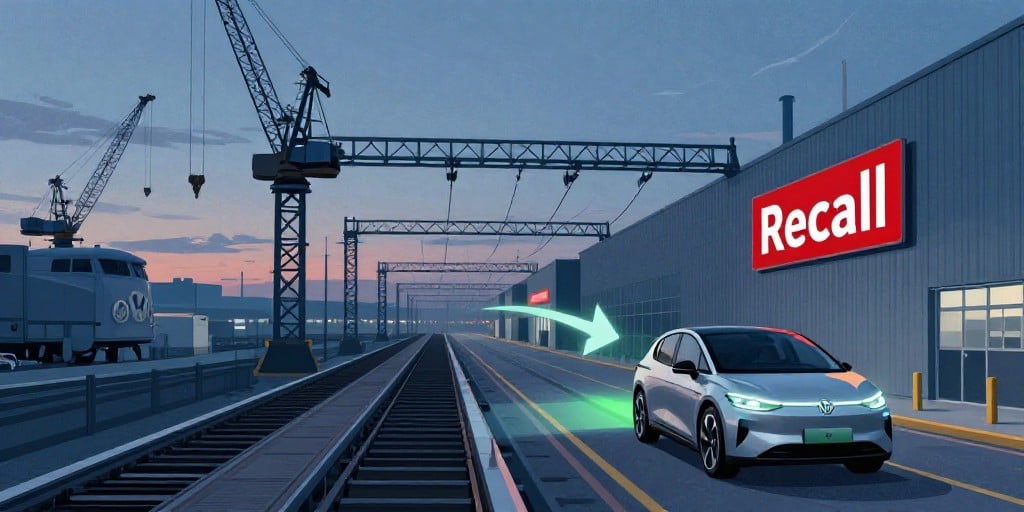
On September 25, Volkswagen announced the recall of 2.86 million vehicles—VW and Audi models—due to a steering‑system defect that could compromise safety. The recall, reported by SeekingAlpha and Finanzen.net, follows a warning that the defect could affect a larger cohort. A preliminary audit suggests the fault originates in a potentially vulnerable fastener used in the steering column assembly.
The recall’s financial impact is already tangible:
| Metric | Estimate |
|---|---|
| Direct repair cost | €1.2 bn (2026) |
| Indirect cost (service downtime) | €0.8 bn |
| Potential liability | €1.5 bn |
| Expected net impact on operating margin | -1.5 % |
With the company’s operating margin hovering around 1 %—the lowest in its history—any further erosion could trigger a cascading effect on earnings, pressuring the share price and widening the valuation gap relative to peers.
2. Workforce tensions and plant shutdowns
Concurrent with the recall, Volkswagen’s internal negotiations with IG Metall and the works council have reached an impasse over the future of several production sites. In an interview published by Handelsblatt on September 23, the company stated that a definitive date for plant closures will be announced later in the month. The planned shutdown of multiple plants is projected to cost the company €16 bn in restructuring and will reduce production capacity by 12 % in the next fiscal year.
The cumulative effect of these operational disruptions is twofold:
- Supply‑chain bottlenecks that could delay the rollout of next‑generation electric vehicles (EVs), which the company is aggressively promoting to offset declining ICE sales.
- Labor‑cost pressures that may compel management to raise vehicle prices, potentially alienating cost‑sensitive segments in key markets such as India and Southeast Asia.
3. Tax liability in India adds a new wrinkle
In late September, India’s JSW Group demanded that Volkswagen cover a $1.4 bn local tax liability, a condition cited in the group’s acquisition talks. As reported by Business‑Standard and MoneyControl, this obligation has become a sticking point in negotiations that could delay the launch of a joint venture aimed at expanding Volkswagen’s presence in the Indian market. The company’s legal team is assessing the potential impact on its global tax burden, which could further compress after‑tax earnings in 2027.
4. Strategic response and forward‑looking outlook
Despite these challenges, Volkswagen’s management has outlined a clear, multi‑tiered strategy to safeguard profitability:
- Accelerated EV development: The company’s “Electrification 2028” roadmap now includes a new battery‑cell partnership with a leading Asian supplier, expected to cut battery costs by 15 %.
- Cost‑cutting initiatives: A €10 bn savings plan over the next three years targets non‑core manufacturing, logistics, and R&D overhead.
- Debt management: The firm plans to refinance €5 bn of high‑interest debt at current market rates, reducing its weighted average cost of capital by 0.4 %.
Analysts project that, if the recall is managed efficiently and plant shutdowns are completed by Q4 2026, Volkswagen’s earnings per share could stabilize at €2.30—a 12 % increase from the current €2.06—by the end of 2027. This would lift the price‑earnings ratio closer to the industry average of 9.5.
5. Market reaction and investor sentiment
The DAX index closed 0.51 % higher on September 25, buoyed by gains in the broader industrial sector. However, the LUS‑DAX also gained modestly, indicating that liquidity remained intact despite the negative news flow. In Frankfurt, traders noted that while Volkswagen’s share price fell 1.4 % in early trading, the decline stalled after the release of the company’s strategic roadmap, suggesting that market participants are weighing long‑term prospects over short‑term disruptions.
6. Conclusion
Volkswagen AG is at a pivotal juncture. The company must navigate a high‑cost recall, resolve workforce negotiations, address a substantial tax liability, and accelerate its electrification agenda—all while maintaining a razor‑thin operating margin. Success will depend on disciplined execution, decisive leadership, and the ability to translate its long‑term strategic plans into tangible financial performance. Investors who can discern the company’s capacity to absorb these shocks will be best positioned to capitalize on the impending recovery as the automaker steers through this turbulent period.