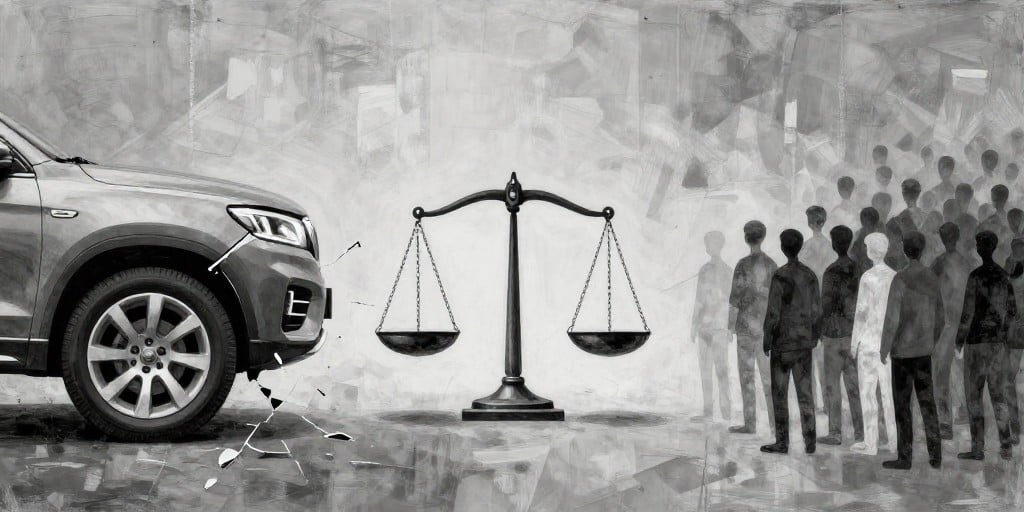
Volkswagen AG: A Corporate Spectacle of Contradictions
Volkswagen AG, the German automotive juggernaut listed on Xetra (EUR) with a market cap of €32.35 billion, is currently in the throes of a multi‑layered crisis that threatens its once‑unassailable reputation. As of 17 November 2026, the share price sits at €64.75, a steep slide from its 52‑week high of €110.20, underscoring investor fatigue amid mounting operational and reputational risks.
1. A Short‑Sale Storm
On 20 November 2026, a short‑sale notice surfaced in the Bundesanzeiger for VW’s shares (ISIN DE0007664005). This public declaration of bearish intent is a clear signal that speculative capital is betting on further deterioration of the company’s fundamentals. In a market where the P/E ratio hovers at 30.06—a figure that already stretches the bounds of traditional valuation models—the appearance of short‑selling pressure amplifies concerns about a potential liquidity crunch.
2. Wage Wars and the Wage‑Demand Conspiracy
The past 24 hours have seen a barrage of reports about the escalating wage dispute that now grips the entire Volkswagen Group. German workers across Audi, BMW, and the Volkswagen assembly plants have announced 24‑hour strikes, a rare escalation that signals profound discontent. The union‑backed action is a direct response to the company’s “Nullrunden und Einschnitte” demand: a proposal to slash wages and trim the 35‑hour workweek.
Volkswagen’s strategy appears two‑fold: first, to suppress labor costs through aggressive bargaining; second, to project an image of disciplined financial management that reassures investors. Yet, the very fact that employees are willing to strike illustrates a severe disconnect between management’s cost‑cutting rhetoric and the ground reality of workers’ livelihoods. The IG Metall’s warning that wage cuts could translate into “herbe Einbußen” for employees underscores the human cost behind these fiscal maneuvers.
3. New Models, Old Problems
Despite the labor turmoil, VW continues to push product innovation, ostensibly to divert attention from internal strife. On 19 November, the company unveiled the T‑Roc R, a high‑performance SUV boasting 333 hp, and on 18 November, it launched the ID. Aura L5—a premium electric sedan now available for pre‑orders in China. While these announcements demonstrate engineering prowess, they also highlight a stark contradiction: significant capital is being funneled into new vehicle development while the workforce battles for basic fair compensation. This misallocation of resources risks eroding consumer trust and undermining the brand’s promise of quality.
4. Market Sentiment and Investor Perception
The short‑sale notification, combined with the intense wage negotiations, has likely contributed to a negative market sentiment reflected in the current share price. Investors, already wary of a high P/E ratio and a steep decline from the 52‑week high, may view these developments as signals of structural instability. The company’s valuation, previously justified by its diverse portfolio of economy, luxury, and commercial vehicles, now seems increasingly fragile.
5. The Bigger Picture
Volkswagen AG’s trajectory is emblematic of a broader challenge faced by legacy automakers: balancing aggressive innovation with sustainable labor practices. The company’s insistence on cost reductions—through wage cuts and shorter workweeks—must be weighed against the long‑term implications for employee morale, productivity, and brand loyalty. Simultaneously, the push into premium electric models and high‑performance SUVs is a tactical response to shifting consumer preferences and regulatory pressures, yet it may not compensate for the internal fractures exposed by the strike wave.
6. Conclusion
Volkswagen AG stands at a crossroads. The short‑sale pressure signals that the market is not convinced by management’s narrative of disciplined cost control. The wage dispute reveals deep fissures within the workforce, while the launch of new models demonstrates a persistent focus on product development at the potential expense of employee welfare. Until Volkswagen reconciles these contradictions, its share price will likely remain volatile, and its reputation—once a hallmark of engineering excellence—will continue to erode.